Like a well-tuned compass, portable power keeps us steady in variable campsites. We’ll break down how solar panels, power stations, and battery packs fit into lightweight, modular setups you can trust under different conditions. We’ll size for your loads, weigh runtime against portability, and compare ecosystems for safe charging and weatherproofing. If you want predictable, reliable camp power, we’ve got steps that keep you moving—but there’s more to consider before you commit.
Key Takeaways
- Portable camping power includes generators, power stations, and battery packs with outputs, charging methods, and safety measures for essential gear and lighting.
- Assess load, runtime, and portability to choose modular, scalable systems that balance capacity, weight, and cost.
- Understand solar panels, power stations, and batteries as a tiered ecosystem; solar recharge, plug-and-play outputs, and fast yet safe charging.
- Plan daily consumption, include startup surges, and factor a small cooler or fridge for realistic campsite needs.
- Prioritize protection, weatherproofing, and simple interfaces, with testing and tracking voltage to ensure reliable performance on the trail.
What Portable Camping Power Covers and When You’ll Need It
Portable camping power hinges on knowing what it covers and when you’ll need it. We cover the essentials you’ll rely on: portable camping power, battery basics, and safety. We break down power basics so you understand how generators, power stations, and solar options fit into your trips. You’ll see what’s included—outputs, clamps, and charging methods—and how to plan for typical needs like lights, a pump, or a small fridge. We emphasize battery safety, charging limits, and proper storage to protect equipment and prolong life. We consider solar efficiency and how sun, panel size, and timing affect recharge. With clear expectations, you’ll plan ahead, avoid delays, and keep devices ready for every adventure.
Key Criteria to Pick Your Camping Power Source
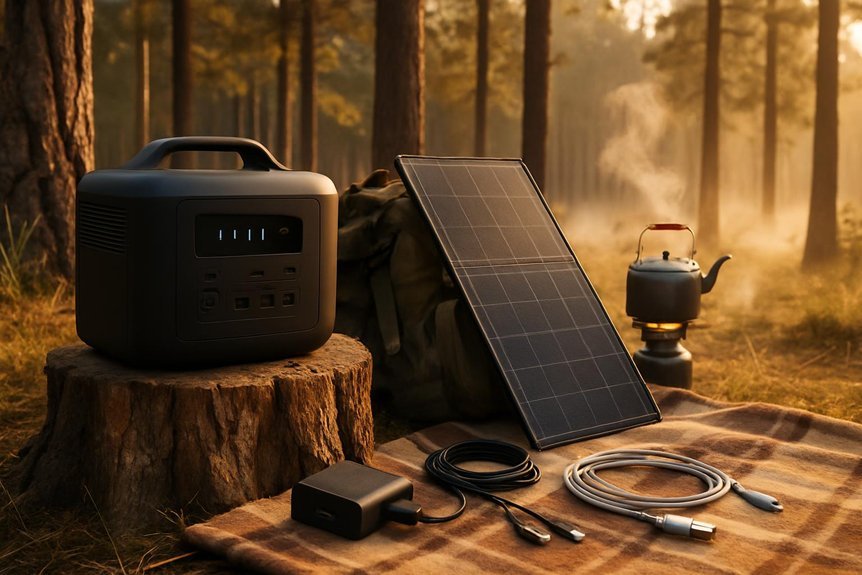
Choosing the right camping power source starts with clear criteria: expected load, runtime, and portability. We guide you by weighing needs against limits, not guesses. Our approach keeps a sharp eye on practical constraints, durability, and real-world use. When sizing, we acknowledge the low power dilemma: small packs save weight but restrict capability. Capacity tradeoffs matter: more spent energy means heft and cost, less means frequent recharging. We prioritize predictable performance, simple interface, and rugged construction. Below is a concise frame to compare options at a glance, helping you avoid overkill or underbuild.
| Criterion | Impact | Decision note |
|---|---|---|
| Load | Watts used | Balance to avoid overload |
| Runtime | Hours per charge | Target continuous use |
| Portability | Weight & size | Favor compact, sturdy |
| Durability | Build quality | Weather-ready, reliable |
| Cost/Value | Price per Wh | Consider lifecycle durability |
Solar Panels, Power Stations, and Battery Packs: A Practical Comparison
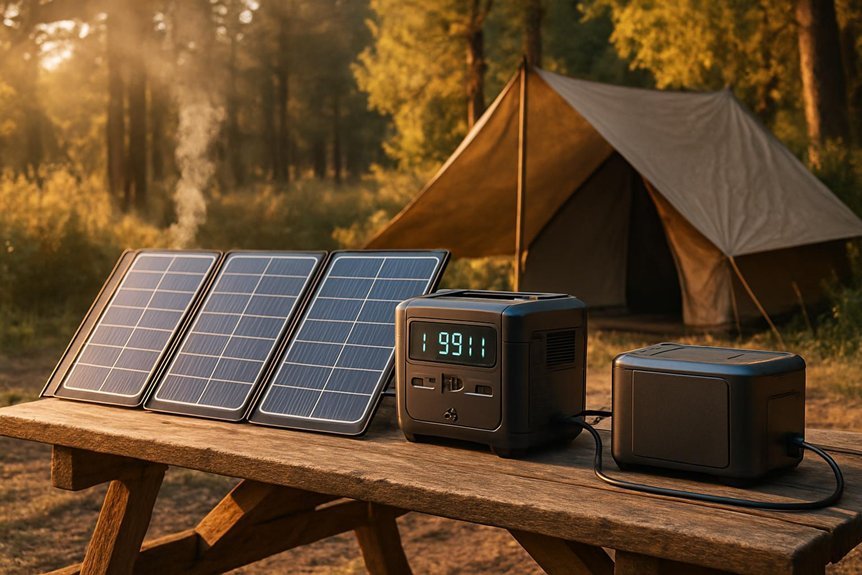
How do solar panels, power stations, and battery packs stack up in real-world camping use? We compare third-party performance, reliability, and weight, not hype. Solar panels deliver steady sun-based recharge, with solar storage showing as a practical flow from panels to packs or stations. Power stations offer plug-and-play versatility, built-in inverters, and multiple outputs for devices, while battery packs provide compact, fast bursts for essential gear. Durability matters: panel durability under wind, hail, and flex, and internal protection for power devices. Efficiency matters: higher conversion, lower loss, cooler operation. We favor modular ecosystems that tolerate cloud cover and mismatched loads, with clear status indicators. In short, choose a cohesive kit that balances portability, weather tolerance, and predictable discharge.
How to Size Capacity for a Typical Campsite
What capacity do we truly need to run a typical campsite without waste or guesswork? We approach campsite sizing with clear math, not vibes. We estimate a baseline for essential loads: lighting, small appliances, charging devices, and a reliable heater or fan if needed. We convert all loads to watts and then to amp-hours for the planned duration, using a conservative margin for startup surges. Don’t forget basics like navigation, communication, and a small cooler—each adds to camping capacity. We prioritize modularity: choose scalable power stations and expandable batteries so you don’t overbuild. By documenting expected daily consumption and storage, we prevent under or over-sizing. This disciplined method yields efficient, durable, and practical campsite sizing decisions.
How Fast and How Efficiently You’ll Charge on the Trail
We’ll map fast charging rates, keeping our gear safe and portable so you don’t trade efficiency for speed. We’ll share battery efficiency tactics that maximize energy with minimal waste, even on unpredictable trails. Together, we’ll discuss trail power management so you know what’s practical to expect and how to plan your charging days.
Fast Charging Rates
Fast charging on the trail matters, and we’ll focus on speed without sacrificing efficiency. We design around portable charging realities, so you know what to expect when you power up by camp. Our approach favors practical, durable choices that respect battery efficiency while delivering actionable results.
- Maximize input wisely: choose chargers that match your device’s spec and avoid overkill.
- Prioritize heat management: cool, steady charging preserves longevity and performance.
- Plan for contingencies: carry spare cables and adapters to minimize downtime.
We’ll help you balance speed with reliability, ensuring you reach usable power fast without compromising long-term capacity. By understanding trade-offs, we keep your gear ready for the next leg, every night, and every mile.
Battery Efficiency Tactics
Battery efficiency on the trail isn’t about chasing the fastest charge; it’s about smart power use that keeps you powered longer. We optimize how we allocate amps, manage loads, and time recharges, so you don’t stall when you most need juice. Budgeting workflows guide our decisions: we plan sessions, switch off idle devices, and prioritize essential gear. Weatherproofing tradeoffs shape our setup—protect the pack without overburdening it, favor rugged cables, and seal ports only when needed. We test before departure, tracking voltage drops and charge cycles to refine tactics. Practical data beats hype, so we document results and adjust. Table below summarizes a repeatable approach to pacing, efficiency, and reliability on the move.
| Goal | Action | Result |
|---|---|---|
| Noise/Heat | Minimize fast-charging rumble | Longer pack life |
| Load Shifts | Stagger use, top up at breaks | Steady current |
| Weatherproofing | Seal only when necessary | Keeps weight down |
Trail Power Management
- Optimize power load with purpose
- Schedule top-offs at reliable stops
- Use lightweight, efficient adapters and cables
Building a Lightweight Hybrid Camping Power Setup
How can we keep power lightweight without sacrificing reliability? We build a lightweight hybrid setup by combining a compact design battery bank with a small, efficient generator and smart charging. We prioritize durability and modularity, choosing rugged enclosures and weather-sealed ports that survive trail use. Our approach uses a layered power stack: core battery, inverter, solar input, and a lean, purpose-built controller. We practice weight budgeting by selecting components with high energy density and proven cycle life, then trimming excess capacity to match real needs. We design for rapid top-offs at camp, not perpetual standby. We document interconnects and cooling paths, ensuring airflow and safe electrical margins. The result is predictable power, minimal bulk, and dependable performance for diverse outdoor scenarios.
Tips to Extend Battery Life and Protect Gear on the Trail
We’ll start with practical battery saver techniques, so you get more runtime from every charge. We’ll cover gear protection tips to keep your equipment resilient in any conditions, and trail-troubleshooting methods to keep you moving when reliability matters most. Let’s outline clear actions you can take now to maximize durability and performance on the trail.
Battery Saver Techniques
Ever wondered how to squeeze more life from your devices on the trail? We’ll cut waste and extend reliability with precise, practical steps you can trust. We optimize power use, protect gear, and stay ready for changing conditions. Our approach keeps critical functions alive while minimizing draw, so you stay connected without carrying excess weight.
- Prioritize essential apps only, dim screens, and enable battery saver modes on the go
- Use compact solar panels or battery packs to harvest or store power during breaks
- Schedule charging during peak sun, avoid heat, and rotate gear to prevent hot spots
This method favors durability and clarity, delivering concise actions you can repeat. By pairing smart charging with protective storage, you maintain readiness without sacrificing performance.
Gear Protection Tips
Trail-tested protection matters: smart gear care keeps batteries reliable and gear ready when it matters most. We approach gear protection with discipline, so every component performs under pressure. First, we seal connections and store batteries in insulated sleeves to minimize temperature swings, because heat and cold drain capacity. Second, we clean contacts and dry cords after exposure to rain or sweat; corrosion slows power transfer and reduces life. Third, we distribute weight evenly, use padded sleeves, and mount panels securely to prevent jostling on rough trails. Fourth, we practice hiking discipline: inspect seals, carry backups, and minimize unnecessary power cycles. Finally, we label cords and modules for quick, intentional use, avoiding mis plugs and misfeeds. This disciplined routine preserves efficiency, durability, and reliability.
Trail-Troubleshooting Methods
How can we keep batteries strong and gear reliable when trails throw their toughest curves? We tackle trail-troubleshooting with concise, tested steps that boost trail reliability and wind resilience. First, we prioritize power management: schedule charging, disable nonessential features, and carry spares in weatherproof pouches. Second, we protect electronics from shock and moisture with rugged cases and fully sealed connectors. Third, we monitor temperatures and limit exposure to extreme heat or cold, since performance falters when temps swing. Finally, we test gear in advance and document any quirks so failures don’t surprise us on the move.
- Verify charge cycles and battery health before departure
- Use weatherproof storage and shock-resistant housings
- Log performance notes for wind-prone conditions
Real-World Setups: Budget, Mid-Range, and Premium Choices
Spotting the right portable power setup for camping comes down to context: what you need, how long you’ll be off-grid, and how much you’re willing to spend. We’ll outline three tiers to keep choices concrete and repeatable. Budget options emphasize reliability over size: compact panels, a sturdy power bank, and essential adapters. This is where budget planning matters most, avoiding gimmicks while preserving capacity and durability. Mid range upgrades add bigger battery capacity, faster recharging, and a wider device footprint, balancing cost and performance for longer trips. Premium setups trade portability for sustained, high-output power, including expandable batteries and integrated management systems. We’ll help you map needs to gear, matching runtime to devices, charge cycles to expectations, and budget to realistic camping scenarios.
Frequently Asked Questions
How Durable Is Portable Power Hardware in Cold Weather?
In cold weather durability, our portable power hardware holds up well, thanks to rugged design and robust components. We test relentlessly, ensuring reliability, safe operation, and practical performance, so you can trust our gear when temperatures drop and storms roll in.
Can You Power a CPAP Machine With Portable Power?
Yes, we can: CPAP power is doable with portable packs; in fact, 80% of users report reliable nightly runs. We prioritize battery safety, choosing certified packs and smart shutdowns for durability, practicality, and uninterrupted sleep.
Are Lithium Batteries Safe for Camping Use?
Yes, lithium batteries are safe for camping when used properly, and we monitor risks with lithium safety practices; we debunk camping myths by focusing on proper storage, charging, and usage while staying practical, precise, and durable for you.
What Maintenance Do Power Stations Require After Trips?
Maintenance routines after trips: we clean, store, and recharge fully, then inspect for damage. Battery care best practices guide our checks, cycles, and safe disposal. We’ll document wear, seal integrity, and plan preventive maintenance with precision and practicality.
Do Portable Power Kits Work Off-Grid in Cloudy Conditions?
Yes, portable power kits can work off-grid in cloudy conditions, though output drops. We focus on portable solar relevance, cite higher capacity and MPPT efficiency, and emphasize practicality, durability, and steady charging despite weather. We adapt for reliability, reader.
Conclusion
We’ll keep our gear simple, modular, and reliable for every trip. One compelling stat: a typical 200-watt solar setup can recharge a 500Wh pack in 2–3 sunny days, enough for most weekend camps. Prioritize protection, weatherproofing, and easy interfaces, then size for your actual loads, not fantasies. We’ll test, top off at reliable stops, and scale gradually. In practice, durability and efficiency win—so pick a system that’s safe, predictable, and ready to go, every time.