Power solutions for RVs, caravans, and van-life setups are a tightrope walk across demand and reliability, and we’ll map it with clear goals first. We’ll define independent energy targets, measure real usage, and budget for seasonal changes. We’ll size batteries, inverters, and solar with daily life in mind, plan for worst-case loads, and document every step. We’ll stress smart charging, MPPT efficiency, and fault-isolation strategies to keep you powered—even when the next trickle of sun seems coy. Ready to balance the math with practical upgrades?
Key Takeaways
- Define a clear off-grid goal set focused on reliability, independence, and predictable energy flow for RV/van life.
- Size a balanced system using daily loads, seasonal variation, DoD targets, and margin for peak/unforeseen use.
- Use smart charging, MPPT controllers, properly sized inverters, and ongoing state-of-charge monitoring to optimize life and performance.
- Plan on-road power management with budgeting, energy zoning, timers, and routine data reviews to stay within limits.
- Include measurement, fault isolation, maintenance, and wind/alternate power considerations to verify performance and readiness.
Set Clear Off-Grid Power Goals for Your RV or Van
We start by precisely defining what “off-grid power” means for our RV or van and what we’re hoping to achieve. We’ll outline concrete goals, prioritizing reliability, independence, and predictable energy flow. Our approach is practical: identify daily habits, essential loads, and seasonal usage to guide decision making. We’ll quantify required runtime for lights, water pumps, fridge, charging devices, and heating or cooling, then translate that into a target daily energy budget. This is off grid prep with a focus on efficiency and resilience. We’ll establish a phased plan: baseline powering, then margin for peak use and unforeseen needs. Throughout, we’ll practice power budgeting, tracking consumption, and adjusting loads to stay within our defined limits.
Size Your RV Battery System: Capacity, DoD, and Reserve Power
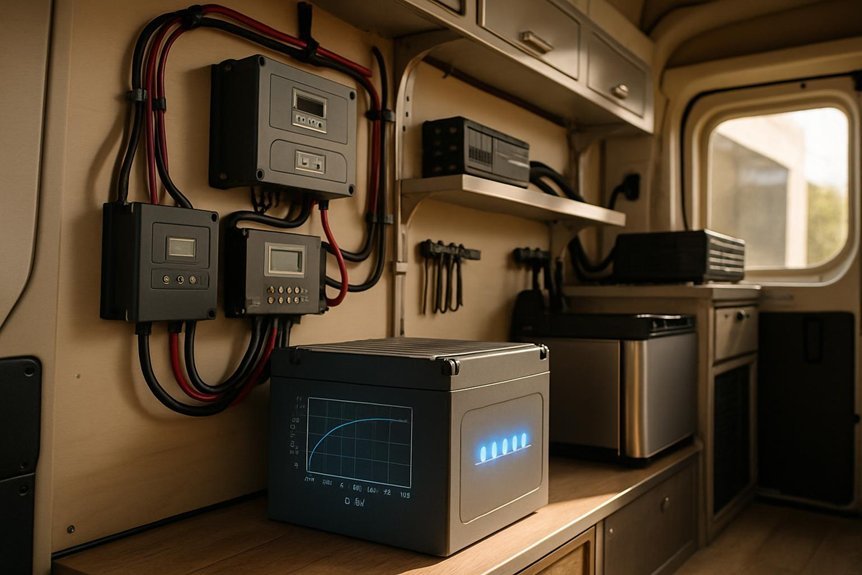
How big should our RV battery system be? We sizing deliberately, not guessing, by evaluating capacity, DoD, and reserve power planning. We begin with load estimates: typical daily use, peak draws, and seasonal variation, then translate that into usable amp-hours. We choose a depth of discharge that balances longevity with usable energy, commonly 50% for lead-acid or 80% for lithium. From there, we compute required capacity: daily consumption × number of days of autonomy, plus a margin for safety. Off grid sizing hinges on inverter efficiency, charging rates, and weather. Reserve power planning ensures we won’t drop to critical levels during cloudy spells or misfires. In short, size to cover demand, tolerance, and resilience, not emotion.
Pick Solar Panels for Van-Life: Wattage, Efficiency, and Roof Fit
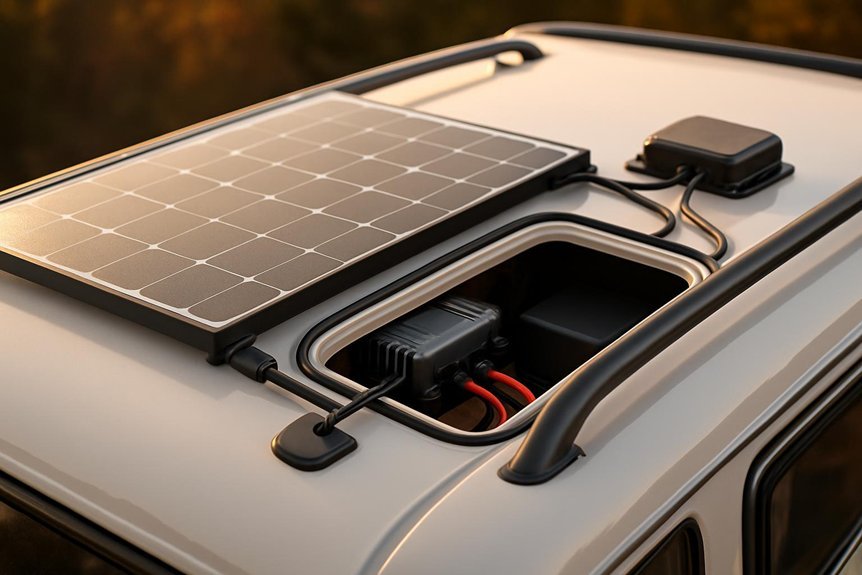
We start by ensuring our wattage needs, balancing daily consumption with available roof space to set a reliable baseline. We then compare panel efficiency and output under typical conditions, translating that into a practical number of panels and a realistic charging curve. Finally, we map roof-fit strategies—orientation, mounting options, and weight limits—to assess secure, maintenance-friendly installation that matches our system goals.
Wattage Needs Assessment
To determine the right solar setup for van life, we start with a precise wattage needs assessment that matches your daily energy profile to roof space and panel efficiency. We map typical loads—lights, electronics, refrigeration, and charging basics—and estimate peak and average draws. We translate those figures into daily watt-hours, then add a safety margin for recoveries and cloudy days. We align the results with roof area, panel count, and mounting constraints, ensuring feasible wiring and space for ventilation. We factor charge controller capacity and inverter loads to keep voltage stability within your system. This method, grounded in data, keeps us pragmatic and systematic, avoiding overstatement while guiding sensible kit choices.
Panel Efficiency Considerations
Panel efficiency matters because it directly influences usable power from your roof without sacrificing space or weight. We assess efficiency considerations to select panels that maximize output per area, while staying within roof load limits. We compare rated wattage, temperature behavior, and tolerance to shading, guiding a balanced choice for van-life setups. Our approach emphasizes real-world performance data, not just spec sheets. By prioritizing high panel efficiency, we optimize solar harvest during mixed driving days and parked hours. We also factor installation practicality, including mounting angles and airflow, to sustain performance across climates. This systematic review helps us avoid overcommitment to oversized arrays.
- Panel efficiency and temperature coefficient implications
- Efficiency considerations under partial shading and real-world conditions
- Trade-offs between wattage, weight, and roof space
Roof Fit Strategies
How we choose solar panels for van roofs hinges on real-world fit: wattage needs, efficiency, and how panels sit on the roof’s limited space. We assess rooftop clearance and wind load to minimize drag and risk, then balance panel size with mounting options and air flow. Our approach is methodical: select high-efficiency cells for limited area, verify panel angle tolerance, and confirm secure, low-profile mounting. We also account for weight distribution and roof hardware compatibility, aiming for predictable performance in varying conditions. In practice, we prefer modular kits that simplify upgrades and maintenance. This table summarizes our criteria.
| Wattage target | Efficiency tier | Mounting considerations |
|---|---|---|
| 80–120W | 20–23% | Low-profile, flush fit |
| 120–200W | 23–26% | Aluminum rails, secure |
| 200W+ | 26%+ | Aerodynamic, robust |
| Battery ready | — | Junction boxed |
| Maintenance | — | Accessibility |
Configure Smart Charging and Inverters for Real-World Use
What’s the practical path to reliably powering RV life with smart charging and inverters?
We align charging profiles with usage patterns, monitor battery health, and size inverters for peak loads. Smart charging prioritizes bulk, absorption, and float stages, adapting to input sources and temps. We pair MPPT controllers with high-efficiency inverters to minimize losses, and we plan for worst‑case draw—air conditioner, heater, and microwave—without oversizing the system. Regular state-of-charge checks, balanced across the pack, protect battery health and extend life. We document cycles, temperature, and resting states to refine settings. Real-world use means simple, repeatable workflows: plug, monitor, and adjust before heavy consumption begins.
Smart charging, balanced SOC, and peak-load inverters for reliable RV power.
- Optimize charging windows to match travel charging opportunities
- Track battery health and cycle data consistently
- Calibrate inverter sizing to actual daily loads
On-Road Power Management Hacks That Stretch Every Watt
We’ll be ruthless about watt efficiency on the road, because every amp-hour saved compounds over a trip. We approach on-road power with a practical, analytical method: measure loads, then trim. First, implement power budgeting: categorize essentials vs. discretionary use, assign realistic duty cycles, and monitor variance as speeds and terrain change. Second, apply energy zoning: isolate critical circuits from nonessential ones, and batch high-draw tasks to avoid peaks. Use programmable timers and low-power modes to minimize idle draw, and favor efficient peripherals over flashy alternatives. Tactics include route-aware charging, preconditioning while connected, and avoiding energy waste from heat or lighting beyond need. Finally, review data daily, iterate settings, and keep a concise, repeatable checklist for each trip.
Real-World Setups: Examples, Budget Scenarios, and Troubleshooting
We’ll walk through real-world budget scenarios and on-the-go troubleshooting, so you can compare setups like compact van rigs and larger caravan systems. We’ll analyze cost versus capability, identify common failure points, and outline stepwise fixes you can apply on the road. Our goal is clear, actionable guidance that stays practical, systematic, and concise.
Real-World Budget Scenarios
- budgeting mistakes: underestimating auxiliary loads, overestimating solar yields, and neglecting warranty terms
- component compatibility: matching controllers, batteries, and inverters to system voltage and safety ratings
- phased implementation: prioritizing essential upgrades, then incrementally expanding capacity as use cases evolve
Troubleshooting On-the-Go Systems
When potential issues arise with on-the-go power setups, a methodical, diagnostic approach saves time and avoids costly fixes. We guide you through quick checks that fit real-world travel life. Begin with measurement: verify battery voltage, load current, and fuse integrity, then compare against system specs. If erratic performance appears, isolate circuits one by one, noting which device or port triggers the change. For portable charging, test individual chargers and USB banks under load, and watch for heat or voltage sag. Wind alternatives come into play when mains or solar aren’t available; evaluate wind turbine output versus demand and battery state of charge, adjusting consumption accordingly. Document patterns, replace failing connectors, and keep spare fuses, adapters, and cabling ready for seamless fixes.
Frequently Asked Questions
How Do I Estimate Nightly Energy Use for Weekends Away?
We estimate nightly energy use by listing essentials, caplights, fridge, and water pump; multiply peak draws, add margin, and adjust for weekends away. We’ll compare weekends away scenarios, then refine with actual consumption data.
What Indicators Show My System Needs a Bigger Inverter?
We’d say indicators of needing a bigger inverter include frequent tripping, voltage drops under load, and charging conflicts; monitor waveform quality, startup surges, and battery aging. We’d adjust inverter sizing when performance degrades, not just peak.
Can I Run High-Draw Appliances Safely on Lithium Vs Lead-Acid?
Yes—we can run high-draw appliances on lithium, safely, with proper charging safety and system sizing. We’ll analyze demands, wire gauge, and BMS limits, then size the inverter accordingly, so you stay powered without risking safety or reliability.
How Do I Handle Extreme Temperatures Affecting Battery Performance?
Extreme temperature directly impacts battery performance; we regulate it with insulation, venting, and active cooling/heating. We monitor temps, size packs for expected swings, and adjust charging/discharging rates to maintain safe, consistent output and longevity.
What Maintenance Schedule Keeps RV Power Systems Reliable Long-Term?
We maintain a steady maintenance cadence to keep battery health high, and we’ll adjust based on usage. We track cycles, voltages, and temps, then service annually, with quarterly checks, so our system stays reliable long-term.
Conclusion
We’ve laid the groundwork: clear goals, precise sizing, smart charging, and tested setups that stand up on the road. As we move from theory to practice, we’ll keep measurements routine, document every change, and optimize MPPT and duty cycles. Think of our system like a marathon—steady pacing, contingency reserves, and scalable upgrades. The rhetorical device: analogy. We’ll treat your power plan as a reliable map, guiding every watt toward safety, readiness, and freedom on any terrain.