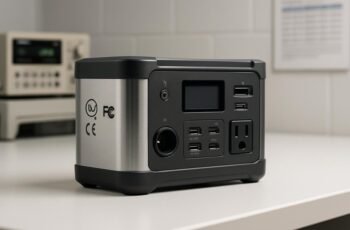
We approach portable power for filmmaking and photography with a practical, field-tested mindset. We map every device’s draw, factor in temperature and aging, and reserve headroom for peaks. We favor modular, hot-swappable packs with clear labeling and robust safety rails. On-location charging combines fast options, portable packs, and efficient cable management. We’ve got to balance weight, runtime, and reliability—because the next shoot hinges on staying powered longer than expected, and we’ll show you why.
Key Takeaways
- Assess total power needs by mapping each device’s draw, runtime, and required buffers for critical loads (camera, monitor, audio, wireless).
- Plan on-location charging with a mix of portable packs, DC fast-charging, and battery carts to ensure continuity.
- Derate battery capacity for temperature, aging, and peak loads; separate constant vs. sporadic power demands.
- Segment power rails by function (camera, audio, lights) with labeled connections and redundant sources for reliability.
- Emphasize safety: monitor voltage/temperature in real time, use lockable connectors, and follow proper battery disposal guidelines.
Decide Your Power Needs Before Anything Else
We start by mapping out exactly what gear we’ll run and for how long, because your power plan should fit the shoot, not the other way around. We’ll list each device, estimate draw in watts, and translate that into runtime on our chosen packs. From there, we set target buffers for robustness and cooldown periods for hot equipment. We prioritize critical loads—camera, monitor, wireless, audio—over ancillary gear, then add contingency for delays. We align charging cycles to shooting windows and establish compensation timing so batteries discharge predictably under load. We document expected runtimes, charging needs, and available outlets at locations. We also address battery disposal guidelines early, ensuring compliant handling and transport. This disciplined prep avoids outages, boosts reliability, and streamlines on-set decisions.
Battery Chemistry and Capacity: What Powers Your Gear?
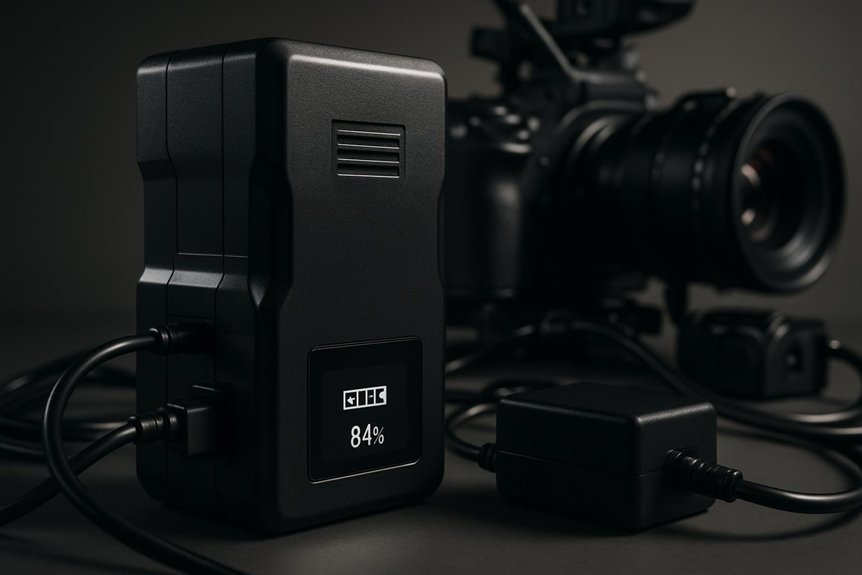
We’ll start with the basics of Battery Chemistry and Capacity, so you know what powers your gear and how it behaves under load. We’ll cover Battery Chemistry Basics, explain Capacity Measurement, and share practical Power Management Strategies that keep rigs running longer. You’ll get concise, field-tested guidance you can apply to select and optimize cells, packs, and charging carefully.
Battery Chemistry Basics
Battery chemistry is the backbone of portable power for filmmaking and photography gear, and understanding it helps you pick the right pack for the job. We’ll keep this tight: chemistry determines how energy is stored, released, and managed under load. Different chemistries offer distinct trade-offs in cycle life, internal resistance, and thermal stability, which affects real-world performance. Our focus remains on practical implications for gear power, not theory alone.
- chemistry types and their typical discharge behavior
- capacity metrics you should track for planning shoots
- how temperature and aging alter available power
- selecting cells and pack configurations for reliability and safety
This lens—power storage, lifecycle, and predictability—helps you compare packs quickly and avoid under- or over-sizing batteries for the task.
Capacity Measurement Explained
Ever wonder how much power your kit really has left before the next run-and-gun shoot? We break down capacity measurement so you can plan without guesswork. Capacity measurement translates chemistry into usable energy, typically expressed in watt-hours (Wh) or amp-hours (Ah). When you see a rating, it’s telling you the total energy stored and potential runtime under specified load and voltage. We convert this to practical terms: a 14.8V battery with 4 Ah equals about 59.2 Wh, guiding how long a camera, monitor, or light will run before recharging. Battery capacity units matter: Wh accounts for voltage, while Ah emphasizes current draw over time. For field use, compare devices at similar loads and consider derating for temperature and aging.
Power Management Strategies
Power management starts with knowing what powers your gear and how long it can run under real conditions. We focus on battery chemistry and capacity to ensure reliable shoots. By matching battery capacity to your workload, we prevent outages and overdraw. We also consider charging safety to protect assets and crew.
- Battery capacity vs. consumption envelopes for cameras, lights, and monitors
- Chemistries and cold-weather performance, cycle life, and weight tradeoffs
- Safe charging practices, connectors, and transport considerations
- Redundancy, hot-swapping, and field replenishment planning
In practice, we validate run times on set, document discharge curves, and preflight power budgets. This disciplined approach minimizes surprises, preserves image quality, and keeps teams moving.
Realistic Runtime: How Long Will Your Setup Actually Last?
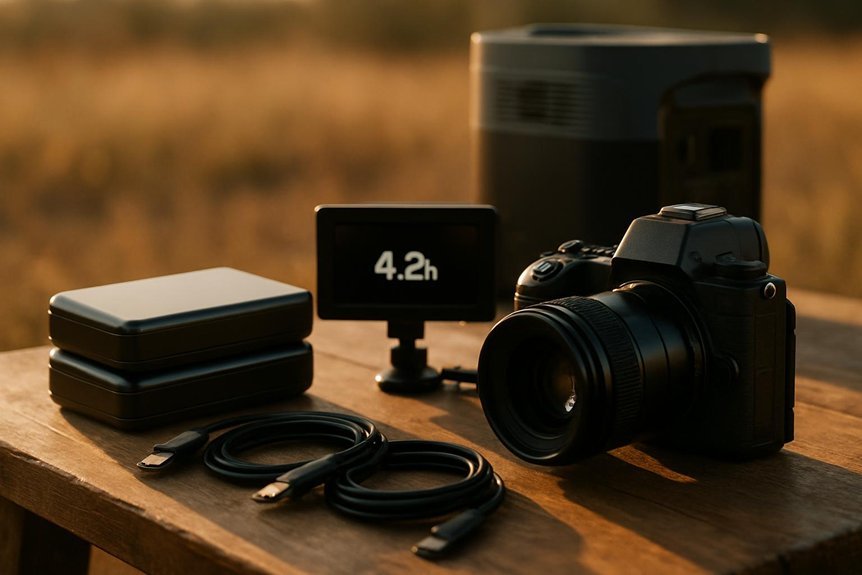
Realistic runtime comes down to the current draw and capacity, not wishful thinking. We approach it with hard numbers, not vibes. We map system load, from cameras to monitors, to power rails, then translate that into milliamp-hours and watts. Our rule: always verify peak and average draw in real-world setups, not hypothetical specs. We sum battery capacity, then subtract headroom for efficiency losses, cables, and temperature. This gives a practical runtime window you can trust for planning. We separate constant loads from sporadic bursts, then apply power management strategies to smooth peaks. By tracking voltage sag and chemistry limits, we avoid overstress and miscalculation. Realistic runtime becomes predictable, enabling better field scheduling, kit choices, and reliability through disciplined power management.
Power Options by Workflow: Stills, Video, or Hybrid Rigs
From our real-world runtime approach, we tailor power options to fit the workflow—stills, video, or hybrid rigs—because each setup stresses batteries differently. We optimize reliability by pairing cores, rails, and monitors to minimize draw peaks and maximize efficiency. For each workflow, we prioritize power optimization through strategic rigging, smart power routing, and load balancing. Battery interchangeability matters: hot-swappable packs keep shoots moving without reboots or retries. Our guidelines keep cables clean, connectors tight, and supplies grounded to avoid voltage sag. The aim is predictable runtimes, not guesswork.
From real-world runtimes, we tailor power for each workflow—stills, video, or hybrid—ensuring predictable, hot-swappable reliability.
- Power-rail planning by use case
- Hot-swappable battery strategies
- Efficient accessory nesting
- Monitoring dashboards for real-time health
On-Location Charging: Fast, Safe Recharging Solutions
On-location charging matters when timing is tight and safety is non-negotiable. We design fast, safe recharging solutions that fit constrained sets and dynamic shoots. Our approach blends portable power packs, robust DC fast-charging, and field-ready battery carts, all built for reliable operation under varying temperatures and dust conditions. We prioritize efficient connector systems, heat management, and real-time status monitoring to avoid surprises between takes. Two word discussion ideas—reload cadence and peak current—guide our setup choices, ensuring we balance speed with battery safety. We recommend staged charging with temperature-aware thresholds, never chaining high-current packs beyond spec. Always segregate charging zones from camera rigs, keep leads organized, and verify cable integrity before power-up. This discipline minimizes downtime and preserves equipment lifespan.
Safe Handling and Field Best Practices for Portable Packs
Ever wonder how to keep portable packs safe while you’re out in the field? We tackle handling and field best practices with practical precision, drawing on field-tested methods. Our approach minimizes risk, emphasizes clear labeling, and enforces consistent procedures to prevent incidents. We address budgeting myths by prioritizing essential protections and reliable charging practices, not expensive fads. We’re vigilant about lithium hazards, using proper storage, monitoring, and transport rules to avoid thermal events and short circuits. Follow these essentials:
Ever wonder how to keep portable packs safe in the field with practical, field-tested methods and clear, consistent procedures?
- Inspect packs before every use and replace damaged cells or cables
- Use dedicated high-ventilation bags and avoid charging on flammable surfaces
- Keep packs away from liquids; seal enclosure during rain or dust
- Tag and log temperature, voltage, and cycle counts for trend spotting
Weight, Size, and Balance: Power Without the Drag
How can we keep power lean without sacrificing runtime? We tackle weight, size, and balance with a measured, field-tested approach that keeps gear nimble and reliable. Our focus is weight optimization, ensuring packs don’t drag a rig down while preserving runtime. We optimize layout, leverage compact cells, and tune balance dynamics so centers of gravity stay predictable across accessories. Precision stacking and cable routing reduce bulk and wobble, enabling steadier handheld shots and smoother rigs on supports. The table below highlights key tradeoffs without overburdening the setup.
| Dimension | Impact |
|---|---|
| Weight optimization | Reduces fatigue, improves handling |
| Balance dynamics | Enhances stability, minimizes drift |
Real-World Rig Setups: Configurations for Your Shoots
As we map rig power layouts, we’ll share practical, field-tested configurations that keep cameras, lights, and accessories running without overloading the system. We’ll discuss on-set power management tactics—how to allocate circuits, stage feeds, and backup sources for steady operation. Let’s tighten these setups against real shoots to simplify decisions and improve reliability.
Rig Power Layouts
When we design rig power layouts, we start from the shoot’s workflow and work backward to the power needs each device imposes. Our approach blends field-tested practices with precise planning, ensuring reliability under deadlines. We optimize for rig ergonomics, keeping access and balance in mind, while prioritizing charger placement to minimize cable clutter and heat buildup. Clear zoning of power rails reduces flicker and voltage drop, and we document each footprint so future shoots replicate success.
- Optimize device placement for quick transfers and balanced weight
- Prioritize charger placement to reduce cable runs and tangling
- Segment power rails by function (camera, audio, lights) with labeled breakers
- Include redundant ports and contingency batteries for critical pieces
On-Set Power Management
On-set power management boils down to reliable, repeatable configurations that keep gear running under pressure. We map rig layouts to shoot demands, prioritizing redundancy and clear power budgeting. We pair high-capacity packs with compact backups, wire with lockable connectors, and label circuits to prevent mis-plugs during takes. Field-tested rigs balance run time and weight, using a central power hub for critical devices and daisy-chained accessories only where permitted by spec. We monitor voltage, current draw, and temperature in real time, adjusting load as scenes change. Battery safety and charging etiquette guide procedures: inspect packs, cap vents, and store packs at safe temperatures; charge only with approved chargers, and rotate batteries to even wear. With disciplined workflows, we minimize interruptions and maximize reliability.
Budget, Value, and Future-Proofing Your Power System
Budget, value, and future-proofing aren’t afterthoughts—we treat them as core specs. We balance upfront costs with long-term reliability, selecting systems that minimize total cost of ownership while maximizing uptime. Our approach emphasizes real-world performance metrics, not hype, so you’ll see clear tradeoffs and tangible benefits.
- Budget tradeoffs: weigh initial spend against cycle life, maintenance, and availability of replacement parts
- Future proofing concerns: choose modular packs and expandable architectures to adapt to gear updates
- Reliability vs. portability: prioritize rugged enclosures, cooling, and fault tolerance for field use
- Total cost of ownership: factor warranties, service networks, and spare inventory into decision making
This disciplined lens keeps your kit ready, scalable, and cost-efficient over time.
Frequently Asked Questions
How Do I Calculate Total Watt-Hours Needed for a Shoot?
We calculate total watt-hours by summing device watts times hours, then add overhead. To estimate runtime, we factor inefficiencies and margin. How to estimate runtime guides our choosing battery capacity to meet shoot demands.
What Safety Features Should Portable Packs Include?
We’ll put safety feature considerations first: battery protection, short-circuit and over-discharge safeguards, proper venting, and thermal monitoring. We prioritize rugged enclosures, fuses, and balanced cell chemistry. We’ll guide you with field-tested, practical, technical precision.
Can Solar Charging Supplement Battery Runtime Effectively?
Yes, solar charging can supplement runtime, but effectiveness hinges on panel area, light conditions, and charge controller. We optimize runtime by careful weight balancing, monitor battery health, and implement practical, field-tested solar charging strategies for reliable power.
How Do You Balance Weight With Power Capacity on Set?
Like navigating with a balanced map, we balance weight with power capacity on set. We optimize battery health, safety features, and grip-friendly packs so you stay practical, field-tested, and efficient while we manage power without overburdening gear.
What Are Signs of Degrading Battery Health in Packs?
We can spot signs of battery health: swelling, rapid voltage drop, unexpected shutdowns, and excessive heat. Key indicators include capacity loss and battery degradation. We track health indicators, log mileage, and replace packs before performance dips impact shoots.
Conclusion
We’ve mapped every device, sized packs for peaks, and pinned safe workflows—so your crew can focus on the shot, not the power math. With modular, hot-swappable packs and robust charging options on site, you’ll minimize downtime and maximize reliability. Think of the system as a well-tuned orchestra: each battery, cable, and rail plays its part. Stay disciplined with labeling, zoning, and disposal. When power rests in balance, creativity can chase the light.