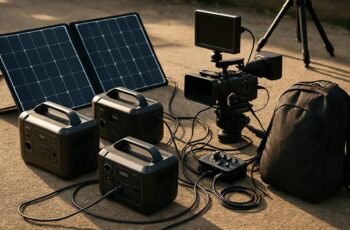
We examine portable power stations for CPAP use with a precise, technical lens, sizing energy needs, selecting inverters, and matching CPAP outputs for reliable operation. We’ll assess battery chemistry, charging, and thermal management to minimize risk, then outline practical setup practices that reduce losses and surge issues. Our goal is a safe, efficient, and durable solution that works across outages, travel, or remote stays—yet some details will push us toward what to optimize next.
Key Takeaways
- Assess whether a CPAP portable power station is needed based on outage reliability, travel, and remote sleeping conditions.
- Size energy needs by measuring CPAP draw, runtime targets, DoD, and charging losses to set a practical capacity.
- Choose an inverter and CPAP-compatible outputs that handle peak load, efficiency, and startup surges with appropriate waveform.
- Evaluate battery chemistry, thermal management, and charging practicality to ensure safe, consistent CPAP operation.
- Use real-world setup tips: stable mounting, short cables, grounding, alerts, worst-case load modeling, and travel-ready cable organization.
Do You Need a CPAP Portable Power Station?
A CPAP portable power station isn’t always necessary, but it’s essential when reliability matters beyond standard outages. We assess whether a dedicated unit improves continuity for CPAP compatibility and overall sleep therapy. If your environment includes prolonged outages, remote occupancy, or travel where grid access is uncertain, a portable power option provides a predictable power source with controlled discharge behavior and surge handling. We compare simple battery packs to purpose-built CPAP power stations, noting that the latter deliver optimized current profiles, voltage regulation, and safety protections. Consider load, runtime, and recharge cycles to determine practical benefits. In routine scenarios, standard adapters suffice, yet for critical nights or remote stays, the added portability of a dedicated solution ensures uninterrupted therapy and peace of mind.
How to Size CPAP Energy Needs for Capacity
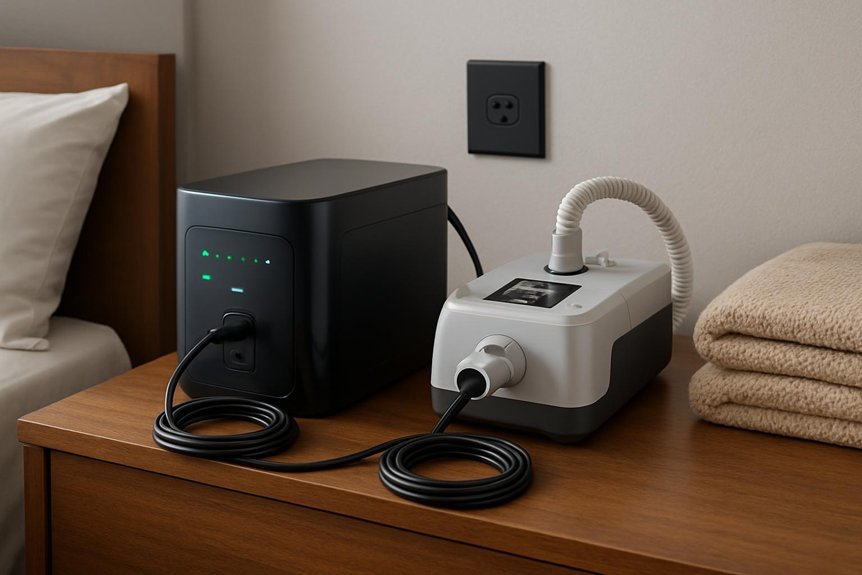
To size CPAP energy needs, we start by quantifying your actual power draw and usage patterns. We then translate that data into capacity targets that account for runtime, DoD, and seasonal variation. Our approach emphasizes methodical size planning and battery efficiency, ensuring margins for charging losses and device tolerances. By mapping nightly usage, we establish a baseline energy requirement and a contingency buffer for outages. The result is a defendable, data-driven capacity estimate that minimizes over- or under-sizing.
| Variable | Method/Metric |
|---|---|
| Runtime Target | Hours per night |
| Peak Draw | Watts at CPAP + accessories |
| Margin & DoD | Percentage for reliability |
Choosing the Right Inverter and CPAP Outputs
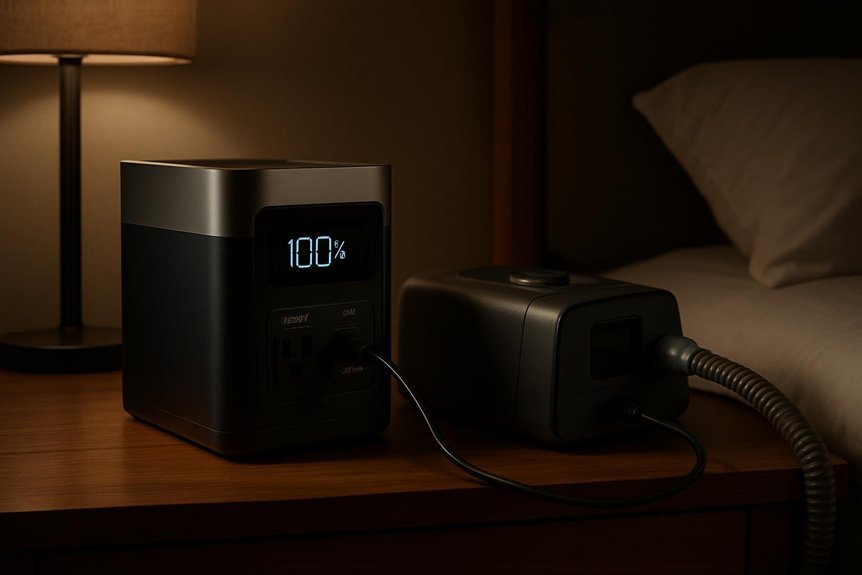
How we select the inverter and CPAP output settings hinges on matching peak and continuous loads to guarantee clean, stable operation while maximizing battery efficiency. We evaluate Selecting inverter efficiency and Power brick compatibility to prevent voltage drops and heat buildup, ensuring uninterrupted pressure delivery. We balance surge capacity with real-time draw, choosing pure sinewave or high-quality modified sinewave options as dictated by CPAP tolerance and device logs. Our approach emphasizes clean power delivery, minimal distortion, and compatibility with the CPAP power brick. We test output voltages, current limits, and startup behavior, documenting tolerances for long-duration runs.
- Selecting inverter efficiency considerations
- Power brick compatibility checks
- Output waveform and surge alignment
Battery Chemistry, Charging, and CPAP Safety
What matters most when evaluating battery chemistry for CPAP use is predicting real-world performance, safety margins, and charging practicality across varied environments. We examine cell chemistry, internal resistance, and thermal behavior to anticipate runtime consistency. Lithium-based chemistries offer high energy density but require robust thermal management and strict safety protocols to prevent thermal runaway. Nickel-based options trade voltage stability for robustness in colder temps, yet exhibit different cycle lifetimes and efficiency profiles. We assess battery efficiency through round-trip losses, charge acceptance, and parasitic loads from the CPAP unit. Charging practices must align with device tolerances and ambient conditions, including recommended charge currents and voltage ceilings. Safety protocols emphasize overcurrent protection, proper isolation, and fracture- and short-circuit safeguards to minimize risk during use and transport.
Real-World Setup Tips for CPAP Users
In real-world setups, small decisions about placement, connectivity, and monitoring have outsized effects on reliability. We approach CPAP power with precision: stable mounting, minimized cable length, and clear visibility of status signals reduce failure modes. We prioritize robust grounding, surge protection, and deliberate shutoff procedures to prevent drain spikes or data loss. Monitoring should be continuous but unobtrusive, with automated alerts for voltage drop and battery health. For disaster preparedness, we model load profiles under worst‑case durations and verify all connections before sleep. Travel hacks include compact routing, modular adapters, and labeled harnesses to speed transitions. Keep a documented checklist to standardize setups across locations.
- Placement and mount strategy
- Connection integrity and signaling
- Quick‑response monitoring and alerts
Compare Top CPAP Power Setups and Maintenance
We compare top CPAP power setups to identify which configurations deliver the best balance of reliability, efficiency, and maintenance ease. Our analysis targets commonly used portable power stations, uninterruptible power options, and integrated battery packs. We evaluate peak discharge rates, depth of discharge, and cycle life to quantify real-world durability. We assess firmware updates, port protection, and user-serviceability to estimate long-term maintenance needs. We weigh charging flexibility, solar compatibility, and auto-shutoff features against energy draw and noise. We highlight portable safety considerations, including insulation, venting, and accidental short-circuit prevention. We also compare battery warranty terms, replacement timelines, and service networks to minimize ownership risk. Our conclusions support selecting configurations with extendable runtimes, predictable performance, and clear maintenance paths.
Frequently Asked Questions
How Long Do Portable Packs Hold a Full CPAP Charge?
We estimate CPAP battery life varies, but a fully charged portable pack typically powers a standard CPAP for about 2–4 nights, depending on pressure, humidity, and APAP mode, highlighting Portable power limitations and usage efficiency.
Can You Run Heated Humidifiers on Portable Power Stations?
We can run a heated humidifier on portable power stations, but efficiency varies; use models with adequate wattage and surge handling. We recommend solar charging when feasible, monitor heat, and optimize battery shutoffs for uninterrupted sleep.
Are There Cpap-Specific Battery Warranties or Limitations?
Yes, cpap warranties vary, and cpap warranties often cap battery limitations; we caution customers, claiming clear criteria, compliance, and coverage. We analyze applicability, clarify manufacturer terms, and communicate precisely how battery limitations affect device protection.
What Happens if a Storm Causes Power Outages Mid-Use?
If a storm disruption cuts power mid-use, we’ll switch to battery management protocols, ensure uninterrupted pressure, monitor runtime, and conserve charge while assessing safety; we analyze risks, reseat alarms, and notify you of outage duration and restoration.
Is It Safe to Mix Multiple Power Sources for CPAP?
We don’t recommend mixing multiple power sources for CPAP; it risks battery incompatibility and unsafe current feeds. CPAP safety hinges on using proven, compatible batteries only. We’ll verify battery compatibility and maintain strict, monitored power sources for you.
Conclusion
We’ve walked through sizing, components, and safe setup, and we know outages won’t dictate our nights. While we can euphemistically frame hesitation as “unpredictable weather,” these systems quietly provide steadier rest. By choosing compatible CPAP outputs, robust battery chemistry, and thoughtful thermal management, we minimize risk and maximize uptime. Let’s adopt disciplined routines, monitor performance, and respect surge needs, so frustration fades and reliable therapy endures—delivering confident, uninterrupted breaths when it matters most.