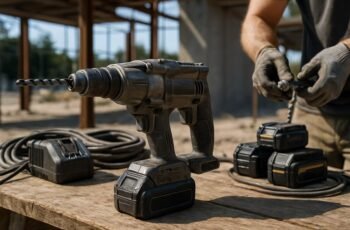
We’re looking at portable power that keeps tools running, lights on, and crews moving, whether on a dense site or remote trailer. We’ll weigh generators, batteries, and solar hybrids for reliability, startup surges, and runtime, all while stressing safety and emissions compliance. The goal isn’t max wattage but steady uptime with clear refuel or recharge plans. We’ve got to balance weight, cost, and maintenance, but there’s more to optimize—let’s map the best mix for your project.
Key Takeaways
- Define portable power by reliability, up-time, safety, and suitable duty cycles, not just raw wattage.
- Use a decision framework to match tool demand, fuel type, and runtime with site constraints.
- Choose generators for high-load, long runtimes; batteries for quiet, instant-on power; solar hybrids to cut fuel use.
- Evaluate fuel options (gasoline, diesel, propane) by total cost, logistics, and emissions; ensure regulatory compliance.
- Plan runtime and refueling with modular reserves, swap-ready packs, and staggered charging to maintain productivity.
What Portable Power on Job Sites Really Means
On job sites, portable power isn’t a luxury—it’s a baseline requirement. We define portable power as the ability to run tools, lights, and communication gear where wiring isn’t practical. Our view centers on reliability, up-time, and safety, not just raw watts. We recognize portable power misconceptions that conflate size with capability or assume equal performance across technologies. We measure value by duty cycle, start-up surge, and runtime at typical loads. We favor systems that reduce fuel burn and maintenance while delivering predictable output. Noise vs efficiency isn’t a trade-off we accept; we optimize for quiet operation without sacrificing performance. In practice, we plan for redundancy, modularity, and easy refueling, so crew productivity stays steady and sites stay compliant.
How to Choose Between Generators, Batteries, and Solar Hybrids
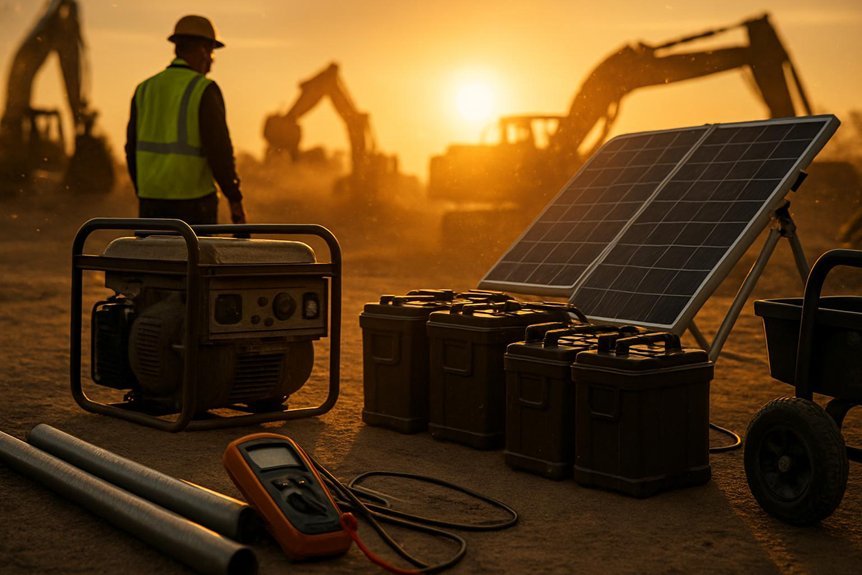
Choosing the right portable power mix isn’t about chasing the biggest system; it’s about matching runtime, reliability, and maintenance to the job. We compare generators, batteries, and solar hybrids by duty cycle, startup surge, and total cost of ownership. Generators excel in high-load, long-duration use, offering predictable runtime with fuel logistics to manage. Batteries shine for quiet, instant-on power and maintenance simplicity, but we monitor cycle life and depth of discharge to extend battery longevity. Solar hybrids reduce fuel needs and emissions, balancing daytime generation with storage for off-peak demand. Consider maintenance cadence, weather exposure, and financing options. We also factor solar financing benefits, incentives, and payback timelines. Our approach stays practical: align system choice to task, risk tolerance, and available support.
Measuring Runtime, Weight, and Recharge Options
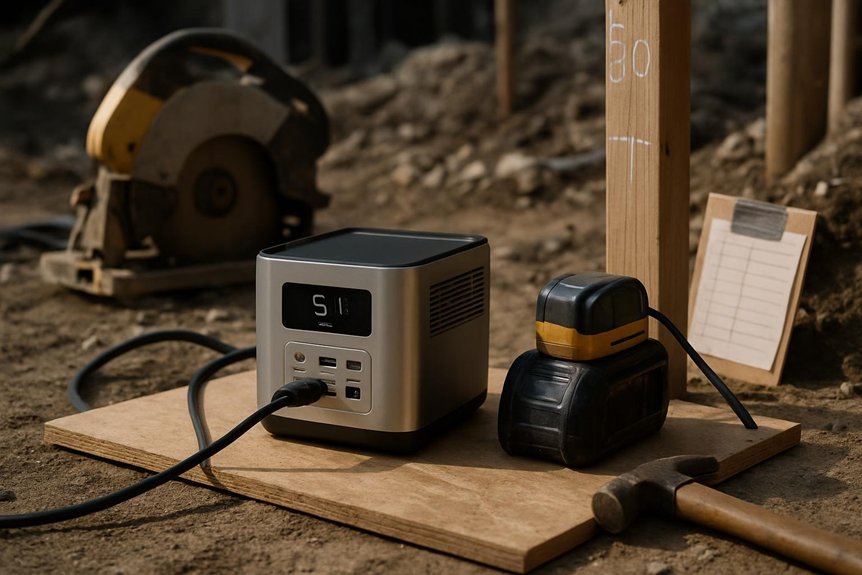
How do we compare runtime, weight, and recharge options across portable power choices? We approach this by defining clear metrics, then benchmarking real-world use. Runtime metrics capture usable hours at typical loads, not peak specs, so we model duty cycles common on job sites. Weight considerations factor in payload impact, handling, and transport accessibility, distinguishing between installed modules and portable units. Recharge options—AC, DC, solar, and swappable packs—determine downtime and workflow continuity, with emphasis on charge rate, thermal limits, and interdependencies with tools. We emphasize consistency in testing conditions, documented efficiency, and cycle life. Throughout, safety standards guide measurement practices, ensuring data reliability and comparability across brands. Our goal is actionable, precise guidance for choosing the right balance of duration, heft, and recharging flexibility.
Safety and Emissions: Clean, Compliant Power for Construction
We’ve compared runtime, weight, and recharge options, and now we turn to safety and emissions to guarantee clean, compliant power on site. We prioritize safety compliance through enclosure design, proper venting, and fault protection that minimizes exposure. Emissions standards drive our choice of fuels and burn control, reducing particulate and audible noise while meeting regulatory limits. We align maintenance schedules with manufacturer diagnostics to prevent degraded performance that could threaten crew safety. Our approach emphasizes trackable compliance documentation, so inspectors see verified results.
- Clear labeling and shutdown procedures for quick, safe responses
- Approved fuels, permits, and ongoing emissions testing
- Routine verification of protection devices and exhaust controls
Cost and Maintenance Considerations for Job-Sites
What are the real cost drivers on job sites, and how can we keep maintenance reliable without dragging down schedules? We approach this by aligning equipment selection with use patterns and maintenance cycles. Cost planning should account for initial purchase, depreciation, fuel or recharge costs, and downtime risk from failures. We evaluate total cost of ownership across battery, generator, and hybrid options, factoring lifecycle reimbursements and resale value. Maintenance budgeting stays tight through preventive routines, onboard diagnostics, and supplier service SLAs that minimize nonproductive time. We standardize spare parts, simplify battery care schedules, and track performance against thresholds to anticipate replacements before outages. Clear budgets, traceable spend, and documented maintenance milestones ensure reliability while protecting project timelines and overall efficiency.
Matching Power to Tools and Site Tasks
Power needs are not one-size-fits-all; match tools to tasks by analyzing duty cycles, peak demands, and runtime expectations. We align generators, batteries, and outlets with the actual work profile to avoid under- or over-spec’ing. By understanding how long a tool runs, how hard it’s pushed, and how often it restarts, we optimize performance, efficiency, and reliability. We also consider site aesthetics and tool ergonomics to minimize fatigue and clutter, keeping the workspace safer and more productive.
- Duty-cycle-aware selection that matches peak draw to available power
- Battery vs. generator trade-offs for runtime and refueling cadence
- Ergonomics-first layouts that reduce cord/tethering strain and trip hazards
Real-World Layouts: Mobile Power for Trailers and Remote Sites
Where can you deploy portable power most effectively on trailers and remote sites, and what layouts deliver reliable run times? We outline practical configurations that teams can implement today. Our approach centers on modular power cores paired with rugged trailers, balancing weight, access, and ventilation. Place portable batteries and inverters adjacent to tool clusters to minimize cabling, with dedicated DC bus runs for compressors and saws. Use a central distribution panel on the trailer wall, and route solar charging inputs to a weatherproof charge controller that feeds the bank without overvoltage. Include a secondary 12V supply for lighting and fans. Favor stacked storage for rapid topping, and maintain clear separation between charging gear and live outlets. This keeps rigs efficient, predictable, and ready for extended remote work.
Steps to Minimize Downtime: Charging, Storage, and Maintenance Routines
We’ll outline practical charging protocols and storage best practices to keep equipment ready and downtime minimal. We’ll discuss consistent charging schedules, battery health checks, and proper storage conditions that protect performance and longevity. By following these steps, you’ll reduce runtime surprises and maintain reliable power at the job site.
Charging Protocols
How can we minimize downtime on site by mastering charging, storage, and maintenance routines? We approach charging protocols with discipline, ensuring fast cycles without compromising safety. We standardize charger compatibility, monitor voltage, and respect temperature windows to protect battery safety and extend life. We prioritize proper connection, avoidance of daisy-chaining, and routine post-charge checks to confirm full, balanced cells. Our aim is predictable runtimes and fewer trips to the charger.
- Consistent interface usage and verified compatibility
- Temperature-aware charging and regular health checks
- Immediate fault isolation, proper disconnects, and logbook updates
Storage Best Practices
Storage is a critical uptime lever: proper storage practices protect battery health and guarantee readiness when you’re ready to deploy. We’ll keep packs at recommended temperatures, away from heat sources, and off high-traffic floor spaces. Establish a routine to charge fully, then store within target voltage bands to minimize stress. Use calibrated tools to monitor state of charge, temperature, and cell balance, logging results for trend analysis. Clean connectors and housings prevent moisture ingress and corrosion, reducing failure modes during reuse. Implement cycle tests to verify readiness after extended storage, and retire aged units before performance degrades. Prioritize storage optimization by pairing batteries with appropriate racks, labels, and rotation schedules. Together, these steps extend battery longevity and cut downtime during deployment windows.
Decision Framework: Picking the Right Portable Power Mix for Your Project
We start by outlining our Power Needs Assessment to match tool demands and site workloads with the right capacity. Then we weigh Fuel Type Considerations and how each option impacts emissions, logistics, and maintenance, so the mix fits your project constraints. Finally, we map a Runtime and Refill Strategy that keeps crews productive, minimizes refueling downtime, and aligns with your task schedule.
Power Needs Assessment
We begin by selecting the right portable power mix through a clear power needs assessment: identify non-negotiable loads, peak demand, and duty cycles, then translate those into a supply plan.
- Define essential tools and environments that must run continuously or intermittently, and their runtime expectations
- Map peak load vs. available generator or battery capacity, accounting for startup surges
- Align duty cycles with recharge windows and site constraints to minimize refueling and idle time
This approach emphasizes portable power that meets critical tasks while preserving site safety. We tailor the mix to prevent brownouts, reduce equipment wear, and maintain safe, compliant operations. Clear documentation supports transitions between power sources and improves on-site coordination.
Fuel Type Considerations
What fuel type best fits our project—considering cost, availability, emissions, and runtime—drives the overall portable power mix? We evaluate options by total cost of ownership, fueling logistics, and contractor access. Gasoline offers portability and rapid refueling but higher maintenance and emissions penalties in dense sites. Diesel trades fuel efficiency for bulkier tanks and cleaner engine designs, with strong availability in industrial supply chains. LPG and propane provide cleaner exhaust and quieter operation, yet costly cylinders and limited endurance can constrain large projects. We must consider fuel licensing, regulatory constraints, and generator emissions profiles to stay compliant while minimizing downtime. Our choice should balance fuel availability, TCO, and emissions targets, aligning with site protocols and expected runtime to sustain critical tools without overprovisioning.
Runtime and Refill Strategy
How can we optimize runtime and refueling to keep critical tools running without overprovisioning? We approach this with a decision framework that balances workload, battery chemistry, and charge planning. We align tools to tasks, estimate peak usage, and set service windows that minimize idle draw and battery cycling. By forecasting runtime, we select a mix that sustains momentum and preserves battery lifecycle. Our strategy emphasizes modular reserves, swap-ready packs, and rapid-refill options to maintain workflow efficiency.
- Align task blocks with battery capacity and charger throughput
- Use hot-swappable packs to minimize downtime and extend battery lifecycle
- Schedule staggered charging to avoid bottlenecks and preserve peak performance
Frequently Asked Questions
How Does Temperature Affect Portable Power Performance On-Site?
Temperature performance declines as ambient temps fluctuate; we see slower battery efficiency in cold and quicker drains in heat. We optimize by preconditioning, staying within recommended ranges, and selecting tools with smart management to preserve battery efficiency.
What’s the Typical Lifespan of Portable Power Batteries in Dusty Environments?
Dust is the enemy: portable batteries typically last 2–4 years in dusty environments, depending on usage. We monitor dust durability, track lifecycle effects, and adhere to maintenance schedules to preserve capacity and reliability.
Can Portable Power Units Power Sensitive Precision Tools Safely?
We can power sensitive precision tools safely, provided the unit delivers clean power and tight regulation. Power quality matters, and safety interlocks protect both operators and equipment during usage in demanding environments. We’ll monitor, test, and maintain rigorously.
Are There Financing Options or Rental Programs for Job-Site Power?
Yes, we offer financing options and rental programs to fit your project timelines. We tailor terms, streamline approvals, and provide scalable power solutions, ensuring affordable, reliable juice on site while you manage costs and schedules.
How Quickly Can Multiple Units Be Interconnected for Higher Loads?
We can interconnect rapidly, but interconnection limits and parallel safety govern speed; we typically stage permits, test sequentially, and monitor loads to prevent faults, ensuring safe, compliant daisy-chaining and stable higher-load operation for your setup.
Conclusion
We’ll leave you with a practical takeaway: choose a balanced mix of generators, batteries, and solar hybrids tuned to your duty cycle and site layout. One eye-opening stat: battery-powered tools can cut idle fuel use by up to 40% on mixed-site tasks. Prioritize clear runtime/refill plans, safety, and emissions compliance, and design modular layouts for trailers and remote worksites. With a tested decision framework, you’ll minimize downtime and maximize productive uptime across any job.