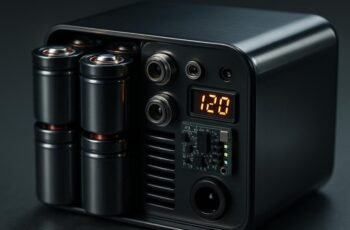
Wireless charging for portable power isn’t just convenient—it changes how we think about endurance and reliability. We explore coil geometry, pad alignment, and device interaction to minimize wear and maximize consistent transfer. Our focus is on efficiency, heat management, and real-world performance, with interoperability and smart power policies guiding behavior. We’ll tackle form factors, smart cases, and modular packs, but the key question remains: how do we ensure repeatable, safe charging across varied use cases?
Key Takeaways
- Align coils and pads within defined lateral and angular tolerances to ensure reliable, repeatable wireless power transfer for portable devices.
- Optimize pad geometry and device orientation to fit common footprints while preserving clearance for cases and adapters.
- Evaluate efficiency, heat, and real-world performance by measuring losses, thermal rise, and impact of misalignment on charge rate.
- Establish interoperability through standardized protocols, centralized policy engines, and adaptive control for mixed standards and regulatory limits.
- Design modular packs and smart cases with clear interfaces, EMI control, and rapid user feedback to minimize latency and enhance charging reliability.
What Wireless Charging Brings to Portable Power
Wireless charging adds convenience and flexibility to portable power by eliminating cables with aligned, inductive power transfer. We, as designers and evaluators, quantify what wireless charging contributes to practical use. It simplifies integration by defining standardized pads, coil geometries, and alignment tolerances that support predictable performance across devices. In portable power applications, the method reduces connector wear, enhances water resistance, and enables seamless charging during operation. We assess energy transfer efficiency, monitoring losses at common distances, and ensure thermal limits remain within safe bounds under typical loads. Reliability metrics focus on repeatable coupling and recovery after misalignment. By embracing wireless charging, portable power gains user-friendly interactions, reduces form-factor constraints, and supports continuous device readiness with minimal management overhead.
How to Align Coils, Pads, and Devices for Reliable Charging
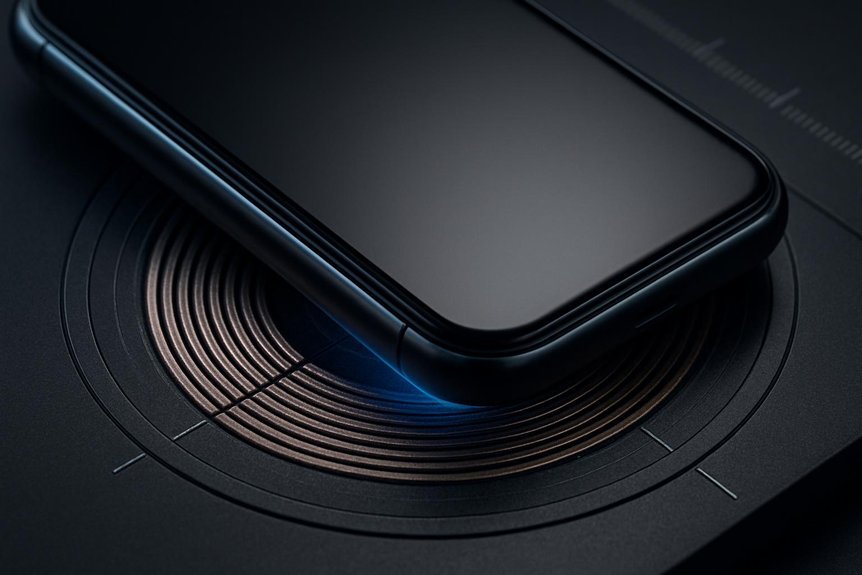
How can we guarantee reliable charging through precise alignment of coils, pads, and devices? We approach this with a methodical workflow. First, define alignment tolerance by specifying acceptable lateral and angular deviations for the pad and device relative to the coil center. Next, assess coil positioning to ensure consistent magnetic flux coupling, using fixed reference marks and calibrated fixtures. Then, optimize pad geometry to fit common device footprints while preserving clearance for adapters and cases. Finally, specify device orientation constraints so that the most efficient coupling occurs in typical usage positions. Document tolerances, measurement methods, and repeatability checks. This disciplined approach minimizes misalignment risk and supports repeatable, dependable charging across a range of portable power configurations.
Efficiency, Heat, and Real-World Charging Performance
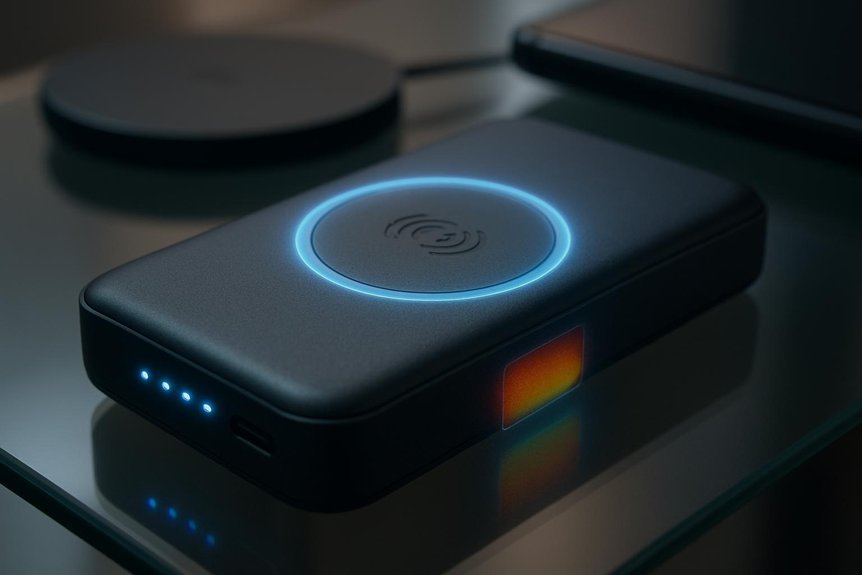
We turn from alignment specifics to how efficiency, heat, and real-world charging performance shape overall system behavior. Our measurements reveal that filamentary losses and coil resistance drive overall input-to-output efficiency, while thermal rise affects control loop stability and safety margins. We quantify heat through temperature delta, duty cycle, and coil cooling capacity, then map these to charge rate targets. Real-world performance varies with placement, misalignment, and load profiles, not just ideal test conditions; non relevant topic, unrelated issues emerge in practice and must be managed by design margins. Adopting a disciplined testing protocol lets us specify acceptable operating envelopes and predict thermal throttling points.
Efficiency and thermal design govern real-world wireless charging performance and safety margins.
- Efficiency metrics under varying alignment
- Thermal behavior and protection strategies
- Real-world charging scenarios and margins
Interoperability and Smart Power Management
What role do interoperability and smart power management play in ensuring seamless wireless charging across devices and environments? We address this by outlining a disciplined framework for compatibility and adaptive control. We catalog interoperability constraints arising from mixed standards, varied coil geometries, and differing regulatory limits, then map them to concrete design decisions. Our approach uses standardized communication protocols to negotiate charging parameters, error signaling, and handshakes that minimize stalls and miscommunications. Smart power management governs energy flow, temperature monitoring, and dynamic duty cycling to preserve efficiency and battery health while meeting user expectations. We implement centralized policy engines that harmonize device capabilities with charger capabilities, enabling predictable behavior under diverse load profiles. The result is robust, cross-device charging that remains safe and efficient.
Design Tactics: Form Factors, Smart Cases, and Modular Packs
Design tactics for form factors, smart cases, and modular packs must align with interoperability goals while preserving user convenience. We outline methods to balance compact form factor ideation with durable housing, ensuring compatibility across modules and chargers. Our approach emphasizes measurable interfaces, standardized connectors, and streamlined assembly for repeatable production quality. We address smart case integration by validating sensor passthrough, accessory awaken/lock states, and thermal pathways, minimizing latency between user action and charge feedback. Modularity is guided by clear slot tolerances, magnetic alignment, and EMI control to sustain reliable charging under motion. – Form factor ideation aligned with cross-device standards
- Smart case integration maintaining tactile and thermal performance
- Modular packs enabling scalable capacity without protocol fragmentation
Frequently Asked Questions
How Do Wireless Charging Standards Affect Durability of Portable Packs?
We’re concerned that wireless charging standards, when paired with durable modular connections, impact durability and reliability. Wireless charging assures compatibility, but we assess mechanical wear, thermal cycling, and misalignment to preserve durability, reliability, and long-term performance.
Can Heat Profiles Vary With Different Device Cases and Environments?
Heat profiles can vary with device cases and environments, we answer as observers. We map heat profiles, consider device cases, environmental impact, moisture outdoors, detailing how cases shield or trap heat, then adjust use accordingly.
What Is the Environmental Impact of Wireless Charging Materials?
We estimate the environmental impact of wireless charging materials by evaluating extraction, manufacturing, usage, and end-of-life phases, noting energy losses and recyclability; overall, wireless charging imposes modest but notable material and waste considerations that we actively mitigate.
How Does Moisture Affect Wireless Charging Performance Outdoors?
Moisture ingress degrades wireless charging outdoors by bridging coils and reducing efficiency; higher outdoor humidity worsens losses and can trigger protection. We assess seals, elevation, and venting to mitigate, ensuring robust performance despite moisture ingress and outdoor humidity.
Are There Long-Term Reliability Concerns With Modular Pack Connections?
We assess that long term reliability hinges on robust modular connections, addressing durability concerns, and ensuring secure pack interfaces. We systematically evaluate wear, corrosion, and alignment to sustain performance, minimizing failure risks and maintaining safe, repeatable charging behavior.
Conclusion
We’ve laid out the blueprint, folks: align coils, banish heat, and pretend there’s no chaos in the real world. In practice, wireless charging for portable power is a meticulous dance of tolerances, feedback loops, and smart policy governance. We’ll keep the pads friendly to cases and modular packs, and our efficiency metrics honest—no magic, just physics in a tuxedo. So yes, we’ll charge on; just don’t trip over the cables we supposedly replaced.