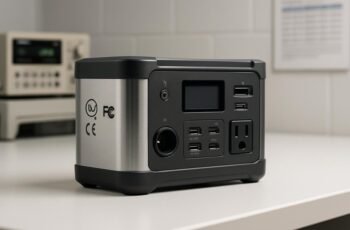
We question the idea that bigger batteries always mean better camping power. We’ll explore how to balance capacity, weight, and durability for real-world trips. If we optimize load, charging, and rugged design, we can stay powered without unnecessary bulk. There’s more to uncover about solar, field charging, and packable setups that keep us mobile and prepared. Let’s examine practical configurations and decisions that fit a range of excursions.
Key Takeaways
- Choose rugged, weather-resistant power packs with USB-C, AC/DC outputs for lighting, charging devices, and small appliances on trips.
- Size battery capacity by listing devices, runtimes, and adding a buffer for growth and cold-weather usage.
- Balance weight and density: prioritize compact, energy-dense packs and efficient charging to maximize days between refuels.
- Pair packs with solar or field charging tuned to load, sun hours, and battery chemistry to sustain daily use.
- Prioritize reliability for critical gear with planned load management, backups, and weather-ready accessories.
What Portable Power Solves on Outdoor Trips
We’ll start by answering a simple question: what portable power solves on outdoor trips? We provide reliable energy when outlets aren’t nearby, enabling essential functions without draining the experience. Our portable power solutions support core needs: lighting, communication, navigation, and small appliances, so you stay safe and comfortable. They cover long duration stays by supplying sustained output, not weekend-only bursts, letting us keep cameras, phones, and radios charged through changing conditions. They’re designed to be windproof and weather-resistant, reducing risk in exposed environments. We optimize for simplicity: plug in devices, monitor runtime, and manage power with intelligent charging. By selecting compact packs and robust batteries, we preserve mobility while guaranteeing steady operation, even when baseload loads rise during extended trips.
How to Size Your Power Needs for the Trail
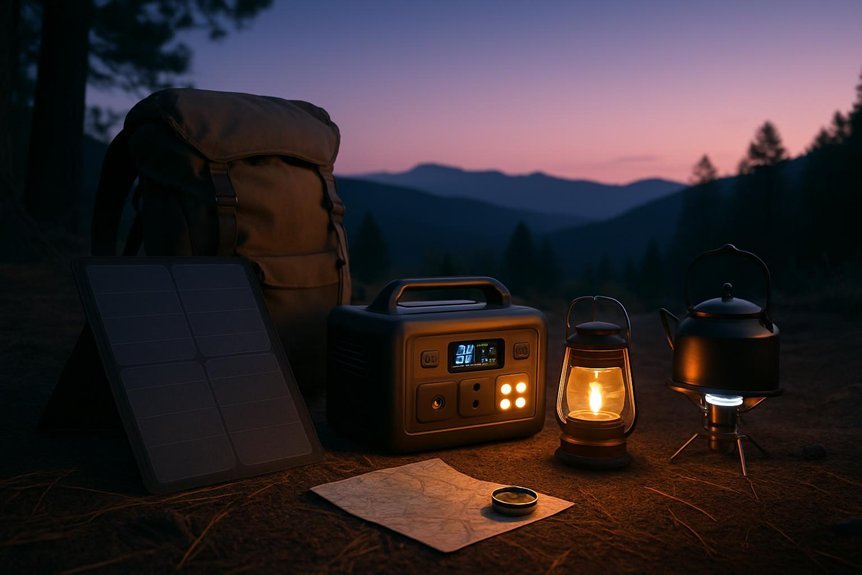
We start by assessing our battery needs, then we measure real power use to avoid surprises on trail days. We’ll outline practical consumption estimates and set realistic targets for daily use, charging, and standby. Finally, we’ll consider growth potential to accommodate extra devices or longer trips.
Assess Your Battery Needs
To size your power needs for the trail, start by listing every device you’ll rely on and how long you’ll use them each day. We’ll estimate total milliamp-hours and convert to amp-hours, then match to a practical battery capacity with an eye toward efficiency. Plan for a small buffer to cover occasional peaks and cold nights. Below is a quick frame to hook you in.
| Device or use | Daily runtime (hours) |
|---|---|
| Phone, GPS, beacon | 6 |
| Lighting, environmental sensors | 4 |
| Outdoor refrigeration, essential gear | 2 |
| Charging for tools, camera | 2 |
We’ll also consider wind powered generators as a supplemental option, and note where outdoor refrigeration shapes daily needs, without overcommitting.
Assess Power Consumption Realistically
Evaluating power consumption realistically means translating those daily runtimes into real-world battery needs. We’ll map your typical activities to a practical energy budget, then size packs accordingly. Begin by listing devices, their wattages, and expected usage windows. Translate that into amp-hours and a margins-based capacity, so you’re not guessing on the trail. Prioritize realistic expectations: some devices spike current briefly; plan for those peaks. We’ll compare two sizing strategies: baseline endurance and growth-ready buffers, choosing the approach that best fits your trips. Focus on compact durability and weight optimization to maximize efficiency without sacrificing reliability. Our aim is a compact, accurate plan that reduces overkill and underestimation, ensuring you’re prepared without carrying excess weight.
Plan For Growth Potential
Wondering how big a power system you’ll actually need as you plan for growth on the trail? We approach sizing with disciplined steps, focusing on how your kit can scale without waste. Start with baseline loads from our Assess Power Consumption Realistically strategy, then project future needs for camping days, extra devices, and seasonal trips. Prioritize modular components that can be added as you expand, avoiding overinvestment in high-capacity gear you won’t use now. Consider portable storage options that stay organized and accessible, simplifying expansion without clutter. Choose equipment with wind resilience so you won’t lose capability in exposed sites. Document each growth milestone and re-evaluate after trips to keep your system lean, efficient, and ready to handle increasing demand.
Battery Packs for Camping: Capacity, Weight, and Run Time
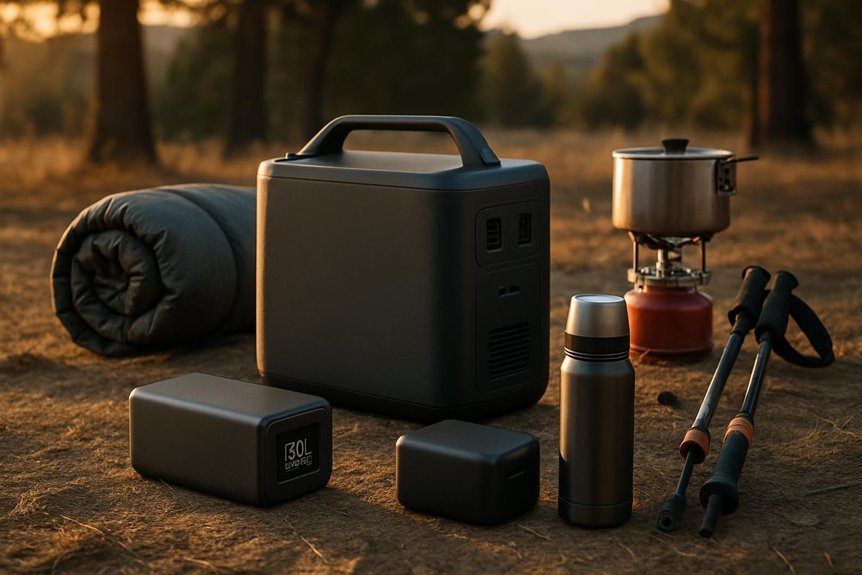
If you’re choosing a battery pack for camping, understanding capacity, weight, and run time helps you balance power needs with portability. We evaluate capacity as the total energy available, linking it to target devices and daily usage. Weight matters for backpack comfort, so we compare energy density and form factor, favoring compact battery designs that fit our packs without sacrifice. Run time translates capacity into practical days of use, guiding decisions on charging frequency and during‑camp needs. We favor tested, rugged durability to survive trips and weather. We prioritize lightweight, reliable performance over flashy specs, ensuring compatibility with USB‑C, AC, or DC outputs as needed. In short, select a compact battery that meets expected load while staying within travel constraints.
Solar Setups for Camping: Panels, Controllers, and Battery Integration
We’re breaking down solar setups by sizing panels to match our load and charging needs, then pairing them with efficient controllers and battery integration that fits our gear. We’ll cover how to size a panel array for typical camping use, choose a controller that suits battery chemistry, and blend panels, controllers, and storage for reliable power. Let’s start with practical guidelines so you can plan a balanced, compact system that keeps essentials ready without excess weight.
Solar Panel Sizing
So how do we size solar panels for camping setups, ensuring we meet daily energy needs without overinvesting in gear? We break sizing into daily use, peak demand, and panel efficiency. We estimate intake in watt-hours, add a buffer, and match it to panel output with thoughtful margins. We select higher solar efficiency panels for compact setups and plan for shade, orientation, and sun hours. Mounting stability matters; secure mounts minimize movement and loss. Below is a mental image of a compact array:
| Day use (Wh) | Panel wattage | Time in sun (h) |
|---|---|---|
| 1500 | 100 W | 5 |
| 600 | 80 W | 7.5 |
| 240 | 40 W | 6 |
This disciplined approach keeps power reliable without waste.
Battery Integration Tactics
Imagine how battery integration shapes reliability: we’ll pair panels with an appropriate charge controller and a capable storage bank to balance daily draw, sun exposure, and system losses. We focus on solid battery chemistry and a stable charging cadence to maintain longevity and performance.
- Select compatible chemistries (lithium or AGM) based on weight, cycle life, and cost.
- Match a controller’s charge profile to your battery chemistry to avoid overcharging or deep discharges.
- Define a charging cadence that aligns with daily sun patterns and appliance usage.
This approach keeps energy available, reduces gut checks during trips, and simplifies maintenance while maximizing stored energy for unpredictable weather and extended stays.
Field Charging Strategies: When to Plug In, When to Go Solar
What’s the right call for field charging—plug in at camp or go solar on the trail? We weigh reliability, weight, and environment to guide you. In general, plug in when you’re at a powered site, booting up devices quickly with minimal risk to gear. When off-grid, go solar with purpose: match solar sizing to your expected load and daylight, then top off during peak sun. We prioritize predictable performance over hype, using a modest inverter load and vented batteries to maintain efficiency. Field charging should be planned around daily patterns: morning top-ups before hikes, afternoon boosts for cameras, evening sessions for planning. Balance convenience and conservation, and carry backup options for cloudy days.
Powering Critical Gear: Phones, Lights, GPS, and Mini-Fridges
Powering critical gear ensures you stay connected, navigable, and safe without draining your battery bank. We prioritize efficiency for phones, lights, GPS, and mini-fridges, weaving endurance optimization into every decision and upholding clear safety protocols. This section covers practical routines and setups you can implement now.
Powering critical gear for reliability, efficiency, and safety on rugged trips.
- Prioritize resource allocation: charge phones first, then GPS and lights; reserve a small constant supply for the mini-fridge.
- Optimize load management: use low-power modes, dimmers, and duty cycling to stretch runtime during extended outings.
- Backup and protection: carry a spare power bank, rugged cables, and a weather-ready case to preserve performance.
With these steps, your critical gear stays reliable, reducing anxiety and enhancing safety on rugged trips.
Choosing Durable, Outdoor-Ready Power Gear
Choosing durable, outdoor-ready power gear means selecting gear that survives the elements while delivering reliable performance when you need it most. We focus on rugged construction, rated IP protection, and proven field performance. Our approach starts with durability testing to verify impact resistance, salt spray tolerance, and vibration durability, ensuring components endure real-world camping conditions. We seek devices with robust housings, reinforced latches, and secure cable management. Waterproof seals are essential to prevent moisture ingress during rain, splashes, and accidental submersion. We assess battery chemistry for temperature stability and cycle life, prioritizing devices that maintain output across cold nights and hot days. Documentation, warranty coverage, and serviceability matter, too, so you can trust gear through multiple trips and seasons.
Packable Power: Balancing Weight, Size, and Reliability
We balance weight, size, and reliability by prioritizing light, dependable power that’s still capable when you need it. We’ll assess compact options that don’t sacrifice performance, and we’ll weigh battery longevity to avoid frequent replacements. Start with the essentials—how light and small it is, how long it lasts on a charge, and how trustworthy the build feels in real-world use.
Lightweight Yet Reliable
Is it possible to balance weight, size, and reliability without sacrificing performance? We answer with a clear yes, focusing on compact durability and lightweight reliability. Our approach blends thoughtful design with proven materials, so we stay nimble without compromising core capability. We aim for portability that doesn’t force tradeoffs.
1) Prioritize energy density without adding bulk.
2) Select rugged housings and protective seals for real-world use.
3) Calibrate electronics for efficiency and dependable endurance.
Our method keeps packs light and capacity solid, ensuring you stay powered on longer trips. You’ll notice a more responsive setup that handles routine loads with minimal fuss, while remaining resilient against vibrations, moisture, and dust. In practice, lightweight reliability means you carry less weight, rely on dependable performance, and enjoy steady power wherever you roam.
Compact Size Considerations
Could compact size compromise power? We explore how compact considerations influence performance, reliability, and usability. We balance form and function by prioritizing core needs: energy density, cooling, and durability. When size shrinks, every gram counts, so we optimize cell chemistry and packaging for real-world use. We translate portability priorities into design choices, selecting modular, scalable configurations that fit backpacks and bivouacs without sacrificing essential features. Our approach favors efficient power delivery, robust connectors, and clear indicators, ensuring predictable behavior under cold, damp, or dusty conditions. We avoid fluff, targeting straightforward assessments and repeatable results. In practice, compact size guides our tradeoffs, guiding users toward gear that remains responsive and dependable while meeting the constraints of remote or minimalist setups. compact considerations support practical, safe camping power.
Battery Longevity Matters
Battery longevity isn’t optional when packability matters; it’s central to reliable power on the trail. We know you value light, compact packs, so we optimize for battery aging awareness and steady performance. We balance weight with durable chemistry, cooling, and input/output efficiency. Preserve capacity by respecting charging cadence and avoiding deep discharges.
- Monitor temperature and usage to guide charging cadence.
- Schedule regular top-ups to minimize capacity fade over trips.
- Prefer balanced-rate charging with compatible devices for steady, predictable performance.
Budget-Friendly Power: Value Wins Without Compromise
Budget-friendly power isn’t about cheap components—it’s about smart choices that keep you powered longer without breaking the bank. We focus on value without sacrificing performance, prioritizing devices and packs that deliver dependable runtimes per dollar. Our approach blends compact efficiency with robust reliability, so you don’t chase upgrades every season. We assess capacity, recharge speed, and protection features, choosing balance points that suit most trips. We favor modular systems and practical cables, avoiding gimmicks that add cost or weight. By favoring proven brands and practical specs, we maintain budget durability—systems that survive weather, dust, and daily use. You gain visibility into where to invest, what to skip, and how to optimize charging etiquette, ensuring reliable power arrives when you need it most.
Real-World Configs for Different Trips
What actually works on the trail? We’ve tested real-world setups that balance weight, reliability, and simplicity. Our goal is clear: give you practical configs you can replicate across trips. Each plan prioritizes efficient charging, durable gear, and ergonomic use of space.
- Weekender trip
- Lightweight inverter, 100W solar, compact battery, and flexible mounting for best camping ergonomics.
- Basecamp style
- 200–300W solar array, high-capacity pack, kajer-style inverter, organized cable management, and easy daylight setup.
- Overnight loop
- Minimal solar, USB-C hub, surge protection, and quick-access power bank for speed and safety.
Remember solar panel cleaning routines and periodic checks preserve output. These setups stay compact, predictable, and adaptable for varying weather and terrain.
Frequently Asked Questions
How Durable Are Power Packs in Freezing Temperatures?
We’re generally cautious: power packs lose efficiency in freezing temps, but durability testing shows solid cold weather performance with proper insulation and prewarming. We recommend battery management checks, and we conduct durability testing to verify reliability.
Can Power Banks Charge From a Bike Dynamo?
Yes, power banks can charge from a bike dynamo when you match charging compatibility. Think of us steering a ship, pedal by pedal, and we’ll reach shore as the dynamo lights our path and charges smoothly.
Do Solar Panels Work Behind Clouds or Shade?
Yes, solar panels work behind clouds, though solar efficiency drops; clouds impact output, shade reduces charging, and we adapt with panel durability, positioning for best sun exposure. We’d explain practical options, monitoring, and recharging strategies for you.
What Is the Best Backup Charging Method for Emergencies?
We’d recommend a reliable backup charging method: a multi-source setup with a USB-C power bank, hand-crank charger, and solar panel for emergencies. This supports emergency preparedness by keeping essential devices powered when outages occur.
How Long Do Batteries Hold a Charge When Stored Unused?
We estimate most batteries hold a charge for about 1–2 years when unused, though lithiums last longer. We’ve seen a 50% capacity drop in 6–12 months if forgotten. Batteries maintenance and storage tips matter, seriously.
Conclusion
We’ve learned that portable power for camping isn’t just gear—it’s peace of mind. We navigate needs, weigh weight against capability, and plan for sun, shade, and surprises. We’ll keep things simple, prioritizing reliability, safety, and adaptability, with smart charging and prudent load management. In short, we balance capacity and practicality, stay ready for growth, and trust steady, field-tested setups. Together, we stay powered, prepared, and pleasantly surprised by what the trail still has to offer.