We map a jobsite power plan as if we’re charting fuel, charge, and torque across a busy day. We’ll weigh batteries, inverters, and generators in a disciplined, efficiency-first approach, linking each choice to task loads, safety, and logistics. Our aim is to cut downtime and keep tools delivering consistent performance, but the best path isn’t obvious at first glance. There’s a method to balance capacity, weight, and cost that invites closer examination.
Key Takeaways
- Portable power solves jobsite mobility, reliability, and ergonomics by delivering accessible energy close to tools and operators.
- Core options—batteries, inverters, and generators—should be mapped to task demands for minimal downtime and stable cycling.
- Cordless vs. corded decisions depend on task duration, RPM needs, tooling ecosystem, and total cost of ownership.
- Battery chemistry choices (NiCd, NiMH, Li-ion, LiFePO4) determine energy density, cycle life, safety, and compatibility with chargers.
- Sizing and planning use load profiles, duty cycles, and ergonomics to design scalable, modular power packs and reduce runtimes.
What Portable Power Solves on a Jobsite
On a jobsite, portable power solves two core problems: mobility and reliability. We approach this topic with a systematic lens, identifying how power access influences workflow, timelines, and safety. First, mobility: portable power reduces trips to fixed outlets, enabling closer tool operation and streamlined task sequencing. Second, reliability: consistent energy supply minimizes downtime, maintains torque and speed stability, and avoids battery-induced delays. We examine how tool ergonomics improve user control when power is readily available, reducing fatigue and awkward postures. We also consider charger ergonomics: accessible, intuitive charging setups shorten prep time and keep crews fueled between shifts. By analyzing these aspects, we establish benchmarks for efficiency, ensuring power design aligns with task demands while preserving tool performance and operator comfort.
Core Power Options: Batteries, Inverters, Generators
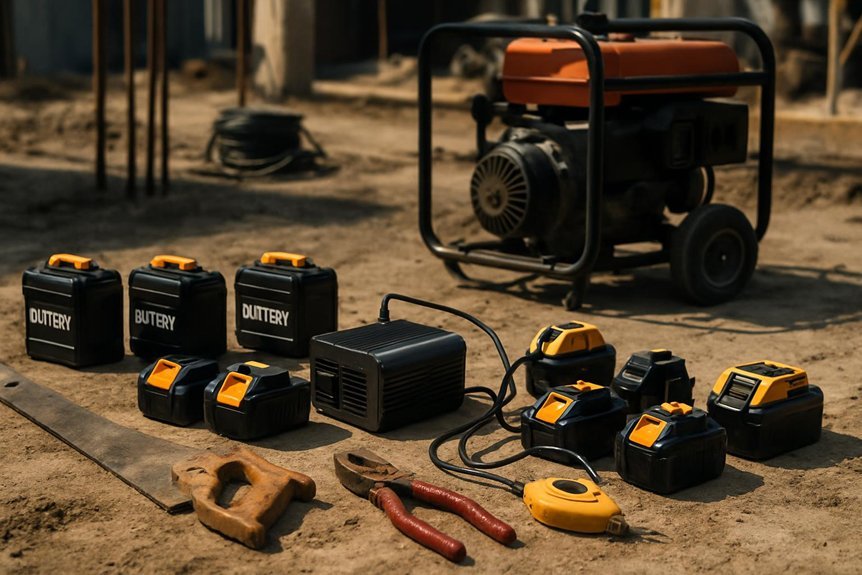
What are the core power options that keep a jobsite moving: batteries, inverters, and generators? We analyze each option’s role, performance, and tradeoffs to guide efficient selection. Batteries provide modular, instant power with predictable discharge profiles; battery chemistry determines energy density, cycle life, and safety. Inverters convert DC to usable AC with measurable inverter efficiency, directly influencing runtime and heat. Generators add peak reliability and high-energy capacity, yet deliver fuel costs, noise, and maintenance factors. Our approach compares footprint, cost-per-use, and duty-cycle suitability for tools and climate. We prioritize systems that minimize downtime and maximize cycling stability. By mapping energy delivery curves, we align each component with tasking, safety, and logistics, ensuring a cohesive, efficient power strategy across on-site conditions.
Cordless vs. Corded Tool Compatibility Explained
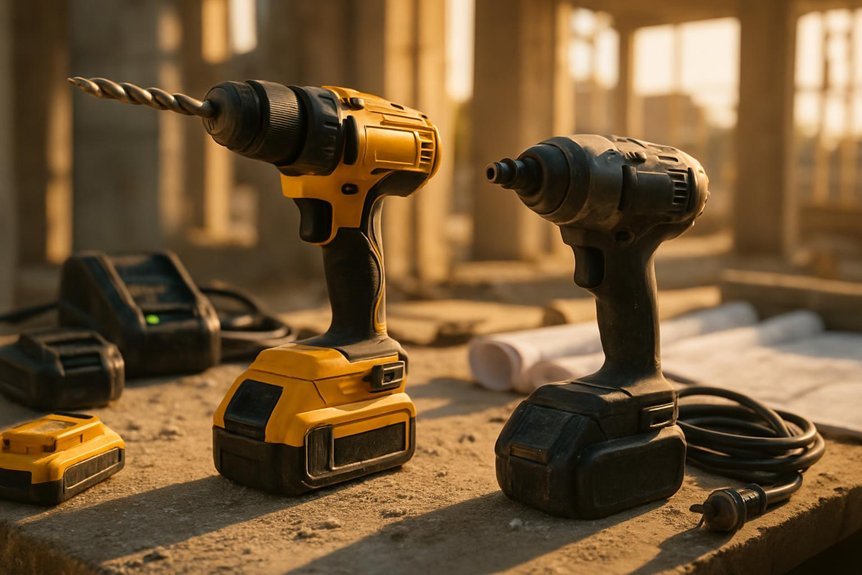
Ever wondered how cordless and corded tools stack up in real-world workflows? We compare compatibility through use-case needs, performance consistency, and system simplicity, emphasizing efficiency and predictability. Our method is analytical: map power delivery, adaptability, and maintenance to job-site realities, then deduce the best fit per task. Key factors include transparent cords for visibility of wear, and motor efficiency as a reliability proxy under load. We prioritize data-driven decisions over hype, recognizing that both formats have trade-offs that influence throughput.
- Identify task duration and required RPM to choose between continuous corded power vs. portable cordless bursts.
- Evaluate accessory ecosystems, tool compatibility, and power adapters for seamless transitions.
- Assess cord management, overheating risks, and thermal response in sustained cuts or drills.
- Measure total cost of ownership, including downtime implications and maintenance.
Battery Chemistry Basics for Construction Tools
We’ll start by outlining the key battery chemistries used in construction tools, how each chemistry influences capacity and runtime, and what that means for tool performance. We’ll tie this to practical considerations: matching tool battery capacities to application demands and managing safety and charging practices. By keeping these fundamentals clear and systematic, we set a foundation for selecting routines and consumables that maximize efficiency and reliability.
Battery Chemistry Basics
Battery chemistry is the backbone of tool performance, so we start with the essentials: what types of cells power our cordless tools, how they store energy, and how that energy translates into runtime and durability.
- We compare common chemistries—NiCd, NiMH, Li-ion, and LiFePO4—focusing on energy density, cycle life, and safety.
- We explain voltage standards and nominal voltages, noting how system voltage relates to performance envelopes across tool categories.
- We examine charge/discharge behavior, temperature sensitivity, and aging effects that impact durability.
- We evaluate implications for maintenance, replacement cycles, and compatibility with chargers and regulators, keeping insights tight and actionable.
Tool Battery Capacities
How much capacity do our tool batteries really deliver, and what does that mean for on-site performance? We analyze capacity as a functional measure, not a label. Our approach links nominal battery capacity to real-world output, factoring current draw, temperature, and duty cycle. We quantify battery capacity by usable energy and project runtime benchmarks under typical tool loads. We assess compatibility considerations across platform ecosystems to minimize waste and optimize interchangeability. Our framework highlights how chemistry, cell design, and pack engineering influence sustained power delivery. We outline efficient charging strategies that preserve capacity over time, without detailing procedures that belong to safety topics. In sum, clear metrics and disciplined evaluation drive smarter tool selection, longer runtimes, and predictable performance for professional applications.
Safety and Charging Practices
What matters most in construction tool safety and charging is understanding the chemistry behind each pack and how it shapes on-site risks and performance. We describe how chemistry informs practice, reduces downtime, and guides decisions about charging cycles, storage, and handling. Our approach is analytical: identify risks, apply controls, verify outcomes, and iterate for efficiency. We emphasize disciplined procedures, consistent inspections, and proper equipment selection to sustain tool safety and reliability.
- Inspect packs for damage, corrosion, and swelling before use.
- Use manufacturer-approved chargers and follow rated charging profiles to minimize heat and wear.
- Store and transport batteries per guidelines to prevent thermal events and extend life.
- Dispose of damaged or end-of-life cells through approved battery disposal channels to protect people and the environment.
Sizing Portable Power for Typical Jobsite Workloads
We start by evaluating typical jobsite load profiles to map when and how power is used, from high-demand tools to intermittent devices. We’ll reference clear battery runtime benchmarks to anchor our sizing decisions and identify margins for peak usage. This systematic approach keeps our power sizing precise, repeatable, and aligned with real-world workloads.
Assess Jobsite Load Profiles
Assessing jobsite load profiles involves quantifying typical power draws from construction tools and equipment to size portable power systems accurately. We take a systematic approach to map demand patterns, focusing on peak periods, steady-state loads, and duty cycles. Our aim is to translate field data into practical sizing decisions that minimize waste and maximize uptime, without overestimating battery capacity or generator output. By identifying the jobsite load distribution, we ensure our power solution matches tool energy demand across common workflows. This disciplined process reduces surprises during critical tasks and informs scalable, modular designs.
- Define baseline tool energy demand by tool type and usage intensity
- Chart on-site load over typical work shifts and contingencies
- Normalize data to identify peak vs. average requirements
- Translate findings into a compact, scalable power pack plan
Battery Runtime Benchmarks
Have you quantified how long a portable power pack must sustain typical jobsite toolloads under real-work conditions? We approach battery runtime benchmarks methodically, grounding estimates in real workloads and measurable metrics. We compare nominal battery capacity, actual delivered energy, and tool ergonomics implications for control, balance, and fatigue. Our benchmarks prioritize repeatability, accounting for duty cycles, peak draws, and rest periods. We quantify runtime with clear thresholds for critical tasks, enabling smarter pack sizing and safer tool operation. This rigor helps us optimize efficiency, reduce waste, and improve ergonomics while maintaining performance.
| Dimension | Metric |
|---|---|
| Battery capacity | Wh delivered |
| Runtime target | minutes per task |
| Peak current | A draw |
| Duty cycle | task/idle ratio |
| Ergonomics impact | user comfort score |
Charging Strategies to Minimize Downtime
How can we keep construction tools ready when the job clock is ticking? We’ll analyze charging strategies that minimize downtime with a clear, data-driven approach. By aligning charging cycles to work patterns, we reduce idle time and extend battery life, while addressing future proofing fleets and environmental impacts.
- Schedule intelligent charging: stagger cycles to match demand, avoiding peak strain on the system.
- Use fast yet controlled charging: leverage higher power when needed, but protect cell health and longevity.
- Centralize charging hubs: consolidate stations to optimize space, monitoring, and maintenance.
- Integrate telemetry: track age, temperature, and usage to refine replacement and charging plans.
Together, these steps drive efficiency, reliability, and sustainable productivity.
Durability and Safety Features to Prioritize
We’ll examine how a durable enclosure reduces impact and exposure to dust, moisture, and bumps, while maintaining accessibility for maintenance. We’ll pair robust overload and short-circuit safeguards with clear testing criteria to prevent failures before they occur. We’ll also optimize temperature and ventilation controls to sustain performance without sacrificing safety or efficiency.
Durable Enclosure Design
- Durable enclosure materials chosen for impact, dust, and moisture resistance, with predictable aging behavior.
- Rugged latches and secure closures that resist accidental opening while enabling quick access.
- Hermetic or splash-proof seals that sustain performance under harsh conditions without hindering serviceability.
- Shielded control interfaces and vibration-tolerant mountings that preserve functionality and reduce failure modes.
Overload and Short-Circuit Safeguards
Building on the rugged enclosure design, we turn to overload and short-circuit safeguards to keep construction tools reliable in harsh environments. We approach safety analytically, mapping fault paths and response times to minimize downtime. First, overload protection detects excessive current quickly, triggers coordinated disconnection, and prevents insulation damage. We define thresholds with margin to account for startup surges while avoiding nuisance trips. Next, short circuit isolation isolates faulted circuits without impacting healthy loads, preserving overall system integrity. Our design emphasizes rapid fault discernment, predictable behavior, and verifiable performance. We document test procedures, verify coordination with breakers and fuses, and ensure recovery is automatic after fault clearance. This disciplined approach sustains tool uptime, reduces maintenance costs, and reinforces operator confidence in demanding sites.
Temperature and Ventilation Controls
Could effective temperature and ventilation management be the deciding factor in tool longevity on rugged sites? We believe so, and we’ll explain how temperature regulation and airflow design influence durability and safety. Our approach is systematic: assess heat generation, cooling paths, and enclosure integrity to prevent thermal failure and user hazards. By aligning components with realistic duty cycles, we minimize wear, downtime, and fire risk. Effective ventilation reduces dust buildup that impairs cooling and shortens motor life. We prioritize predictable performance under varied conditions, enabling safer tool operation and maintenance planning. Temperature and airflow strategies should be integral to design reviews and field testing, not afterthoughts.
- Assess heat sources and peak loads
- Optimize airflow channels and vents
- Validate with real-world duty cycles
- Monitor temperatures continuously
Kit Recommendations by Use Case: Framing, Finishing, and Lighting
In framing, finishing, and lighting, we tailor kit recommendations to the distinct demands of each task, focusing on efficiency, reliability, and tool compatibility. Our approach is analytical: we map power needs to workflow, minimize setup time, and maximize runtime. For framing efficiency, we prioritize compact, high-torque tools with fast-charging batteries and durable carriers. For finishing ergonomics, we balance weight, grip comfort, and vibration control to reduce fatigue over long sessions. For lighting, we select compact, bright, cordless units with stable color rendering.
| Use Case | Core Tool Type | Battery Strategy |
|---|---|---|
| Framing | Drill/Impact | High-amp, rapid swap |
| Finishing | Sander/Router | Lightweight, low-vibration |
| Lighting | Portable LED | Long runtime, quick-charge |
Total Cost of Ownership: Upfront, Maintenance, and Lifecycle
We’ll extend our framing, finishing, and lighting kit approach to cost considerations by evaluating total ownership rather than just upfront price. We analyze total cost of ownership by balancing upfront investment with maintenance needs and lifecycle planning, ensuring decisions serve long-term reliability and productivity. Our method emphasizes data-driven comparisons, predictable downtimes, and return on investment across crews and sites. By foregrounding ownership costs, we reveal how battery life, warranty, and part availability shape true value.
- upfront vs ongoing costs
- maintenance intervals and spare parts
- battery lifecycle and replacement timing
- total lifecycle planning and asset utilization
Planning for Future Expansion on a Growing Site
As projects scale, planning for future expansion on a growing site becomes a strategic priority rather than an afterthought. We approach site expansion with a methodical framework, forecasting needs based on current load, peak demand, and anticipated tool diversity. By aligning power scaling with workflow milestones, we prevent bottlenecks and minimize idle equipment. Our process emphasizes modularity: scalable power sources, adaptable charging layouts, and expandable distribution without compromising safety or efficiency. We quantify demand with duty cycles, storage capacity, and return on investment, then map these to phased implementations that avoid overprovisioning. Risk is managed through redundancy and clear upgrade paths. We document every assumption, review performance metrics, and iterate plans as site conditions evolve. This disciplined planning sustains productivity and ensures resilient, long-term power readiness for ongoing site expansion.
Frequently Asked Questions
How Long Can a Single Charge Run Typical Construction Tools?
We can answer: typical tool run times vary, but with efficient battery usage we estimate 1–4 hours per charge, depending on tool, load, and efficiency. We analyze battery efficiency and run time estimates to optimize performance.
Which Power Source Is Safest for Wet or Dusty Sites?
We’ve tested and conclude: the safest power source on wet or dusty sites is a sealed, intrinsically safe system with dust resistance and silent safety features. We recommend rigorously evaluating certifications, isolation, and maintenance to maximize efficiency.
Do Battery Warranties Cover On-Site Abuse or Misuse?
We can’t rely on warranty coverage for on-site misuse; batteries typically void coverage if damage results from improper use. We analyze policies systematically, urging readers to document practices and follow manufacturer guidelines to minimize liability and protect warranty coverage.
Can Hybrid Systems Reduce Total Maintenance Costs Effectively?
We’ll acknowledge the irony: yes, hybrid systems can reduce maintenance tradeoffs, boosting cost effectiveness. We analyze battery lifecycle impacts, optimize charging, and monitor wear; efficiency drives decisions, delivering clearer maintenance tradeoffs for a smarter, lower-cost solution.
What Is the Real-World Downtime Impact of Charging While Working?
Downtime varies by system, but we quantify it with downtime math: charging during shifts adds measurable idle minutes. We optimize charging scheduling to minimize disruption, spreading loads, aligning with tool cycles, and preserving productivity while reducing maintenance overhead.
Conclusion
We’ve mapped a clear path: batteries give instant, modular power; inverters deliver efficient DC-to-AC conversion; generators cover peak needs with fuel and noise trade-offs. We’ve weighed cordless against corded compatibility, chemistry basics, and workload sizing. We’ve prioritized durability, safety, and lifecycle costs, then matched kits to framing, finishing, and lighting. We’ve planned for expansion, scheduling charging, telemetry, and cooling. We’ve built a cohesive strategy that minimizes downtime, maximizes torque and speed, and keeps crews productive.