Imagine the steady hum of a well-regulated power supply contrasted sharply with the sudden, jagged spike of a lightning strike. This visual captures the core of our discussion: the differences between surge and continuous power. Understanding these distinctions is essential for safeguarding equipment and optimizing system resilience. As we explore the comparison chart, you’ll see how each type impacts performance and protection strategies, prompting questions about which approach best suits your specific needs.
Key Takeaways
- Surge power provides rapid, high-intensity bursts for transient events, while continuous power supplies steady, regulated energy over time.
- Surge patterns appear as peaks; continuous power is represented as a flat, stable line in charts.
- Surge protection devices are cost-effective but need frequent replacement; continuous systems are more expensive but offer lasting regulation.
- Surge power is essential during startup and transient loads; continuous power supports long-term device stability.
- Visual charts help compare energy capacity, efficiency, and stability by using distinct color coding and accurate scaling.
What Are Surge Power and Continuous Power? An Overview
Surge power and continuous power are essential metrics that define an appliance or device’s electrical performance capabilities. Surge power refers to the maximum power a device can handle momentarily, often necessary during startup or transient conditions, which is critical for devices influenced by renewable energy sources where fluctuations are common. Continuous power indicates the consistent power a device can sustain without damage, directly impacting overall power efficiency. Understanding these metrics helps us evaluate how well equipment manages electrical loads, especially in renewable energy systems where variability in power supply exists. Precise knowledge of surge versus continuous power ensures peak performance, reduces risk of failure, and enhances power efficiency. By analyzing these parameters, we can select appliances suited to fluctuating power conditions typical in sustainable energy applications.
Key Differences Between Surge and Continuous Power Explained
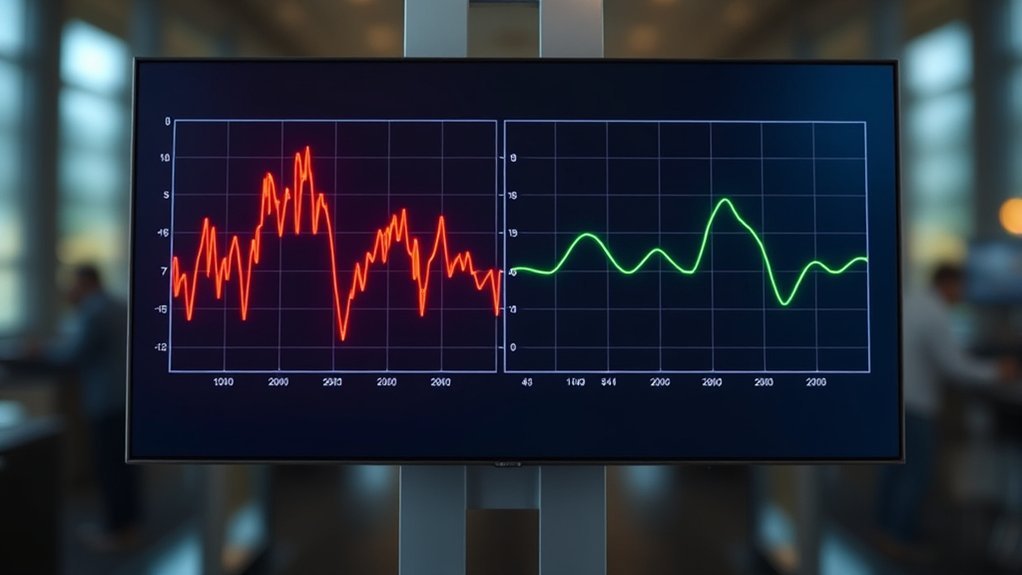
Understanding the key differences between surge and continuous power requires examining how each delivers energy, their ideal applications, and their associated costs. Surge power provides short bursts of high energy, making it suitable for initial device startup, while continuous power offers a steady supply for ongoing operation. Analyzing these distinctions helps determine the most efficient and cost-effective choice for specific electrical needs.
Power Delivery Method
Have you ever wondered how power delivery differs when managing surges versus continuous loads? Surge power delivery is characterized by rapid, high-intensity bursts that require immediate response, often challenging power stability and voltage regulation. In contrast, continuous power maintains a steady, regulated flow, prioritizing consistent voltage and minimal fluctuations.
| Power Delivery Aspect | Surge Power | Continuous Power |
|---|---|---|
| Power Stability | Fluctuates sharply | Maintains steady |
| Voltage Regulation | Less controlled | Precise control |
| Response Time | Instantaneous | Ongoing |
| Load Handling | Short bursts | Extended periods |
| Impact on Equipment | High stress | Minimal stress |
Understanding these differences helps optimize system design for reliability and efficiency.
Usage Suitability
While both surge and continuous power serve distinct functions within electrical systems, their suitability depends heavily on the specific application and operational demands. Surge power is ideal for protecting sensitive equipment from sudden voltage spikes, ensuring voltage regulation during transient events. It’s particularly valuable in environments prone to electrical surges, where power stability is compromised by external factors. Conversely, continuous power provides a stable, steady current essential for devices requiring consistent voltage regulation over extended periods. This ongoing supply is critical for equipment that cannot tolerate fluctuations, ensuring reliable operation and preventing damage caused by voltage drops or surges. Essentially, surge power caters to short-term protection, while continuous power guarantees long-term power stability aligned with specific operational needs.
Cost and Efficiency
When comparing surge and continuous power systems, cost and effectiveness emerge as critical factors influencing their practical deployment. Surge protectors typically have a lower initial cost but may require frequent replacements, affecting long-term expenses. Continuous power systems, though more expensive upfront, provide superior voltage regulation and power stability, reducing downtime and maintenance costs. The effectiveness of continuous systems ensures consistent voltage levels, minimizing energy loss and safeguarding sensitive devices. Conversely, surge systems excel at short-term protection but lack sustained voltage regulation, limiting their overall efficiency.
| Aspect | Surge Power | Continuous Power | Key Consideration |
|---|---|---|---|
| Cost | Lower initial, potential replacement | Higher initial, durable | Long-term savings vs. upfront costs |
| Voltage Regulation | Limited | Superior | Ensures stable power delivery |
| Power Stability | Short bursts | Consistent | Critical for sensitive equipment |
| Efficiency | Moderate | High | Reduces energy loss |
| Maintenance | Frequent | Less frequent | Long-term operational costs |
Understanding Surge Power: How Short Spikes Can Damage Your Equipment
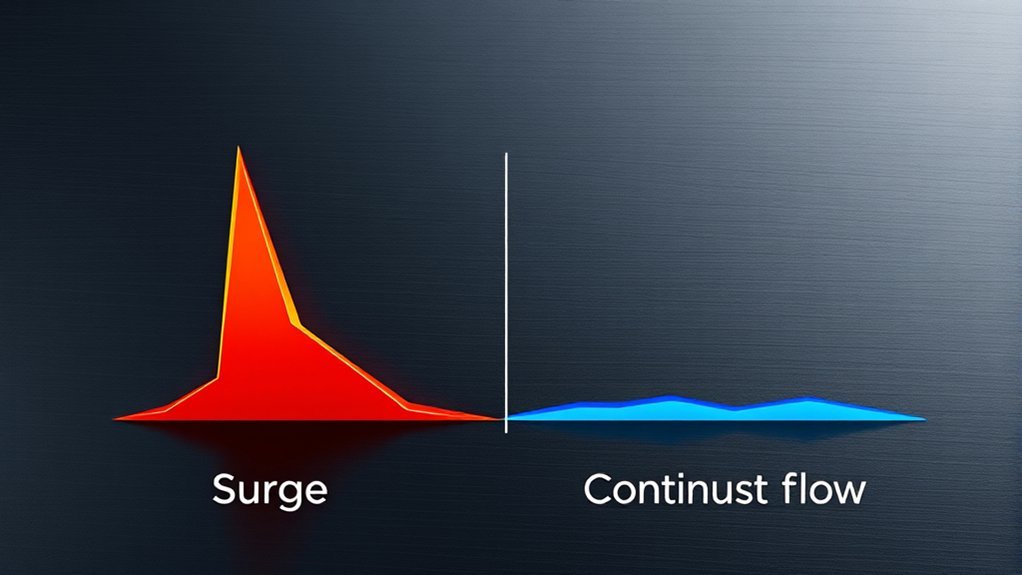
Understanding surge power is essential because even brief spikes in electrical voltage can cause significant damage to sensitive equipment. Voltage fluctuations, though often imperceptible, can create short surges that compromise device integrity. These spikes, often lasting milliseconds, can overload circuits, degrade internal components, and shorten equipment lifespan. Power stability is vital for safeguarding electronics; without it, equipment endures stress during sudden voltage increases. Surge power isn’t just about momentary discomfort—it can lead to cumulative damage, increasing the risk of failure over time. Recognizing how these short spikes occur and their potential effects underscores the importance of protective measures. Ensuring stable power flow minimizes the risk of costly repairs, data loss, or hardware replacement caused by unpredictable surges.
What Is Continuous Power and Why It Matters for Device Longevity
Continuous power refers to a stable and consistent electrical supply delivered to devices over an extended period, without fluctuations or interruptions. This stability is essential for maintaining ideal battery capacity and ensuring power efficiency. When devices receive uninterrupted power, their batteries operate within designed parameters, reducing stress and prolonging lifespan.
Continuous power ensures stable device operation, preserving battery health and maximizing efficiency over time.
We can understand its importance through these key points:
- Battery Capacity Preservation: Steady power prevents overworking batteries, minimizing degradation over time.
- Enhanced Power Efficiency: Consistent power flow reduces energy waste, optimizing device performance.
- Device Longevity: Reliable, continuous power minimizes wear and tear, extending operational life.
Visualizing the Comparison: The Surge vs Continuous Power Chart
When visualizing the surge versus continuous power chart, we focus on how power delivery patterns differ and their impact on device performance. Clear visual representation is essential to accurately interpret these patterns and distinguish between rapid spikes and steady output. Understanding these differences helps clarify usage scenarios, guiding ideal device protection and efficiency strategies.
Power Delivery Patterns
Visualizing power delivery patterns reveals distinct differences between surge and continuous power modes, enabling us to compare their effects with clarity. In the context of renewable energy integration into the power grid, understanding these patterns is essential.
- Surge power delivers high-intensity bursts, suitable for short-term demands, but can strain infrastructure if frequent.
- Continuous power maintains a steady output, promoting stability in the power grid, especially when managing variable renewable sources.
- The pattern impacts energy efficiency, with surge modes risking overloads, whereas continuous modes optimize resource utilization.
Analyzing these delivery patterns helps us assess how different power modes support renewable energy systems and influence grid reliability, making this comparison critical for optimizing energy management strategies.
Visual Representation Clarity
Creating an effective visual comparison between surge and continuous power modes requires clear and precise representation. To accurately convey differences, the chart must clearly delineate energy storage capacities and power efficiency metrics. A well-designed graph uses distinct color coding and labeled axes to distinguish peak surge levels from steady continuous output. This clarity helps viewers interpret how energy storage impacts each mode’s performance, revealing how surge power maximizes immediate energy release while continuous mode emphasizes sustained efficiency. Precise scaling guarantees that both parameters are comparable without distortion. Ultimately, an effective visual emphasizes the relationship between energy storage and power efficiency, enabling readers to analyze the trade-offs and benefits of each mode with confidence and without ambiguity.
Usage Scenario Differences
How do surge and continuous power modes differ in practical applications? Surge power is vital during initial device startup, where short bursts of high energy are needed, such as during battery backup activation or startup of renewable energy systems. Continuous power provides a steady, reliable flow essential for ongoing operations.
In usage scenarios:
- Battery backup systems rely on surge power for device startup during outages, then switch to continuous power for stable operation.
- Renewable energy setups require continuous power for consistent energy supply, while surge power handles transient loads like inverter startup.
- Sensitive electronics depend on continuous power for clarity and safety, with surge power only needed during initial power-up.
Understanding these differences guarantees ideal system design and prevents equipment damage.
Common Use Cases for Surge Protection Devices
Surge protection devices are essential in safeguarding sensitive electronic equipment from voltage spikes, particularly in environments where power fluctuations are frequent or unpredictable. They are vital in renewable energy systems, where variability can cause sudden surges, and in the broader power grid, which is susceptible to transient voltage events. These devices help prevent equipment damage and data loss during unexpected spikes caused by lightning strikes, switching operations, or grid instability. In renewable energy installations, surge protectors mitigate voltage fluctuations from wind, solar, or other sources, ensuring consistent operation. On the power grid, they serve as a first line of defense, maintaining stability and protecting infrastructure. Their strategic deployment reduces maintenance costs and prolongs equipment lifespan, making surge protection integral to reliable electrical system management.
When to Rely on Continuous Power Management Strategies
When consistent power supply is critical, relying on continuous power management strategies guarantees uninterrupted operation and stability. Sensitive equipment that cannot tolerate fluctuations benefits from these systems, which are designed to maintain a steady voltage level. Recognizing these specific needs helps determine when continuous management is the appropriate choice over surge protection alone.
Consistent Power Supply Needs
Determining the appropriate timing for relying on continuous power management strategies hinges on understanding the stability of your power supply requirements. When voltage stability is a concern, or when optimizing power efficiency is critical, continuous power solutions become essential.
Consider these factors:
- Voltage Stability: Fluctuations can disrupt operations, making consistent power necessary.
- Power Efficiency: In systems demanding high efficiency, continuous management minimizes energy losses.
- Operational Consistency: Processes requiring uninterrupted operation benefit from steady power, avoiding potential downtime or damage.
Sensitive Equipment Compatibility
Are your critical devices susceptible to power fluctuations that could cause malfunction or damage? When voltage fluctuation impacts power quality, continuous power management strategies become essential. Sensitive equipment like medical devices, servers, or research instruments require stable, clean power to operate reliably. Surge protection alone may not suffice, as it doesn’t address sustained voltage irregularities.
| Equipment Type | Voltage Fluctuation Tolerance | Recommended Strategy |
|---|---|---|
| Medical Devices | Very Low | Continuous Power Management |
| Data Servers | Moderate | Continuous Power Management |
| Laboratory Instruments | Very Low | Continuous Power Management |
| Audio/Visual Equipment | Low to Moderate | Surge Protection + UPS |
| Industrial Control Systems | Very Low | Continuous Power Management |
For these devices, relying on continuous power management strategies ensures ideal power quality and minimizes risks associated with voltage fluctuation.
Risks of Ignoring Surge and Continuous Power Differences
Neglecting to take into account the differences between surge and continuous power can lead to severe equipment failures and data loss. In a renewable energy-powered system connected to the power grid, overlooked power fluctuations may cause irreversible damage. Specifically:
Ignoring surge and continuous power differences risks equipment damage, data loss, and system downtime in renewable energy systems.
- Equipment Damage: Surge events can degrade sensitive components, especially when renewable energy sources introduce variable inputs, risking costly repairs.
- Data Corruption: Unprotected continuous power fluctuations may corrupt critical data, undermining system reliability.
- Operational Downtime: Ignoring these differences increases the likelihood of system shutdowns, compromising productivity and safety due to unpredictable power quality issues.
Understanding these risks emphasizes the importance of tailored protection strategies, ensuring stable operation within complex power environments like renewable energy integrations.
Choosing the Right Protective Devices for Your Needs
Selecting the appropriate protective devices is essential to safeguard equipment and data from power fluctuations. Proper choices guarantee voltage regulation and maintain power stability, preventing damage and downtime. For critical environments, surge protectors guard against transient voltage spikes, while uninterruptible power supplies (UPS) provide continuous power and voltage regulation during outages. We recommend evaluating device specifications carefully:
| Device Type | Function | Ideal Use Case |
|---|---|---|
| Surge Protectors | Block transient voltage spikes | Protecting sensitive electronics |
| UPS Systems | Maintain power stability | Data centers, medical facilities |
| Voltage Regulators | Ensure consistent voltage output | Industrial machinery, labs |
Choosing the right combination depends on your load requirements and risk assessment, emphasizing tailored protection for peak power stability.
Practical Tips for Managing Surge and Continuous Power at Home and Business
Effective management of power fluctuations requires a strategic approach that combines both protective devices and informed practices. For homes and businesses integrating solar energy, it’s crucial to optimize power stability by employing reliable surge protectors alongside continuous power solutions. Battery backup systems are essential for maintaining uninterrupted operation during outages or surges, especially when harnessing renewable energy sources.
To ensure effective management:
- Regularly inspect and upgrade surge protection devices to handle increased load demands and protect sensitive solar components.
- Install a well-designed battery backup system to provide seamless power during interruptions, ensuring continuity for critical systems.
- Monitor power quality consistently, identifying potential fluctuations early and adjusting your setup to accommodate surges and continuous power needs efficiently.
Frequently Asked Questions
How Do Surge and Continuous Power Affect Electronic Device Warranties?
Surge and continuous power impact warranties by emphasizing power stability’s role in device durability. We advise users that consistent, stable power reduces risks, potentially preserving warranty validity, whereas power fluctuations may void warranties due to damage caused by instability.
Can a Device Handle Both Surge and Continuous Power Simultaneously?
Absolutely, a device can handle both surge and continuous power simultaneously, but only if it’s designed with robust device compatibility and resilience to power fluctuation. Precision in specifications guarantees ideal protection against extreme electrical variations.
What Are the Long-Term Costs of Ignoring Surge Protection?
Ignoring surge protection compromises electrical durability and power stability, leading to increased equipment failures, costly repairs, and potential data loss over time. Proactively safeguarding devices preserves long-term operational integrity and minimizes expensive, preventable damage.
Are There Specific Industries More Vulnerable to Surge Power Damage?
Think of industries like manufacturing or data centers as sitting ducks for surge susceptibility, due to sensitive equipment and high power demands. These sectors face heightened vulnerabilities, requiring targeted protections to mitigate industry-specific vulnerabilities and prevent costly damage.
How Do Temperature and Humidity Impact Surge and Continuous Power Levels?
Temperature fluctuations can cause equipment to expand or contract, impacting surge and continuous power levels, while humidity effects promote corrosion and short circuits, making systems more vulnerable to power damage under extreme environmental conditions.
Conclusion
Understanding the distinction between surge and continuous power is essential for safeguarding our equipment and ensuring operational efficiency. Did you know that power surges can cause up to $10 billion in damages annually? By analyzing their characteristics with tools like the comparison chart, we can make informed decisions on protective strategies. Prioritizing proper management of both power types minimizes risks, extends device longevity, and optimizes system resilience—making our investments more reliable and cost-effective over time.