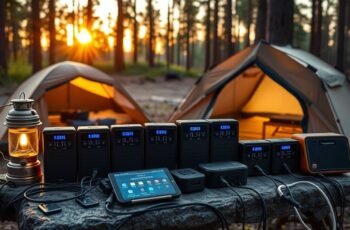
We recognize the importance of reliable backup power, safety, and convenience. We consider capacity, versatility, and recharging options when selecting the best units. We seek solutions that balance performance and portability for different needs. But with so many options available, finding the right one can be complex. That’s why exploring the top power stations can help you make an informed choice—so you stay prepared when it matters most.
Key Takeaways
- Prioritize units with high capacity (1000Wh+) and surge power support for essential home appliances during outages.
- Choose power stations with LiFePO4 batteries offering over 4000 cycles for long-term reliability.
- Opt for models with multiple charging options, including fast AC, solar, and car recharge for flexibility.
- Select units with diverse ports (AC, USB-C, DC) to power various household devices simultaneously.
- Ensure safety features like BMS, overload protection, and certifications for secure, dependable home backup.
AFERIY P210 Portable Power Station with Solar Charging


The AFERIY P210 Portable Power Station with Solar Charging is an excellent choice for anyone seeking a reliable home backup, especially during power outages. It features a 2400W inverter with a 4800W surge, providing clean, stable power for sensitive devices. Its 2048Wh LiFePO4 battery offers over 3500 cycles and a 10-year lifespan. With 16 versatile ports—including AC, USB, Type-C, and DC outlets—it handles multiple devices simultaneously. Its rapid internal AC charging and 500W solar input guarantee quick, eco-friendly recharging. Compact yet durable, it’s perfect for home backup, camping, or off-grid use, backed by a strong warranty and reliable customer support.
Best For: Homeowners, campers, and outdoor enthusiasts seeking a reliable, versatile, and eco-friendly portable power solution for backup, off-grid, or outdoor use.
Pros:
- High-capacity 2048Wh LiFePO4 battery with over 3500 charge cycles for long-term durability
- Multiple charging options including rapid AC charging and 500W solar input, supporting eco-friendly recharging
- Quiet, pure sine wave operation ensures safe use with sensitive electronics and minimal noise
Cons:
- Heavy weight of approximately 54 lbs may reduce portability for some users
- Large dimensions could be less convenient for tight storage spaces
- Higher initial cost compared to smaller or less feature-rich portable power stations
Jackery Explorer 1000v2 Portable Solar Power Station

If you’re seeking a portable power station with fast charging and reliable performance, the Jackery Explorer 1000v2 is an excellent choice. It offers a robust 1,500W AC output with a surge peak of 3,000W, powered by a 1,070Wh LiFePO4 battery that retains over 70% capacity after 4,000 cycles. Weighing just 23.8 lbs with a foldable handle, it’s perfect for camping, road trips, or emergencies. It features multiple ports, including USB-C PD 100W fast charging, and can be quickly charged in an hour. Its durable build and smart app control make it a versatile, dependable power source for various off-grid needs.
Best For: outdoor enthusiasts, travelers, and emergency preparedness individuals seeking a portable, reliable power solution with fast charging capabilities.
Pros:
- Rapid 1-hour full charge with emergency charging via dedicated app
- High power output (1,500W continuous, 3,000W surge) suitable for various appliances
- Long-lasting LiFePO4 battery retaining over 70% capacity after 4,000 cycles
Cons:
- Solar panels not included, requiring additional purchase for solar charging
- Slightly higher price point compared to basic portable power stations
- App functionality may require account setup and occasional updates
DaranEner 56000mAh Portable Power Station with AC Outlets

Looking for a portable power station that can keep your essential devices running during outages or outdoor adventures? The DaranEner 56000mAh Portable Power Station offers 179.2Wh capacity with a compact design, weighing around 6 pounds. It features 7 ports, including AC outlets, USB-C, and quick-charge USB-A, supporting devices like laptops, phones, and small appliances under 300W. It charges rapidly—100% in just 1.5 hours via a home outlet—and supports solar or car charging. Built with LiFePO4 batteries, it boasts 12 safety features and over 3,500 cycles for durability. Its versatility makes it perfect for emergencies, camping, or backup power at home.
Best For: outdoor enthusiasts, emergency preparedness, and small-scale power needs who require a portable, reliable, and fast-charging power station.
Pros:
- Rapid charging capability: 100% in just 1.5 hours via home outlet.
- Multiple versatile ports including AC, USB-C, and quick-charge USB-A for various devices.
- Durable LiFePO4 battery with over 3,500 cycles and multiple safety features ensuring longevity and safety.
Cons:
- Slightly heavy at around 6 pounds, which may be a consideration for ultra-light portability.
- Performance on high-load devices may vary, potentially limiting use for larger appliances.
- Limited capacity for larger power needs beyond 300W, not suitable for heavy-duty equipment.
AFERIY 3840Wh Portable Power Station with Outlets

For those seeking long-lasting, high-capacity backup power, the AFERIY 3840Wh Portable Power Station stands out with its expandable battery and multiple outlets. It features a 3600W LiFePO4 battery that can be expanded from 3.8kWh to 11.5kWh using extra batteries, making it suitable for long-term use and high-power appliances. With five AC outlets, USB ports, DC, and a car socket, it covers diverse power needs. It charges quickly—0 to 100% in 2.5 hours—and supports solar input, although panels are sold separately. Built with safety in mind, it offers a 10-year battery lifespan and a 7-year warranty for reliable, long-term performance.
Best For: individuals or families seeking a reliable, high-capacity portable power solution for home backup, outdoor adventures, or long-term off-grid use.
Pros:
- Large expandable capacity up to 11.5kWh with additional batteries, suitable for high-power appliances and extended use.
- Fast charging capability from 0 to 100% in just 2.5 hours via AC, minimizing downtime.
- Multiple output ports, including AC, USB, DC, and car socket, offering versatile power options for various devices.
Cons:
- Heavy weight at over 104 pounds, which may affect portability and handling.
- Display/readability issues reported by some users, impacting ease of monitor management.
- Solar panels are sold separately, adding extra cost for those looking to utilize solar charging.
UDPOWER S1200 Solar Generator Kit with 120W Panel

The UDPOWER S1200 Solar Generator Kit is ideal for those seeking reliable home backup during power outages. It features a 1190Wh LiFePO4 battery, capable of running essential appliances like refrigerators and power tools with a peak of 1800W. With 14 ports—including AC outlets, USB-C, USB-A, and car DC—it supports multiple devices simultaneously. The included 120W foldable solar panel, waterproof and weather-resistant, makes outdoor charging efficient. Compact and lightweight at around 26 pounds, it offers fast dual charging, smart energy management, and a digital display for monitoring. Perfect for home, camping, RV, or emergency use, it combines versatility and durability.
Best For: individuals seeking a reliable, portable power solution for home backup, outdoor adventures, or off-grid living.
Pros:
- High-capacity 1190Wh LiFePO4 battery with over 4,000 charge cycles for long-term durability
- Multiple output options (AC, USB, car port) support various devices simultaneously
- Weather-resistant and foldable solar panel with IP65 rating for efficient outdoor charging
Cons:
- Relatively heavy at around 26 pounds, which may affect portability for some users
- Solar panel shipped separately, requiring additional coordination for setup
- Limited to 120W solar input, which may result in longer charging times in low sunlight conditions
Jackery HomePower 3600+ Portable Solar Generator
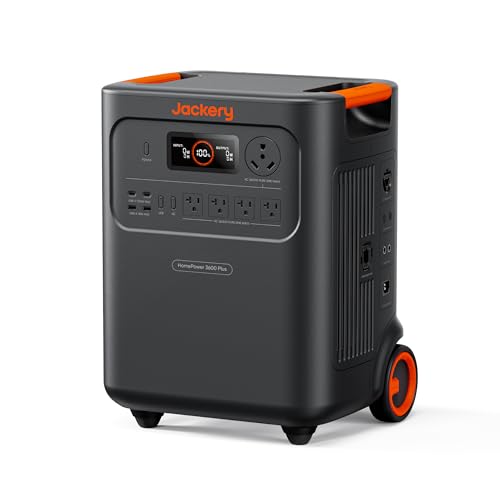
The Jackery HomePower 3600+ Portable Solar Generator is ideal for households seeking reliable, high-capacity backup power. With a 3,584Wh capacity and 3600W AC output (7200W parallel), it supports essential appliances for over two weeks for a family of three. Its durable, high-temp ceramic battery cells guarantee safety and longevity, with a lifespan of 6,000 cycles—lasting up to 10 years. Weighing just over 77 pounds and featuring a luggage-style design with wheels, it’s easy to move. Four charging options, including solar in four hours, make recharging quick and efficient, providing clean, quiet energy whenever you need it.
Best For: households and outdoor enthusiasts seeking a reliable, high-capacity portable power solution for backup or off-grid use.
Pros:
- High capacity of 3,584Wh and 3600W AC output supports essential appliances for extended periods
- Fast recharge options, including solar in just 4 hours, ensuring quick and clean energy replenishment
- Durable high-temp ceramic battery cells with a lifespan of up to 10 years and 6,000 cycles
Cons:
- Relatively heavy at over 77 pounds, which might impact portability for some users
- Higher price point compared to smaller or less powerful portable generators
- Limited to 4 charging methods, which may not cover all specific charging needs in some scenarios
MARBERO 88Wh Portable Solar Power Station with AC

Compact and lightweight, the MARBERO 88Wh Portable Solar Power Station is ideal for those seeking reliable backup power on the go. Weighing just about 2.29 pounds, it’s easy to carry with its ergonomic handle. It features 8 ports—including AC, DC, USB, and USB-C PD—to power multiple devices simultaneously. The battery charges quickly—80% in 2 hours—and supports solar input with compatible panels. Its peak output of 120W handles small appliances, phones, and laptops effortlessly. Built-in safety features like BMS protection ensure safe operation, while the included flashlight adds convenience. Perfect for camping, emergencies, or off-grid use, it’s a versatile portable power solution.
Best For: outdoor enthusiasts, campers, and emergency prepper seeking a portable, versatile, and reliable power source for small devices and appliances.
Pros:
- Lightweight and compact design with an ergonomic handle for easy portability
- Multiple output options (AC, DC, USB, USB-C PD) to power various devices simultaneously
- Fast charging capability (80% in 2 hours) and support for solar input for flexible recharging
Cons:
- Limited battery capacity (88Wh) may not power larger devices for long periods
- Some users report slower full recharge times and occasional reliability issues over extended use
- Noise from the device when running DC output, which may be disruptive in quiet environments
BLUETTI Elite 30 V2 Portable Power Station 600W

If you’re seeking portable power that can handle emergencies or outdoor adventures, the BLUETTI Elite 30 V2 is an excellent choice. It delivers a steady 600W output, with a power lifting mode up to 1500W, making it versatile for various devices. Weighing only 9.4 pounds and compact in size, it’s easy to carry around. Its 288Wh LiFePO4 battery charges quickly—0-80% in 45 minutes—and supports eight different charging modes, including solar and car. Plus, it features smart cooling and ultraCell tech that reduces power consumption by 50%. Whether for camping, home backup, or road trips, it guarantees reliable power whenever you need it.
Best For: outdoor enthusiasts, emergency preparedness, and anyone needing portable, reliable power on the go.
Pros:
- Compact and lightweight design (9.4 lbs) for easy portability
- Fast charging with 0-80% in 45 minutes and versatile power modes
- Reliable 288Wh LiFePO4 battery with smart cooling and reduced power consumption
Cons:
- Limited continuous power output (600W) may not support high-demand devices
- Only includes basic accessories; additional compatible accessories may be needed for certain uses
- 30-day return policy might be restrictive for some buyers
Anker SOLIX C1000 Gen 2 Portable Power Station

For those seeking a powerful, portable backup during outages or outdoor adventures, the Anker SOLIX C1000 Gen 2 stands out with its rapid recharging and high-capacity battery. It delivers 2000W continuous power with a 1024Wh LiFePO4 battery that’s built to last, with over 4000 cycles retaining at least 80% capacity. Its UltraFast HyperFlash recharges the unit in just 49 minutes via AC, or 1.8 hours with solar. The device features 10 ports to power up to 10 devices simultaneously, plus a 10 ms UPS backup for essential appliances. Designed to be smaller and lighter, it’s durable, portable, and perfect for home backup, camping, or emergencies.
Best For: outdoor enthusiasts, homeowners needing reliable backup, and professionals requiring portable high-capacity power solutions.
Pros:
- Rapid HyperFlash recharging in just 49 minutes via AC, minimizing downtime
- High-capacity 1024Wh LiFePO4 battery with over 4000 cycles for longevity
- Multiple output ports, including AC, USB-C/A, and car socket, supporting up to 10 devices simultaneously
Cons:
- Missing wires or accessories for solar panel connection in some packages
- App limitations, such as restricted power consumption history monitoring
- Potential input limitations when charging while discharging, affecting simultaneous power management
Pecron 3072Wh Portable Solar Power Station (F3000LFP)

The Pecron 3072Wh Portable Solar Power Station stands out for its massive capacity, making it ideal for those needing reliable backup during extended outages. It features a powerful 3072Wh LiFePO4 battery and supports supporting heavy loads like refrigerators, air conditioners, and power tools, powering up to 13 devices simultaneously. With a quick 2-hour charge via 1800W AC input, it’s ready fast. Its smart features include UPS backup, real-time app monitoring, and multiple charging options—AC, solar, or car. We find it’s perfect for home essentials, providing 2–3 days of backup with safety, speed, and versatility.
Best For: those seeking a reliable, high-capacity portable power station for extended emergency backup, outdoor adventures, or supporting multiple heavy devices simultaneously.
Pros:
- Massive 3072Wh LiFePO4 battery provides extended runtime for home essentials and multiple devices
- Supports heavy loads like refrigerators, air conditioners, and power tools with 3600W pure sine wave output
- Fast charging capabilities: 0–100% in just 2 hours via 1800W AC input
Cons:
- Heavy at 63.3 pounds, which may reduce portability for some users
- Requires additional accessories (like cascade cable and smart car charger) for certain functions
- Larger size may limit ease of transport and storage in tight spaces
Factors to Consider When Choosing Power Stations for Home Backup
When selecting a power station for home backup, we need to take into account several key factors to ensure it meets our needs. We look at capacity, battery lifespan, charging options, port variety, and portability to find the best fit. Let’s explore how each of these points can influence our choice.
Power Capacity Needs
How do you determine the right power capacity for your home backup needs? First, we assess the total wattage of all devices we want to run simultaneously. High-startup appliances like refrigerators or air conditioners often need double their running wattage temporarily, so we factor that in. We also evaluate the battery capacity in watt-hours (Wh) to verify it can power essential devices for the required duration during outages. It’s important to match the power station’s continuous output wattage with our needs—ranging from 600W for small loads to over 3000W for larger appliances. Finally, we consider future expansion or additional device use by choosing a station with expandable capacity or higher power output, ensuring flexibility for changing needs.
Battery Longevity and Life
Choosing a power station with a long-lasting battery requires careful consideration of its longevity features. We look for batteries with high cycle counts, like LiFePO4 models, which often deliver over 3,500 to 4,000 cycles before dropping below 80% capacity. The overall lifespan depends on the battery chemistry and the management system (BMS), which monitors and protects the battery. Proper charging habits, such as avoiding full discharges or overcharging, can greatly extend the battery’s life. Additionally, safety features and thermal management help prevent degradation caused by overheating or electrical faults. Batteries with higher cycle counts and longer lifespans are more cost-effective over time, especially for frequent use or long-term backup needs. These factors guarantee reliable performance when it matters most.
Charging Methods Available
Selecting a power station that suits home backup needs involves understanding its available charging methods. Different units offer various options, including AC wall outlets, solar panels, and car chargers. Some models support fast charging, allowing recharges in just 1 to 2 hours with high-wattage AC inputs. Solar charging capabilities also vary, with some supporting up to 500W or more, making outdoor or off-grid use more sustainable. Many power stations enable simultaneous charging and device operation, ensuring continuous power during recharging. The flexibility to choose among multiple charging methods lets us adapt to different scenarios, whether it’s emergency backup, outdoor adventures, or off-grid living. Considering these options helps us select a unit that’s both efficient and versatile for our needs.
Port Selection and Output
When evaluating power stations for home backup, considering the variety and capacity of ports is essential to guarantee all your devices can be powered simultaneously. You’ll want enough outlets—AC, USB, and DC—to support your essential electronics and appliances. Check the wattage ratings of these outlets to confirm they can handle your devices’ power needs. Pure sine wave outputs are crucial for sensitive electronics, providing cleaner power and reducing the risk of damage. Versatility matters too; look for port types like Type-C, USB-A, and car sockets to match your connectivity needs. Additionally, verify the total output capacity in watts and surge capabilities to ensure the power station can handle both continuous operation and startup demands. This guarantees a reliable, safe backup for your home.
Portability and Size
Considering the variety of ports and output options is important, but equally essential is how portable and manageable the power station is for your needs. Power stations range widely in weight—from under 3 pounds to over 100 pounds—significantly impacting transportability. Compact designs with built-in handles or wheels make it easier to move units for outdoor adventures or emergencies. The physical size also affects storage space and how easily you can carry them in backpacks or vehicles. Lighter options often prioritize portability but may have lower capacity or fewer features. Striking the right balance between size and power capacity ensures the station remains manageable while still meeting your energy requirements. Ultimately, choosing the right size and weight depends on your specific backup and mobility needs.
Safety Features Included
Have you thought about the safety features that come with a power station? These features are essential for secure operation during home backup. Many models include a Battery Management System (BMS) that monitors voltage, current, and temperature to prevent overheating and overcharging. Lithium Iron Phosphate (LiFePO4) batteries are often used because they’re thermally stable and less prone to thermal runaway, making them safer. Additionally, most power stations have overload and short circuit protections that automatically shut down the unit during electrical faults. Some models carry multiple safety certifications like UL, CE, or FCC, confirming they meet strict safety standards. Features such as automatic shutoff, surge protection, and temperature control further guarantee safe, reliable use when you need backup power.
Warranty and Support
A strong warranty and reliable support are essential factors that can make or break your experience with a home backup power station. A thorough warranty, like a 7-year extended coverage, offers peace of mind by protecting against manufacturing defects over the long term. It’s important to check what components are covered and the coverage duration to fit your needs. Reliable customer support that’s available 24/7/365 ensures you get prompt help and troubleshooting whenever issues arise. Manufacturers with robust support often provide quick response times and easy communication channels, minimizing downtime. Ultimately, a solid warranty and dependable support system boost the overall value and trustworthiness of your power station, ensuring you’re prepared and protected when you need backup power most.
Frequently Asked Questions
How Long Do Portable Power Stations Typically Last During an Outage?
During an outage, portable power stations usually last between 4 to 12 hours, depending on their capacity and your power usage. We recommend choosing a model with a higher watt-hour rating for longer backup times.
Can These Power Stations Be Used for Outdoor Camping or RV Trips?
Yes, these power stations are perfect for outdoor camping or RV trips. We love how portable and versatile they are, providing reliable power for devices, lighting, and even small appliances while enjoying outdoor adventures.
Are Replacement Batteries Available for Extended Use?
Absolutely, replacement batteries are available for extended use, and we keep an eye on availability—after all, you don’t want to put all your eggs in one basket. Regular replacements keep your power station running smoothly.
How Safe Are Portable Power Stations With Regards to Fire Hazards?
Portable power stations are generally safe when used correctly; they have built-in safety features like overcharge protection and thermal safeguards. However, we always recommend following manufacturer instructions and avoiding overloading to minimize fire risks.
What Maintenance Is Required for Optimal Performance?
We regularly check connections, keep vents clean, and charge batteries according to manufacturer instructions. We also store power stations in cool, dry places and perform periodic tests to guarantee they’re ready when needed, maintaining peak performance.
Conclusion
In the end, choosing the perfect power station feels almost too easy — just pick the one with the biggest capacity, right? But in reality, it’s about balancing size, safety, and versatility. After all, who wouldn’t want a reliable backup that’s lightweight and fast to recharge? So, while it might seem straightforward, it’s worth digging a little deeper — because when the power goes out, only the best will do, and no, size isn’t everything.