When comparing LiFePO4 and NMC batteries, we recognize that each offers specific advantages and limitations rooted in their chemical structures and design. To determine which suits particular applications, we need to analyze factors like safety, lifespan, cost, and performance under various conditions. Understanding these nuances is essential for making informed choices, yet the decision remains complex. Let’s explore the key differences and see what implications they hold for your needs.
Key Takeaways
- LiFePO4 offers superior thermal stability and safety, reducing fire risk compared to NMC batteries.
- NMC provides higher energy density, making it suitable for space-constrained and high-performance applications.
- LiFePO4 has a longer cycle life (~2,000-3,000 cycles), ensuring durability and lower replacement costs.
- NMC batteries are typically cheaper initially but degrade faster, leading to higher long-term expenses.
- LiFePO4 performs better in high-temperature environments and simplifies recycling due to its stable chemistry.
What Are LiFePO4 and NMC Batteries? An Overview of Basics
LiFePO4 (Lithium Iron Phosphate) and NMC (Nickel Manganese Cobalt) batteries are two prominent lithium-ion chemistries that dominate energy storage applications today. Their differences stem from unique electrochemical properties influencing performance, safety, and durability. In battery manufacturing, LiFePO4 benefits from simpler, safer chemistries with less thermal runaway risk, while NMC offers higher energy density for compact applications. Recycling techniques vary: LiFePO4’s stable chemistry simplifies material recovery, whereas NMC’s complex composition demands advanced processes to reclaim valuable metals like cobalt and nickel. Understanding these fundamentals helps optimize manufacturing practices and recycling methods, ensuring sustainable development and efficient resource utilization. Both chemistries play critical roles in advancing energy storage, but their distinct characteristics influence production protocols and end-of-life management strategies.
How Do LiFePO4 and NMC Batteries Differ in Chemistry and Design?
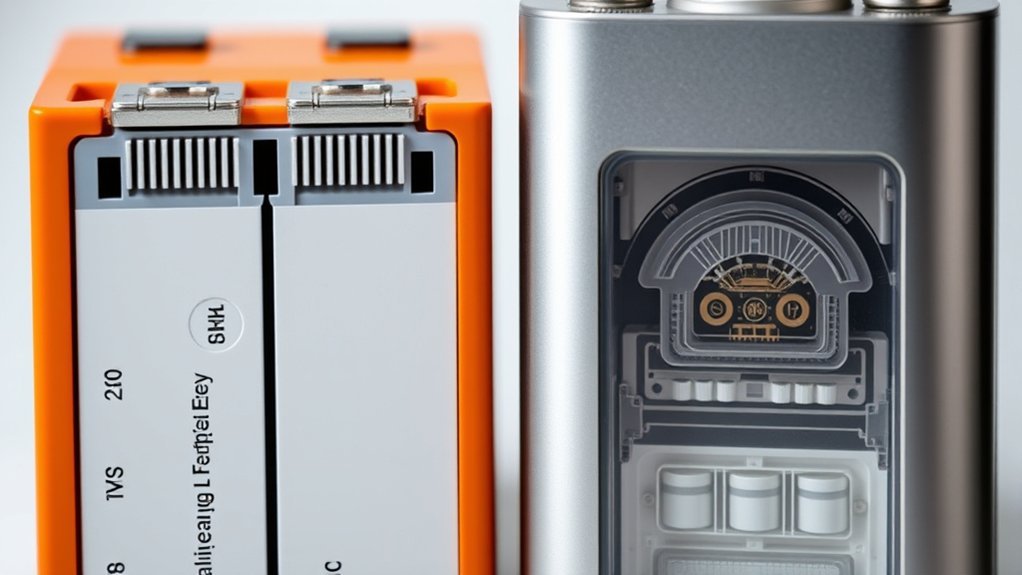
The fundamental differences between LiFePO4 and NMC batteries stem from their distinct chemical compositions and cell architectures, which directly influence their performance characteristics. LiFePO4 batteries use lithium iron phosphate as the cathode, offering greater thermal stability and longer cycle life, while NMC batteries combine nickel, manganese, and cobalt, providing higher energy density. These variations impact manufacturing processes, with LiFePO4 producing cells that are simpler and safer but potentially less energy-dense. Regarding battery recycling, LiFePO4’s stable chemistry simplifies material recovery, whereas NMC’s complex composition poses challenges. The design differences also influence heat management, lifespan, and overall efficiency, making each chemistry suited to specific applications based on their intrinsic structural and chemical traits.
Which Applications Suit LiFePO4 Batteries Best? Pros and Cons for EVs and Energy Storage
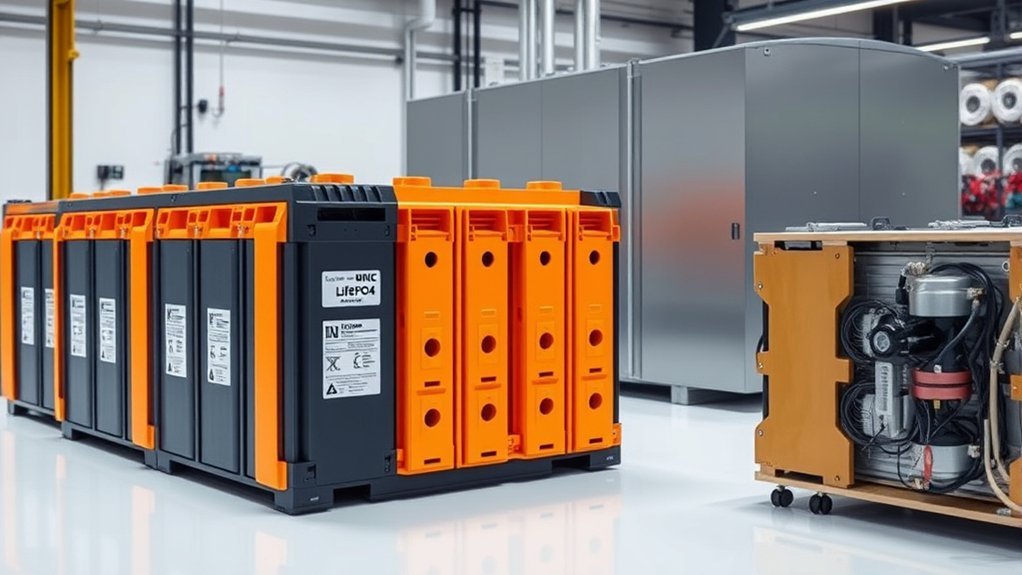
We recognize that LiFePO4 batteries excel in applications requiring high safety, long cycle life, and stable thermal performance, making them well-suited for electric vehicles and energy storage systems. Their energy efficiency and durability often translate into lower total cost of ownership over time. However, their lower energy density compared to NMC batteries can limit use cases where space and weight are critical.
Suitability for Electric Vehicles
Because of their stability, lifespan, and safety profile, LiFePO4 batteries are particularly well-suited for electric vehicle applications that demand durability and reliable performance over extended periods. Their thermal stability reduces risk of thermal runaway, making them safer for EV integration. Additionally, their longer cycle life supports vehicle longevity, minimizing replacement costs. From a manufacturing perspective, LiFePO4 batteries benefit from more environmentally friendly processes and easier battery recycling, reducing long-term ecological impacts. This eco-conscious advantage aligns with sustainable EV development. However, their lower energy density may limit range compared to NMC batteries, but their stability compensates in applications requiring consistent, safe power delivery. Overall, LiFePO4’s combination of safety, durability, and recyclability makes them highly suitable for electric vehicles prioritizing longevity and environmental considerations.
Energy Storage Efficiency
While LiFePO4 batteries excel in safety and longevity, their energy storage efficiency varies depending on the application. In stationary energy storage, they offer high cycle life and stable performance, but their voltage profile can impact overall efficiency, especially during rapid charge/discharge cycles. Manufacturing processes influence efficiency by affecting cell uniformity and internal resistance, directly impacting energy retention. Additionally, considerations like battery recycling are vital; LiFePO4’s chemical stability facilitates eco-friendly recycling, reducing energy loss during disposal. Compared to NMC batteries, LiFePO4 often exhibits slightly lower energy density, which can affect efficiency in applications demanding compact power sources. Overall, the efficiency of LiFePO4 batteries aligns well with grid-scale storage and renewable integration, where longevity and safety outweigh sheer energy density.
Safety and Longevity
LiFePO4 batteries are renowned for their exceptional safety profile and long operational lifespan, making them particularly suitable for applications where reliability and minimal risk are paramount. Their thermal stability reduces the risk of thermal runaway, a critical factor in EV safety and energy storage systems. Additionally, LiFePO4 batteries demonstrate remarkable cycle life, often exceeding 2,000 charge cycles, which extends their overall longevity. This durability positively impacts environmental impact by reducing the frequency of replacement and facilitating more sustainable battery recycling processes. The stable chemistry simplifies recycling efforts, minimizing hazardous waste. Compared to other chemistries, their inherent safety and longevity render LiFePO4 batteries ideal for stationary energy storage and electric vehicles where long-term reliability and environmental considerations are essential.
When Are NMC Batteries the Better Choice? Advantages and Drawbacks for Portable Devices and EVs
When do NMC batteries emerge as the most suitable choice for portable devices and electric vehicles? They excel where high energy density and better power delivery are critical, making them ideal for EVs and portable electronics. Their manufacturing processes allow for optimized cathode compositions, enhancing performance. Additionally, NMC batteries benefit from advancements in battery recycling techniques, enabling more sustainable disposal and reuse. However, their complexity in manufacturing can lead to higher costs and potential supply chain vulnerabilities. While they offer superior energy density and power output, these benefits come with trade-offs in safety and longevity compared to alternatives like LiFePO4. Ultimately, NMC batteries are preferable when energy density and rapid charging are prioritized over long-term stability, especially when manufacturing efficiencies can offset environmental concerns.
Comparing Safety: Are LiFePO4 or NMC Batteries Safer to Use?
When comparing the safety of LiFePO4 and NMC batteries, thermal stability is a key factor that influences their risk profiles. LiFePO4 batteries exhibit superior thermal stability, reducing the likelihood of fire or explosion under stress, whereas NMC cells are more prone to thermal runaway. Understanding these differences is essential for evaluating their safety in various applications and operating conditions.
Thermal Stability Differences
Thermal stability is a critical factor when evaluating the safety of rechargeable batteries, as it directly influences their risk of overheating or thermal runaway. LiFePO4 batteries exhibit superior thermal stability compared to NMC batteries, making them inherently safer under high-stress conditions. This stability stems from their robust chemical structure, which resists decomposition at elevated temperatures. In contrast, NMC batteries are more prone to thermal fluctuations, increasing safety concerns during abuse scenarios. Additionally, the enhanced thermal stability of LiFePO4 simplifies battery recycling processes by reducing the risk of thermal hazards, which can lower overall safety costs. However, LiFePO4’s manufacturing costs are typically higher due to more complex material processing. Ultimately, this thermal stability difference impacts both operational safety and the lifecycle management of these batteries.
Risk of Fire or Explosion
LiFePO4 batteries generally present a lower risk of fire or explosion compared to NMC batteries, primarily due to their more stable chemical composition. Their thermal stability reduces the likelihood of thermal runaway, a key factor in safety concerns. Additionally, manufacturing processes for LiFePO4 emphasize strict control to minimize impurities, further enhancing safety. Conversely, NMC batteries, with their layered oxide chemistry, are more prone to internal short circuits if damaged or improperly manufactured. When considering battery recycling, LiFePO4’s less toxic materials lessen fire hazards during disposal. Overall, the stability of LiFePO4 cells makes them inherently safer, especially in high-stress conditions, whereas NMC’s higher energy density comes with increased safety risks linked to chemical volatility and manufacturing tolerances.
How Do Lifespans and Durability of LiFePO4 and NMC Batteries Stack Up?
The lifespan and durability of LiFePO4 and NMC batteries are critical factors in evaluating their long-term performance and cost-effectiveness. LiFePO4 batteries generally offer longer cycle life—around 2,000 to 3,000 cycles—due to their stable chemistry, which resists degradation over time. NMC batteries, while providing higher energy density, tend to have shorter lifespans—around 1,000 to 2,000 cycles—especially under high charge rates. Manufacturing challenges also influence durability; LiFePO4’s simpler chemistry facilitates more consistent quality and easier recycling, reducing environmental impact. Conversely, NMC’s complex cathode materials pose challenges in recycling and manufacturing, potentially affecting long-term sustainability. Overall, LiFePO4’s durability makes it more suitable for applications demanding longevity, despite NMC’s superior energy density.
What Are the Cost Differences Between LiFePO4 and NMC Batteries?
When comparing the costs of LiFePO4 and NMC batteries, it’s important to take into account both initial purchase prices and long-term economic factors. LiFePO4 batteries generally have higher upfront costs due to more complex manufacturing processes, but benefit from longer lifespans and improved battery recycling potential, reducing replacement expenses. In contrast, NMC batteries are initially cheaper but tend to degrade faster, leading to higher replacement costs over time.
- Manufacturing processes influence cost, with LiFePO4 requiring more precise fabrication.
- Battery recycling impacts total lifecycle costs, favoring LiFePO4’s eco-friendly design.
- Initial purchase prices are typically 20-30% higher for LiFePO4.
- Long-term costs favor LiFePO4 due to durability and lower replacement frequency.
Which Battery Type Offers Better Performance in Cold or High-Temperature Conditions?
How do LiFePO4 and NMC batteries compare in performance under extreme temperature conditions? LiFePO4 batteries generally excel in high-temperature environments due to their stable chemistry, while NMC batteries tend to perform better in cold conditions, maintaining capacity more effectively. Temperature impacts battery chemistry, influencing cycle life and safety. Manufacturing processes influence thermal resilience, with LiFePO4’s solid cathode structure offering superior stability. Battery recycling strategies vary, affecting performance longevity and environmental impact. The table below summarizes key differences:
| Temperature Range | Performance | Manufacturing & Recycling Impact |
|---|---|---|
| Cold | NMC better | Recycling maintains capacity |
| Hot | LiFePO4 better | Manufacturing enhances stability |
| Extremes | LiFePO4 more stable | Recycling improves lifespan |
| General Use | Context-dependent | Process optimization critical |
How to Choose Between LiFePO4 and NMC Batteries for Your Needs
Choosing between LiFePO4 and NMC batteries depends on your specific application requirements, environmental conditions, and performance priorities. To make an informed decision, consider the following:
- Cycle life and durability: LiFePO4 batteries typically offer longer cycle life, reducing replacement frequency and supporting sustainable battery recycling.
- Energy density and weight: NMC batteries provide higher energy density, advantageous for space-constrained applications but may require more rigorous charging protocols to optimize lifespan.
- Thermal stability: LiFePO4’s inherent thermal stability makes it suitable for harsh environments with less risk of thermal runaway.
- Charge management: Proper charging protocols are vital for both types. NMC batteries often demand precise control to prevent degradation, whereas LiFePO4 batteries are more forgiving, enhancing safety and longevity.
Frequently Asked Questions
How Do Environmental Impacts Differ Between Lifepo4 and NMC Batteries?
We find that LiFePO4 batteries have a longer lifespan and are more environmentally friendly due to fewer toxic materials, enhancing cost efficiency and reducing ecological impact. NMC batteries, however, involve more resource extraction and disposal concerns, affecting their overall environmental footprint.
Are There Recycling Differences Between Lifepo4 and NMC Batteries?
Like artisans refining rare metals, we find lithium iron phosphate batteries easier to recycle due to less complex chemistry, supporting longer battery lifespan and manufacturing sustainability. NMC batteries require more complex processes, affecting their recycling efficiency and environmental impact.
Can Lifepo4 and NMC Batteries Be Safely Combined in One System?
We believe combining LiFePO4 and NMC batteries isn’t recommended due to potential issues with battery compatibility and system integration, which could lead to safety risks or performance problems. Properly matching chemistries guarantees system reliability and longevity.
What Are the Charging Time Differences for Lifepo4 Versus NMC Batteries?
Charging times differ: lifepo4 batteries typically charge faster due to higher charging efficiency, and their voltage remains more stable, like a steady heartbeat, whereas NMC batteries take longer, reflecting their more complex chemistry and energy density.
How Do Temperature Tolerance Levels Impact Battery Performance Long-Term?
We find that thermal stability and temperature resilience greatly influence long-term performance; batteries with superior thermal stability maintain efficiency, resist degradation, and guarantee safety over time, making them preferable for demanding environments.
Conclusion
Ultimately, selecting between LiFePO4 and NMC batteries hinges on weighing safety, longevity, and performance. While LiFePO4’s stability and lifespan seem ideal for long-term applications, their lower energy density and higher upfront costs can be limiting. Conversely, NMC’s impressive energy capacity and performance in cold conditions come with safety and durability trade-offs. Ironically, the “better” choice depends entirely on your priorities—sometimes, safer and longer-lasting just isn’t the most convenient option.