We’re examining whether portable power stations are worth it, and we’ll look at real-world needs, not hype. We’ll weigh capacity, output, and LiFePO4 trade-offs with a skeptical eye, noting how many essentials can run on 500–1,500 Wh and where peak surges matter. We’ll compare costs, recharging options, and lifecycle economics. If you’re deciding for outage-prone homes, off-grid, or mobile use, there’s more to the story than size and price—and several pitfalls to avoid as we move forward.
Key Takeaways
- They provide backup power for outages, keeping lights, comms, and essential loads running, with varying needs from 60–200W to 1,000–2,000+Wh for refrigeration.
- Real usable energy depends on DoD, LiFePO4 chemistry, inverter losses, and peak surge; expect 80–100% DoD and 2–4× surge capacity.
- For camping or mobile work, 1,000–1,500Wh can support fridges, lighting, and devices; plan around loads and solar recharging.
- Higher upfront cost can be offset by long life, 3,000–8,000+ cycles, and lower maintenance versus lead-acid.
- Recharging varies: fast wall charging, solar with MPPT, and vehicle top-ups; over-paneling yields diminishing returns.
Do You Need a Portable Power Station?
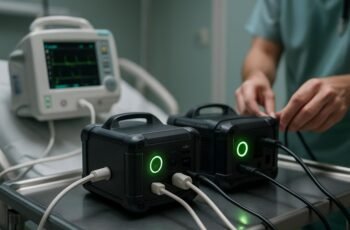
Do you need a portable power station? We start by weighing likely beneficiaries and real needs, not wishful thinking. For households in outage-prone areas, these devices can bridge critical gaps for lights, comms, refrigeration, and medical devices, yet not every blackout demands backup power of 1,000Wh or more. For CPAPs or oxygen concentrators, runtimes and surge specs matter, and we assess whether a unit’s capacity aligns with medical requirements. Campers, RVers, and vanlifers gain silent, emission-free power, but many setups still hinge on solar recharge and trip duration. Remote workers benefit only if loads stay within 60–200W during off-grid sessions. Small vendors and events gain portability, yet weight and cost escalate with use. The takeaway: feasibility hinges on actual load, not irrelevant topic hype or unrelated angle claims. Portable power stations are self-contained devices that store electrical energy in an internal battery and deliver via outlets (AC, USB, 12V).
How to Evaluate Capacity, Output, and LiFePO4 Chemistry
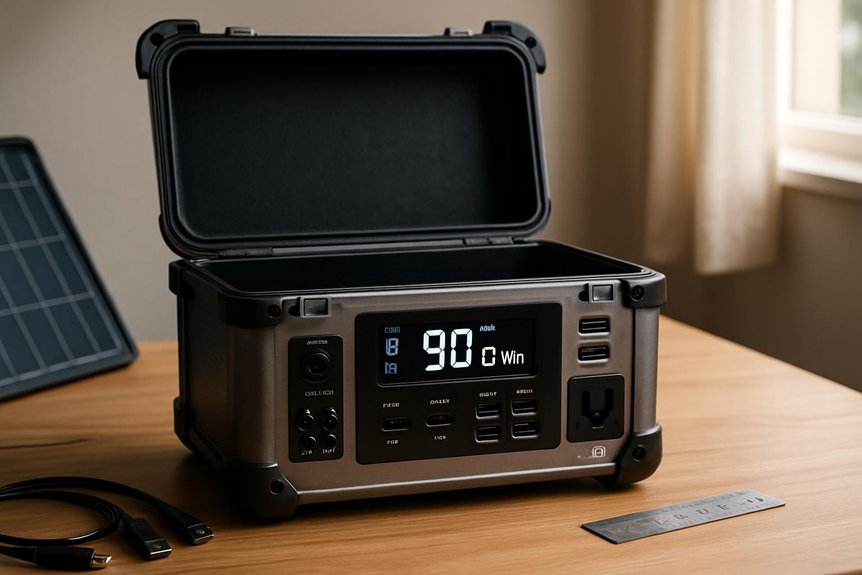
How should you judge capacity, output, and LiFePO4 chemistry when choosing a portable power station? We approach this skeptically: weigh usable capacity, DoD, cycle life, and weight tradeoffs against real needs. LiFePO4 offers 80–100% DoD and 2,500–4,000+ cycles, but its lower Wh/kg means heftier packs for the same usable energy. Capacity planning matters: consider usable Wh after inverter and BMS losses, not just rated Wh. Inverter sizing must exceed peak loads, with surge 2–4× and temperature derating kept in mind. Efficiency and continuous vs. peak output influence runtime. LiFePO4’s calendar life helps storage resilience, but MPs and chargers vary. Table below highlights key contrasts. Capacity planning The practical takeaway is to model your typical daily and seasonal energy profiles and choose a system whose usable energy aligns with those patterns.
| Factor | Implication |
|---|---|
| Capacity planning | Prioritize usable Wh, DoD, and long-term cycles |
| Inverter sizing | Match continuous and surge needs; consider derating |
Real-Use Scenarios: Camping, Home Backup, and Mobile Work
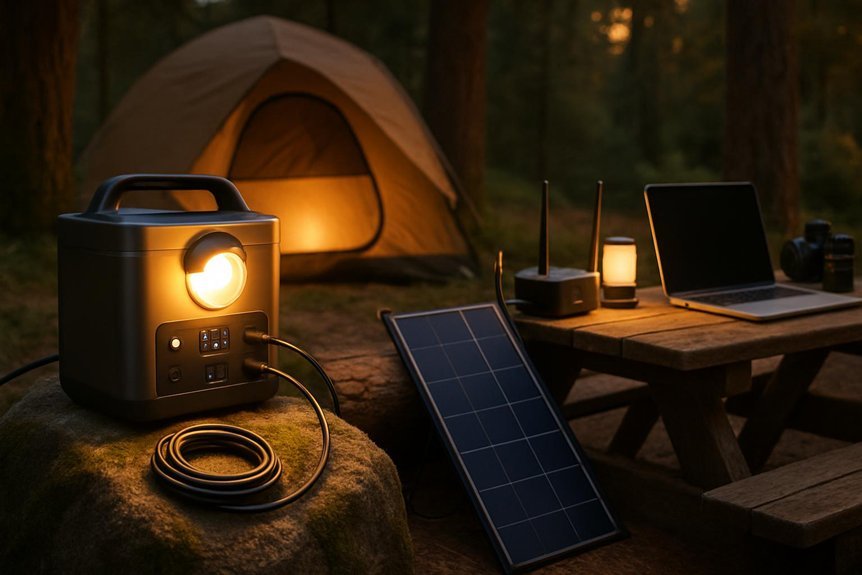
So, what do real-world uses demand from portable power stations, and how do camping, home backup, and mobile work scenarios shape our sizing decisions? We approach camping with modest loads: 12V fridge 40–60 W, lighting 5–30 W, and phone charging, totaling meaningful runtime on 1,000–1,500 Wh. Induction stoves are impractical for sustained use. For home backup, essential loads require 500–1,500 Wh for short outages, while refrigerators push 1,000–2,000 Wh with surge considerations; larger systems handle multi-day needs. In mobile work, a typical day runs 700–1,000 Wh for laptop, monitor, and connectivity, with recharging via solar or vehicle input. We stress camping efficiency and home backup sizing discipline: align capacity, inverter, and cooling needs to expected duty cycles, avoiding overestimation or underprovisioning. 1000W power station can power a range of devices during these scenarios, but must be paired with realistic runtime expectations and proper surge planning.
Costs and Long-Term Value of LiFePO4
LiFePO4 packs sit at the core of any portable power strategy, balancing upfront costs against long-run value. We evaluate price ranges €100–€900 per kWh and note pack-level erosion of 20–40% since the early 2020s, with premium integrated systems holding margins. Higher upfront cost vs. lead-acid is offset by 3,000–8,000 cycles to 80% SOH and 90–95% usable DoD, improving effective capacity. LCOS sits near €0.05–€0.20 per kWh delivered, driven by capex, cycles, efficiency (92–96%), and BOS. End-of-life planning at 70–80% SOH matters for TCO, as do replacement and recycling costs. Certifications raise price but reduce risk; BMS quality matters for performance. We consider irrelevant ethics and political implications in market dynamics, not chemical merit. New sentence: The market context emphasizes volatility in European grid prices and gas costs, which strengthens the case for storage as a hedge against price spikes.
[new sentence bracketed phrase
Recharging Options and Reliability Optimization
Which charging method best preserves battery health while delivering practical recharges? We approach recharging options with a critical eye, comparing speed, heat, and longevity. Wall AC is fastest, but high input can spike temperatures; many units taper after ~80% to protect cells. Solar charging fundamentals show real-world gains depend on irradiance, panel wattage, and MPPT efficiency; over-paneling yields diminishing returns. Vehicle 12V/DC taps are slower and best for top-ups, not full recharges of large stations. Generator/AC hybrid considerations are practical for continuity and reduced heat spikes when managed with inverter feeds to minimize noise and BMS trips. Some 2024–2026 systems accept high-voltage DC or EV inputs for rapid charging, albeit with specialized cables. Overall, balance speed, thermal management, and firmware limits when evaluating reliability and long-term degradation.
Buying Guide: Pitfalls to Avoid and How to Choose
We’ve looked at recharging methods with a critical eye, now we turn to practical buying guidelines that help you avoid common pitfalls and pick a station that fits your real needs. We approach this with a skeptical, detail‑oriented lens, separating usable energy from raw capacity and prioritizing real-world performance over hype. Don’t rely on peak watts or dramatic runtimes; read spec sheets, manuals, and third‑party tests to verify inverter efficiency, standby losses, and surge ratings. Beware nonessential marketing and unsupported claims that gloss over depth‑of‑discharge, cycle life, and temperature effects. Match continuous inverter output to the highest steady load, plan for peak starts, and consider modularity versus monolithic units. Align capacity with cadence, then confirm charging opportunities and expected runtimes under realistic conditions.
Frequently Asked Questions
Do Portable Power Stations Pose Fire or Thermal Runaway Risks?
Portable power stations do pose danger awareness and thermal risk, but overall risk is low with certified models. We scrutinize chemistry and BMS, emphasize proper charging, ventilation, and reputable brands to minimize incidents and maximize safety.
How Quiet Are These Units in Real-World Use?
“Silence is golden, but not perfect.” We’re honest about quiet operation, noting real world noise varies; we assess noise comparison, battery hum, and how fan ramps under loads, keeping a skeptical, detail-oriented view for you.
Are Lifepo4 Units Truly Maintenance-Free Long-Term?
Yes, lifepo4 units aren’t truly maintenance-free long-term; lifepo4 myths and maintenance misconceptions persist. We’ve seen calendar aging, BMS failures, and temperature effects require attention, even with gentle DoD and careful storage practices.
Can They Power Essential Appliances During Extended Outages?
We can power essential appliances during extended outages, but only if you size properly: most 1,000–2,000 Wh units handle fridge and router for 12–24 hours. Outdoor cooking and solar charging complicate, yet remain feasible with planning.
Is Rental a Cost-Effective Alternative to Buying?
Renting vs buying can be cost-effective for infrequent use, but we’re skeptical about simplicity: a clear cost comparison shows breakeven timing, depreciation, and add-ons often tilt toward buying for regular or high-capacity needs.
Conclusion
We conclude that portable power stations can be worthwhile for outage-prone homes or off-grid lifestyles, but only when sizing, chemistry, and use cases align. An interesting stat: LiFePO4 packs can sustain 80–90% DoD with long cycle life, translating to lower replacement costs over time—if you pay for quality. In practice, evaluate peak loads, runtimes, and charging options, then compare total cost of ownership rather than upfront price. Proceed skeptically, and verify real-world performance claims before committing.