Did you know that portable power stations can store as much as a small apartment’s worth of energy in a single device? We’re here to explain what they are, how they work, and who benefits, so you’ll understand not just the tech but how it fits into real life. We’ll cover capacity, outputs, charging options, and practical use cases, with enough detail to make smart choices—and you’ll see why the next step matters.
Key Takeaways
- A portable power station is a compact, battery-powered system that stores energy and outputs electricity for AC, DC, and USB devices via an inverter and management components.
- It can recharge from mains, solar panels, or a vehicle and may offer pass-through charging for simultaneous use and charging.
- Key specs include capacity in watt-hours (Wh), continuous and surge output (W), weight (roughly 3–12 kg), and battery chemistry (e.g., Li-ion or LiFePO4).
- Lithium chemistries affect energy density, cycle life, safety, and longevity, with battery management and thermal control critical for performance.
- Real-world use emphasizes usable energy (consider DoD, efficiency, and temperature) and appropriate charging strategies for reliability and longevity.
What Is a Portable Power Station and Who Should Use It
A portable power station is a compact battery-powered system that stores energy and outputs electricity for a variety of devices. We designed these units to power essentials during outages, support outdoor work, and enable off‑grid living or events. They store energy in internal battery cells measured in watt‑hours (Wh) and provide AC, DC, and USB outputs through an inverter, charge controller, and BMS. We recharge from mains AC, solar panels, or vehicle 12V systems, with some models offering pass‑through charging. Lithium chemistry options (NMC, LMO, and LiFePO4) influence energy density, cycle life, and safety. Thermal management is critical for performance and longevity. Choose based on ongoing load, weight, and efficiency; lower DoD and proper BMS extend usable life and reliability. Key point: capacity and management determine usable energy [1
How to Decide: Key Criteria for Choosing
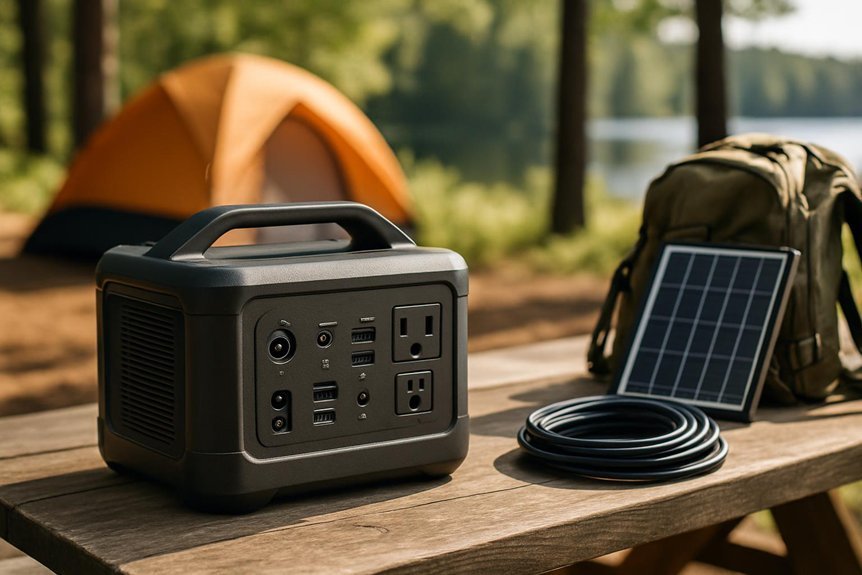
So how do you pick a portable power station that actually fits your needs? We evaluate battery chemistry and lifespan, prioritizing LiFePO4 for 2,000–4,000+ cycles and slower capacity fade, with calendar aging and thermal management shaping long‑term capacity. Look for a defined DoD 80% cycle rating and compare like‑for‑like. Consider total output: continuous watts for running multiple devices and surge ratings for start‑ups, plus pure sine wave for sensitive electronics. Assess charging speed, solar input, MPPT efficiency, and the potential to parallel units or add modules. Portability matters: weight, IP rating, operating temperature, and modularity matter. From a budgeting lens, include maintenance budgeting and warranty coverage; a robust BMS and clear cycle warranty signal reliability and value.
Core Specs: Capacity, Output, and Charging Options
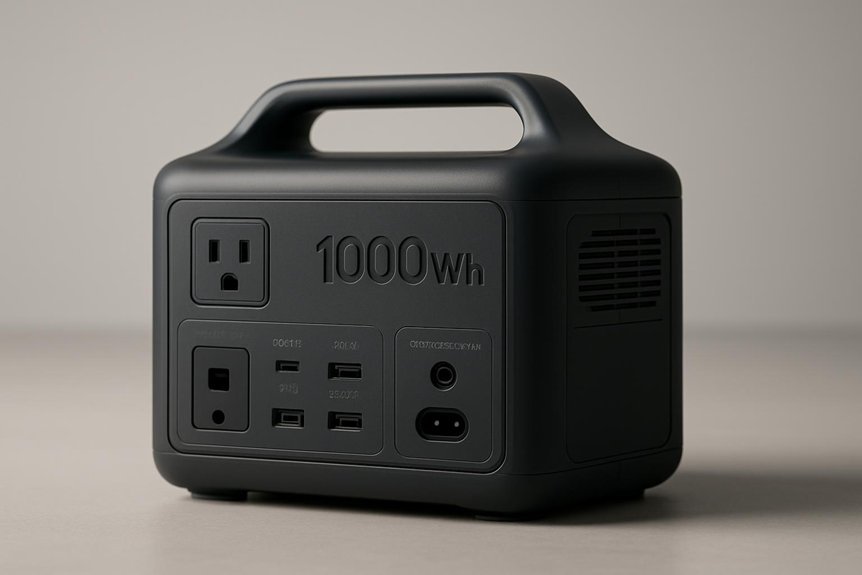
We’ll start by mapping capacity and runtime against real-use needs, noting how usable energy, chemistry, and DoD affect what you actually get from a battery. Watts will help you understand how much continuous and surge power your devices require and how that translates into inverter efficiency, thermal limits, and port availability. We’ll then match the required output power to continuous and surge limits, considering inverter efficiency, thermal constraints, and port availability. Finally, we’ll outline charging options—from wall and solar inputs to fast-charging realities—so you can plan total recharge time and daily operation.
Capacity And Runtime
What does capacity really mean for a portable power station, and how does that translate into usable runtime?
Capacity translates to the total energy stored (Wh) and the practical runtime you can expect. Usable Wh depends on chemistry, BMS cutoffs, and efficiency. Real-world runtime uses usable Wh divided by load, minus losses.
- Visualize a 200–500 Wh unit powering a fridge or tool, where DoD and efficiency trim the last few hours.
- A 500–2,000 Wh pack supports camping, with modest inverter losses.
- 2,000+ Wh systems back home backups, yet temperature and self discharge matter over time.
- DoD choices trade cycle life for more usable energy, a balance pilots capacity and longevity.
Key terms: battery chemistry, self discharge.
Output Power Requirements
Choosing the right output power starts with capacity and charging options, then scales to how much continuous and peak power you’ll actually need. We focus on continuous vs. peak outputs: most units deliver 200–3,000+ W continuous, with peak surges 1.5–3× for startup. Appliances with motors can demand 2–4× their running wattage at startup, so mismatches trigger trips. Inverter type matters: pure sine-wave units offer lower THD and steadier surges than modified sine. Thermal management and derating reduce usable continuous power under heat, SOC, or altitude. DC and USB outputs vary: high-current DC ports and PD USB-C reduce AC load. Don’t overlook efficiency; 85–95% conversion shapes runtime. We avoid disallowed topics and legal considerations, and center on selecting an inverter that matches your gear’s continuous and peak needs without fluff.
Charging Options Overview
Charging options free up how quickly you top up capacity and how you sustain output. We balance capacity, output, and charging methods to fit real-world needs, noting battery chemistry effects and warranty coverage. AC charging is fast but heats the system; solar adds green backup with MPPT optimization; car charging offers roadside top-ups but slower than wall power; generators provide flexible, on-demand recharging when mains aren’t available.
- Wall AC charging delivers high power through 200–1,500 W inputs, with faster fills on 1,000 W-plus units.
- Solar input uses MPPT to convert sun to usable charge, typically 100–1,200 W depending on setup.
- Car and cigarette-lighter charging provide portable, on-the-go replenishment, often 120–400 W.
- Generators fuel rapid recharge with clean sine-wave output, matching the station’s needs.
Battery chemistry and warranty coverage frame long-term reliability.
Real-World Performance: Estimating Run Time and Efficiency
How long a portable power station runs depends on real-world efficiency and the load it powers. We estimate runtime with battery Wh, the usable fraction, and inverter efficiency, then adjust for temperature and aging. Real-world numbers drift from nominal capacity: use 70–90% usable for Li-ion, 80–95% for LiFePO4, and expect derating as cycles accumulate. Inverter efficiency typically sits 85–95% for pure sine waves, with DC outputs saving 5–15% energy. Runtime formulas multiply usable Wh by efficiency and divide by load. Common rule: multiply nominal Wh by ~0.75–0.85 for AC-delivered energy. Track performance over time to support lifecycle management. Be mindful of startup surges, environmental temp, and cable losses, all shaping core specs and long-term reliability.
Use-Case Guides: Emergency Backup, Travel, and Off-Grid
We’ll outline practical use-case guides for Emergency Backup, Travel, and Off-Grid scenarios, focusing on what matters most: reliability, portability, and efficiency. We’ll highlight essential loads, safety considerations, and flexible charging options to keep you powered when grid access is limited. Let’s explore how a portable power station adapts to real-world needs without extra fluff.
Emergency Backup Basics
- Prioritized loads: life-safety, food preservation, then communications and refrigeration.
- Realistic runtimes: use Wh/day goals to avoid overestimating capacity.
- Charging mix: combine AC, solar, and car charging to shorten outages.
- Redundancy plan: multiple small units or one larger unit for reliability.
This framework keeps sizing honest, avoids hype, and powers essential tasks with precision.
Travel Ready Essentials
Travel-ready power sits at the intersection of portability and capability, building on emergency-backup basics by focusing on units you can carry, pack, and deploy on the road or trail. We balance travel-friendly size (200–600 Wh) and weight (3–12 kg) with versatile charging: AC 100–600 W, MPPT solar 100–500 W, and 12V car inputs 60–150 W, plus USB-C PD ports. Our aim is packability and rugged build (ABS/aluminum, IP-rated). For airline rules, keep under 100 Wh for carry-on; 100–160 Wh needs approval; over 160 Wh is generally prohibited. Safety and compliance come first: battery chemistry (LiFePO4), BMS protections, and regulatory compliance (UN38.3, UL 2743/IEC 62133). Table below highlights essentials.
| Size/Weight | Charging Options | Outputs/Safety |
|---|---|---|
| 200–600 Wh | AC 100–600 W, Solar 100–500 W, Car 60–150 W | USB-C PD, pure sine wave, multiple ports |
| 3–12 kg | Dual/tri-input, fast-charge tradeoffs | Battery safety, regulatory compliance |
Off-Grid Living Flexibility
How flexible is your power strategy when the grid goes dark? We design portable stations for off-grid living that cover emergency backups, travel, and continuous independence. Outdoor charging becomes practical with proper power, solar input, and safe storage, while microgravity travel concepts remind us of reliable, compact kits that perform in varying environments.
- We prioritize critical loads first, then important, then deferrable, ensuring essential comfort and safety.
- We size for multi-day outages, 1,000–3,000 Wh for short downtimes, larger for extended use.
- We leverage solar recharge during daylight, plus grid or generator recharging when available.
- We monitor real-time consumption to prevent depletion and schedule high-demand tasks during sun.
Together, we stay prepared anywhere, from outdoor charging to microgravity travel scenarios.
Charging, Lifecycle, and Maintenance Best Practices
Wondering how to keep your portable power station reliable long-term? We’ll focus on charging, lifecycle, and maintenance to maximize longevity. Aim for a 20%–80% SoC window for best cycle life, reserving full charges for imminent use. Use manufacturer-approved chargers and cables to ensure correct profiles, and update firmware to benefit from optimized charging algorithms. Favor charging methods that balance speed and heat: wall AC charging is fastest, while solar and car input can supplement without overtaxing the system. Monitor charging temperature: keep it between 0°C and 45°C when possible to avoid BMS protections. Prioritize thermal management and avoid deep discharges; remember Li-ion and LiFePO4 chemistries differ in tolerance. Manage inputs concurrently only if the unit supports it, to preserve efficiency and battery health.
Frequently Asked Questions
How Do I Determine Actual Runtime for My Devices?
We determine actual runtime by calculating usableWh, factoring efficiency losses, and applying device wattage. We consider battery aging, temperature, and surge needs, while noting unrelated topic ideas and irrelevant subtopics to stay flexible in planning.
What Is the Trade-Off Between Lifepo4 and Li-Ion?
We’ll acknowledge the objection: “LiFePO4 is pricier,” yet lithium chemistry favors longer life and safety. We trade weight and energy density for durability and battery safety, with LiFePO4 offering lower fire risk and higher cycle life.
Can I Expand Capacity With Extra Batteries?
Yes, we can add batteries to expand capacity, but ensure voltage, chemistry, and connectors align with the host. We’ll estimate runtime, evaluate device power, and respect current limits. Runtime estimation tricks optimize capacity planning for you.
How Safe Are Portable Power Stations Under Load?
We’re confident portable safety under load testing is high but not risk-free; quality BMS and proper cooling matter. We assess safeguards, avoid overloading, and practice safe load testing to prevent thermal derating or faults.
Do All Chargers Support Solar and Car Inputs Simultaneously?
Like a busy crossroads, not all chargers support solar charging compatibility and car input integration simultaneously. We find that many units can’t, due to inputs, MPPT, and thermal limits; some do, others require prioritization or firmware.
Conclusion
We’ve explored what a portable power station is, who it helps, and how to pick one that fits your needs. With typical users relying on 2–3 devices at once, many models deliver 1–3 kWh of capacity and multiple outputs for flexibility. One striking stat: a single high-quality unit can replace multiple gas generators, cutting noise and emissions. If you’re planning outages or adventures, we’ll help you choose a reliable, efficient option and use it safely for years.