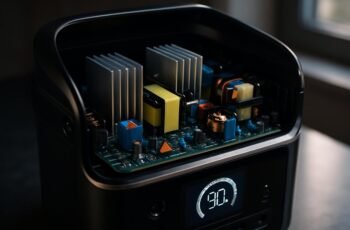
We’re used to coincidences popping up when we plan power: a panel’s open-circuit voltage suddenly mirrors our charger’s input range, prompting questions about real-world tolerance. We’ll outline how to verify voltage, current, and connector compatibility, ensure MPPT versus PWM considerations, and confirm polarity and weatherproofing. If we don’t align Vmp and Imp with the station’s MPPT window and account for temperature and losses, the setup won’t meet expectations. Let’s ensure we cover the details before you commit.
Key Takeaways
- Match voltage, current (or power), and DC connector type between the panel and the portable power station; verify open-circuit voltage, max power, and MPPT range.
- Ensure panel current capacity meets or exceeds the station’s input requirements and accounts for temperature and shading.
- Confirm panel type and connector compatibility (MC4-style, locking harnesses, adapters) and polarity to prevent damage.
- Size panels from the station’s capacity and daily energy goals, using safe margins for real-world conditions.
- Verify ratings, certifications, and warranties; distinguish marketing claims from measured data and document compatibility.
Key Definitions: What Makes a Power Station and Solar Panel Compatible
Determining compatibility between a portable power station and a solar panel hinges on matching three core specs: voltage, current (or power), and connector type. We, as practitioners, define compatibility by confirming the panel’s open-circuit voltage and maximum power align with the station’s accepted input range, and by ensuring the current capacity meets or exceeds the station’s charging requirements. We also verify the matching of the DC connector style and polarity, since mismatches can cause inefficiency or damage. Practical considerations include temperature and tolerance margins that affect real‑world performance. We address charging mismatch proactively by selecting components with compatible MPPT input characteristics when available. Warranty considerations arise when nonstandard or forced configurations are used, potentially voiding coverage. Precision, adherence to manufacturer specifications, and documented limits guide our assessments.
Common Panel Types and Connectors You’ll Encounter
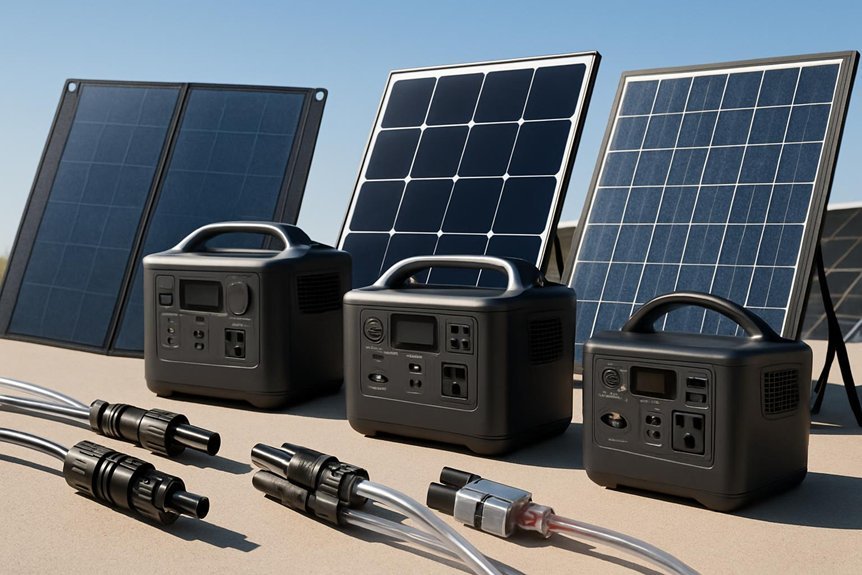
What panel types and connectors will you encounter, and how do they map to your power station’s inputs? We approach common panel types and connectors with precision, focusing on practical compatibility. We describe standard photovoltaic outputs, MC4-style connectors, and locking or parallel-ready harnesses that align with solar panel compatibility requirements. Connector standards define polarity, wire gauge, and weather sealing, ensuring safe, repeatable connections to charging interfaces. We emphasize that, for portable power stations, input tolerances, maximum current, and input voltage ranges govern which panels are usable. The discussion covers rigid panels, flexible modules, and their typical connectors, noting that adapters exist but may affect efficiency. By aligning panel types to your station’s charging interface, you ensure reliable performance and durable operation.
Sizing Panels: Wattage, Voltage, and Current for Your Station
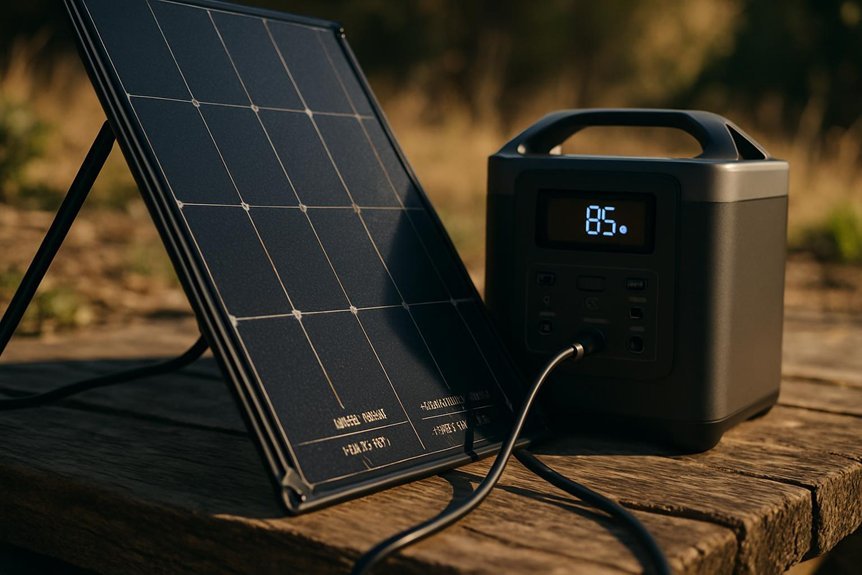
How much power do you need from a solar panel, and how do you determine that from your station’s specs? We start with the station’s total watt-hour capacity and target daily energy, then translate that into panel wattage, voltage, and current requirements. Match the panel’s nominal operating voltage to the charge controller’s input range and the battery’s chemistry. Use safety margins for real-world conditions, including temperature and shading, to select a wattage that sustains charging during peak sun hours. Ensure the panel’s current exceeds the controller’s maximum input current to avoid bottlenecks. Consider panel efficiency when sizing, as higher efficiency reduces area while maintaining output. Prioritize mounting safety, choosing sturdy mounts and proper wiring practices to prevent faults or hazards.
Compatibility Pitfalls and How to Verify Before You Buy
Are compatibility pitfalls lurking in plain sight, and how can we verify claims before we buy? We approach this with precise criteria: verify panel nominal ratings, connector types, and compatibility matrices from reputable standards bodies. We separate bold marketing claims from measurable data, checking open-circuit voltage, rated power, and temperature coefficients to avoid overstated performance. The term compatibility myths often hides simple mismatches, like nonstandard MC4 variants or misrepresented maximum input current. We map every port to the portable power station’s accepted ranges and confirm charge controller compatibility, including MPPT vs. PWM distinctions. We document manufacturer tests, third‑party certifications, and warranty coverage. Finally, we request documented tolerances for voltage and current under typical operating conditions, ensuring the selected panel aligns with safety and durability requirements.
Practical Setup Tips to Maximize Charging Speed and Efficiency
We’ll start with a simple premise: maximize charging speed hinges on matching the panel’s characteristics to the power station’s accepted input window and control strategy. We approach this with precise, standards-driven steps to sustain efficiency and durability.
1) Align panel Vmp and Imp with the power station’s MPPT range to minimize losses.
2) Verify efficient wiring and connector integrity, ensuring low resistance and secure, weatherproof connections.
3) Optimize portable mounting for shade-free exposure, angle, and tilt to maintain consistent irradiance.
4) Monitor solar panel durability and system temperature, adopting protective enclosures and appropriate heat dissipation.
Frequently Asked Questions
Do MPPT vs. PWM Controllers Affect Compatibility With Portable Stations?
MPPT vs PWM controllers can affect compatibility with portable stations; we’ll prioritize MPPT for higher efficiency, especially with varying panel voltages. We assess Panel warranties, specs, and standards, ensuring MPPT integration aligns with safety margins and warranty terms.
Can Solar Panel Warranties Impact Compatibility With Power Stations?
We’ll say: yes, solar panel warranties can influence portability compatibility, since warranty terms affect panel reliability and risk assumptions for portable stations, guiding compatibility checks, spare-part access, and long-term performance guarantees while aligning with standards-driven integration and safe operation.
Are Multi-Panel Arrays Supported by All Portable Power Stations?
Yes, multi-panel feasibility varies; not all portable power stations support it. We assess panel compatibility, MPPT limits, and input ratings, ensuring adapters and wiring meet standards. We confirm compatibility before scaling arrays for reliable, safe operation.
Do Temperature Coefficients Alter Real-World Charging Speeds?
Temperature coefficients do affect real world charging speeds; hotter temps reduce voltage and PDF efficiency. We ensure MPPT PWM compatibility, portable stations handle multi panel arrays, panel cable gauge, and consider panel warranties impact for reliable performance.
Is Panel Cable Gauge Critical for Specific Stations?
Yes, panel cable gauge is critical for certain stations due to current rating and protection. We’ll ensure proper solar compatibility by matching cable size and conductor standards to max input, voltage drop limits, and safety certifications.
Conclusion
We’ve laid out the checks you’ll need: verify open-circuit and max-power ranges, match Vmp and Imp to the MPPT input, confirm current sufficiency, and confirm connector, polarity, and weatherproofing. We’ll also flag real-world tolerances, temperature effects, and safety certifications. Do these steps first, because a misalignment can throttle charging or damage gear. If a mismatch appears, you’ll want the right adapter or HS-tested panel. Now, the test begins—will your panel pass the compatibility gauntlet?