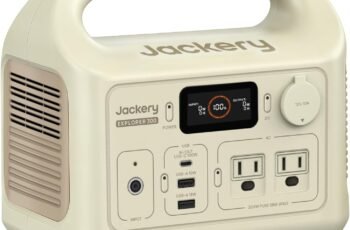
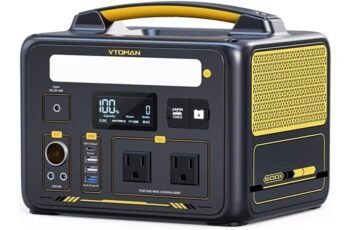
We find this 296Wh portable power station delivers up to 300W of continuous, quiet AC power, making it suitable for phones, laptops, cameras, lights, and compatible mini-fridges or projectors. Its ports include a 100W USB-C outlet and 12V/10A DC output, while wall, car, and up-to-100W solar charging provide flexible recharging. A 50W device may run for less than six hours, depending on losses and actual draw. We’ll examine its features, limitations, and best-fit uses next.
Key Takeaways
- The 296Wh battery and 300W continuous output suit phones, laptops, cameras, lights, and compatible mini-fridges or projectors.
- A 50W device may run for under six hours; actual runtime varies with power draw and conversion losses.
- Ports include a 300W pure sine wave AC outlet, 12V/10A DC output, 100W USB-C, and additional USB ports.
- Recharge it from a wall outlet, car charger, or solar panels; built-in MPPT accepts up to 100W solar input.
- At 7.1 lb, it’s portable and offers integrated lighting, but cannot power appliances above 300W or sustain heavy loads for long.
296Wh Battery Capacity
The 296Wh battery stores enough energy to run compatible devices such as laptops, lights, projectors, and mini-fridges, provided their power draw stays within the station’s 300W continuous AC output limit.
We can use this rating to estimate runtime by dividing the station’s usable capacity by a device’s wattage, while allowing for conversion losses and variations in actual consumption. For example, a 50W load could run for less than six hours under typical conditions.
The product information doesn’t specify battery chemistry, so we can’t assess its cycle life or charging characteristics from that detail alone. Actual runtime depends on connected equipment.
Detailed features
Beyond its 296Wh capacity and 300W continuous output, this power station offers several connection and charging options. We can connect compatible electronics through these ports:
| Connection | Specification | Use |
|---|---|---|
| AC outlet | 300W Pure Sine Wave | Appliances |
| DC port | 12V/10A | DC devices |
| USB-C | 100W | Laptops |
| USB ports | Multiple | Small electronics |
We can recharge from a wall outlet, car charger, or solar panels; built-in MPPT supports up to 100W solar input. Integrated Lighting includes a 360° light with four modes and a 20W flashlight with three brightness levels, SOS signaling, and a beam distance up to 1,500 meters.
Pros and Cons
We’ll weigh the 296Wh capacity, 300W output, versatile ports, and three charging options against the station’s power and solar-input limits.
We’ll also assess how its 7.1 lb design, integrated lights, and included accessories affect portability and practical use.
This comparison will help you determine which strengths and limitations matter most for your devices and use case.
Pros
With 296Wh of capacity and 300W of continuous pure sine wave output, this power station can run compatible devices such as laptops, mini-fridges, projectors, and lights. We can connect electronics through its AC outlet, 12V/10A DC port, 100W USB-C port, and USB ports.
Quiet operation suits indoor use and campsites, while reliable performance supports everyday charging needs. We can recharge from a wall outlet, car charger, or solar panels; built-in MPPT accepts up to 100W of solar input.
At 7.1 pounds, it’s portable, and its shoulder strap, phone stand, storage pouch, and integrated lighting add practical utility.
Cons
Although its 296Wh capacity and 300W output suit smaller electronics, this power station can’t run devices that exceed the 300W limit, and its stored energy may not support high-draw appliances for long.
We should consider its modest battery capacity when planning extended use: actual runtime also depends on device consumption and conversion losses. Limited appliance compatibility rules out many heaters, kettles, and other high-wattage equipment, even when they’ve standard plugs.
Its 100W solar input can help replenish the battery, but charging requires suitable panels and favorable conditions. For longer outages or demanding loads, we’ll need a higher-capacity unit with greater continuous output.
Concluding thoughts
For compatible devices drawing no more than 300W, this 296Wh power station combines a pure sine wave AC outlet with USB-C, USB, and 12V DC ports in a 7.1 lb package. We can recharge it from a wall outlet, car charger, or solar panels, with MPPT support for up to 100W solar input.
Its integrated lights add practical emergency and campsite illumination. Ideal use cases include charging phones, laptops, cameras, lights, and compatible mini-fridges or projectors.
Before buying, consider device wattage, required runtime, and recharge access. We wouldn’t choose it for appliances exceeding its output limit or extended high-demand use.
Frequently Asked Questions
Can This Power Station Be Taken on an Airplane?
We can’t assume airlines will allow this 296Wh power station onboard: Airline watt hour limits generally restrict carry-on batteries to 100Wh, with approval sometimes permitted up to 160Wh. Check your carrier’s carry on battery rules before traveling.
How Long Does the Battery Retain Charge During Storage?
We can’t specify charge retention or storage duration from the provided information; the manufacturer gives no self-discharge rate or standby-time data. For reliable performance, we recommend checking the manual and periodically recharging the battery during storage.
Can It Be Used While Charging?
Yes—you can use it while charging: like a relay passing its baton, Pass through charging lets us recharge the station while powering devices. We can’t confirm simultaneous device charging is supported; check the manufacturer before relying on it.
What Safety Protections Are Built Into the Unit?
We can confirm overload protection and short circuit protection aren’t specified in the available product details. We shouldn’t assume the unit includes them; check its manual or contact customer support to verify its built-in safety features before use.
Is the Battery Replaceable or Serviceable?
We can’t confirm user-replaceable batteries or internal serviceability from the available specifications. Battery replacement and service options aren’t documented; contact customer support to verify repair availability, warranty coverage, and safe handling before attempting any battery work.
Conclusion
We find this 296Wh power station best suited to phones, laptops, lights, and other modest loads—not appliances that demand more than its 300W continuous output. Its pure sine wave AC, USB-C and USB ports, three charging options, and MPPT solar input make it versatile, while the camping light and 7.1-pound weight add practical value. The irony is that a generator this portable can’t power everything, but that’s precisely why it’s easy to bring along. We’d choose it for short trips and outages, not whole-home backup.