We find this 300W portable power station best suited to short outages, camping, and travel. Its 220Wh battery can power phones, lights, fans, and laptops, but runtime depends on device demand and conversion losses; a 20W light may run for under 11 hours. Two pure sine wave AC outlets, four USB ports, and a vehicle port support flexible charging, while AC, car, and optional solar input replenish the unit. We’ll outline its features, limits, and ideal uses next.
Key Takeaways
- The 220Wh battery and 300W output suit phones, lights, fans, and laptops, but not most high-wattage appliances.
- Two pure sine wave AC outlets, four USB ports, and a vehicle port offer flexible charging for compatible devices.
- Runtime depends on device wattage; a 20W light may run for less than 11 hours after conversion losses.
- At 5 pounds, it’s portable for camping, travel, RV accessories, and brief outages.
- AC, car, and optional solar charging add flexibility, but limited capacity and potentially slow recharging constrain longer outages.
220Wh Battery Capacity
The 220Wh lithium-ion battery stores enough energy to power small devices such as phones, lights, and fans, while its 300W rated output supports compatible appliances. This Energy Storage capacity suits short outages, camping, and travel, but actual runtime depends on each device’s wattage and usage.
For Runtime Estimates, divide 220Wh by the device’s power draw, then allow for conversion losses and operating conditions. A 20W light, for example, may run for less than 11 hours in practice. We can use this estimate to plan essential loads, prioritize devices, and avoid exceeding the station’s rated output during use.
Detailed features
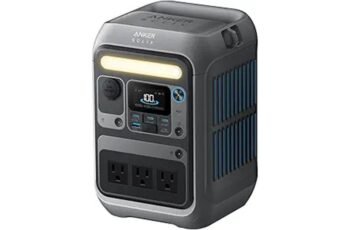
Beyond its 220Wh battery, this power station pairs two 110V pure sine wave AC outlets with four USB ports and a 9–12.6V DC vehicle port. We can connect several devices at once, while its 300W rated Power Output supports compatible electronics and small appliances.
Three USB ports deliver up to 5V/3.1A; the fourth supports 5V/3A or 9V/2A. The vehicle port supplies up to 10A. Charging Options include an AC wall adapter, car charger, or solar panel, sold separately.
We can monitor charge levels and operating status through indicator lights. Its battery management system regulates voltage and temperature and guards against overloads and short circuits.
Pros and Cons
We’ll weigh the station’s compact design, versatile ports, and safety features against its output limits and other trade-offs.
This comparison will help you judge whether it fits your power needs. Let’s review the main pros and cons.
Pros
A compact 5-pound design, 220Wh battery, and seven output ports make this power station easy to carry and useful for charging several devices at once. Its Compact Lightweight build fits camping, travel, and emergency kits without taking much space.
We can power laptops, phones, fans, and lights through two pure sine wave AC outlets, USB ports, and a DC vehicle port. This Versatile Charging setup supports varied devices, while the 300W rated output handles compatible loads.
We also get flexible recharging from an AC adapter, car charger, or solar panel. Clear indicators show battery level and output status during use.
Cons
Despite its flexibility, this power station has limits: its 300W rated output and 220Wh capacity won’t support high-wattage appliances or extended use. We should plan around its modest reserve and recharge time.
| Limitation | Practical effect | Planning note |
|---|---|---|
| Limited runtime | Shorter device operation | Prioritize essentials |
| 300W output | Excludes many appliances | Check wattage |
| 220Wh capacity | Restricts sustained backup | Conserve power |
| slow recharging | Delays readiness | Allow recharge time |
We can recharge through AC, car, or solar, but solar panels aren’t included, and charging speed depends on the source. The seven outlets don’t increase total available power, so simultaneous loads still need to stay within the rated limit. For longer outages, we’ll need a larger-capacity unit or another power source.
Concluding thoughts
Overall, the Portable Power Station 300W offers a compact 220Wh battery, versatile charging ports, and useful safety features for camping, travel, and short-term backup power.
Its 300W rated output, pure sine wave AC outlets, and USB and DC connections support common small devices, while solar, car, and wall charging add flexibility. We’d match its capacity to phones, lights, fans, and laptops, not high-wattage appliances.
Ideal Use Cases include weekend trips, RV accessories, and brief outages. The BMS, LED light, and 12-month warranty add practical value.
Final Verdict: we consider it a portable, capable option when modest output and capacity meet your needs.
Frequently Asked Questions
Can This Power Station Be Taken on an Airplane?
We can’t assume this 220Wh power station is permitted aboard: Airline carry on rules generally limit lithium battery capacity to 100Wh, with airline approval sometimes required up to 160Wh. Check your carrier; this exceeds typical lithium battery limits.
How Long Does It Take to Recharge From a Wall Outlet?
We can’t confirm the Wall recharge time because the specifications don’t state it. Charging speed depends on the included AC adapter and battery level; check the manual or time a full recharge from empty.
Is a Solar Panel Included With the Power Station?
No, we don’t receive a solar panel with the power station; you’ll need to purchase one separately. For Solar Panel Compatibility and added Charging Options, we can recharge the unit using a compatible panel, AC adapter, or car charger.
What Maintenance Is Recommended During Long-Term Storage?
For long-term storage, fully charge the unit first, then recharge it every two to three months. Why risk capacity loss? We should maintain its Battery charge level and store it in a dry, temperature-controlled environment, avoiding extremes.
How Long Is the Warranty, and How Can I Contact Customer Support?
Warranty duration: 12 months. For Support contact, we’re told customer service is available, but no phone number, email, or website is provided. Check your product manual or seller listing to find the appropriate support channel.
Conclusion
We see the Portable Power Station 300W as a practical pick for phones, lights, fans, and compatible laptops during outages or trips. Its 220Wh battery, dual pure sine wave outlets, and multiple charging options offer useful flexibility in a five-pound package. One notable figure: the unit is rated for more than 1,000 charge cycles. Still, its 300W limit rules out many appliances, and solar panels cost extra. We’d choose it for portable essentials, not whole-home backup.