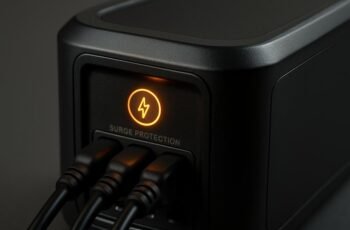
We see Modular Portable Power Station Systems as interoperable, scalable platforms that combine cores, batteries, and modules into a cohesive ecosystem. We’ll evaluate efficiency, fault tolerance, and thermal management while weighing load prioritization and long-term economics. Our focus is on predictable performance, upgrade paths, and ergonomic design that scales from home to site. If we align interfaces now, we’ll unlock smoother expansions later—and we’ll have reasons to push further as new configurations emerge.
Key Takeaways
- A Modular Portable Power Station System is a configurable platform of interchangeable power modules, batteries, and control interfaces for scalable, on-demand energy.
- Standardized interfaces enable predictable performance, upgrade pathways, and seamless integration with existing infrastructure.
- Core capabilities include efficiency, fault tolerance, and thermal management validated through rigorous testing and lifecycle metrics.
- Load prioritization and expansion planning ensure critical loads stay powered, with automatic shedding and staged growth as capacity rises.
- Scenario-focused value frameworks assess home, outdoor, and work-site use, balancing capacity, portability, and resilience across configurations.
What a Modular Portable Power System Is and Why It Matters
A modular portable power system is a configurable platform that combines interchangeable power modules, batteries, and control interfaces to deliver scalable, on-demand energy. We define it as a structured, interoperable ecosystem that enables rapid reconfiguration for varied loads and environments. By standardizing interfaces, we achieve predictable performance across configurations and simplify upgrade paths. We emphasize modular aesthetics, where form follows function without sacrificing reliability, and we assess portability benchmarks to quantify weight, footprint, and handle ergonomics. Our approach isolates core capabilities: efficiency, fault tolerance, and thermal management, all validated through rigorous testing. We measure real-world effectiveness by response time, energy density, and lifecycle integrity, ensuring seamless integration with existing infrastructure. In practice, this clarity helps you compare options, plan deployments, and optimize total cost of ownership.
Define Your Power Needs: Start Here
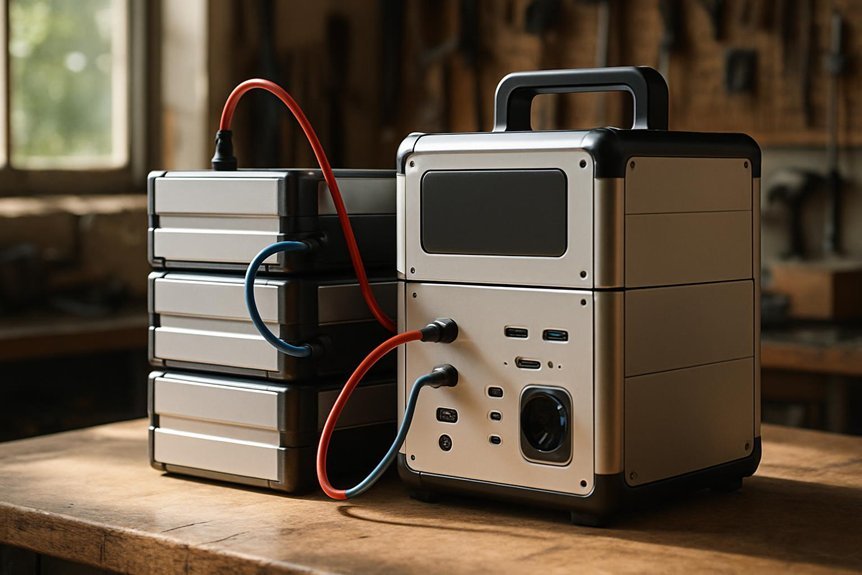
We start by quantifying your total power needs and identifying critical vs. nonessential loads. Next, we map these requirements to a load order and establish a clear expansion path for future growth. Together, we’ll align the system’s capacity with your priorities: assess power requirements, identify load priorities, and plan an expansion path.
Assess Power Requirements
To accurately size a modular portable power station, we start by precisely listing every device and its expected run time, then convert each one’s wattage and current into a common baseline (watts and amp-hours). We then aggregate these figures to determine total energy needs, peak draw, and autonomy targets. Our method emphasizes reproducibility: we validate calculations with contingency margins and consider voltage compatibility, efficiency losses, and inverter sizing. We translate requirements into an energy profile that supports disaster readiness and grid independence, ensuring we account for charging cycles, recharge sources, and ambient conditions. This rigorous assessment guides component selection, battery chemistry, and modular expansion strategies, delivering a defensible, evidence-based plan rather than guesswork. Clear documentation, repeatable procedures, and transparent assumptions anchor our sizing process.
Identify Load Priorities
How should we prioritize loads to ensure reliability under varying conditions? We define load priorities to preserve essential functionality while respecting safety thresholds and system limits. Our method targets critical operations first, then essential comfort, with nonessential loads last. We quantify needs, assign priority levels, and verify real-time feasibility under changing inputs.
- Critical systems: life-safety, communications, control, and safety interlocks.
- Essential services: refrigeration, environmental monitoring, essential lighting.
- Comfort and convenience: noncritical climate control, entertainment, charging of nonessential devices.
- Discretionary loads: auxiliary power, nonessential tools, future expansions.
We document thresholds, test responses, and recalibrate as conditions shift. This disciplined load prioritization ensures reliability, preserves safety thresholds, and guides automatic shedding when supply dwindles.
Plan Expansion Path
Plan Expansion Path: Define Your Power Needs starts with a clear map of capacity, demand, and growth targets informed by the load priorities we established earlier. We identify current usage, seasonal variance, and potential future loads to estimate headroom and reliability margins. This concept teardown reveals how incremental capacity aligns with modular growth, enables staged investments, and preserves system efficiency. We translate needs into a scalable bill of materials, wiring topology, and charging strategy that accommodates evolving requirements without overprovisioning. Our analysis includes risk assessment, redundancy options, and performance metrics to monitor expansion effectiveness. We also consider warranty considerations, ensuring components support expansion timelines and compatibility across generations. Finally, we document decision criteria, milestones, and review cycles to sustain deliberate, data-driven growth.
Choose Your Core: Cores, Batteries, and Modules That Fit

We’ll start with Core Selection Basics, outlining how cores, batteries, and modules interlock to meet your goals. We’ll compare battery chemistries and module interfaces to identify tradeoffs in energy density, safety, and lifecycle costs. We’ll then map compatibility considerations to your target uses, so you can assemble a coherent, scalable power system.
Core Selection Basics
Are you optimizing for reliability and efficiency when selecting a modular core? We approach core selection with disciplined criteria, focusing on compatibility, performance margins, and lifecycle costs. We articulate how cores, batteries, and modules fit together to meet use-case demands without overengineering. Our method emphasizes measurable variables and repeatable checks.
- Define load profiles to match core capacity and heat dissipation.
- Verify interfaces for mechanical, electrical, and firmware compatibility.
- Assess expandability, module diversity, and future-proofing.
- Compare total cost of ownership across replacement cycles and maintenance.
These steps support clear tradeoffs and risk awareness. By centering core selection around interoperability and robust operation, we reduce surprises. Battery chemistry considerations inform compatibility without detailing chemistry options here, keeping focus tight and practical.
Battery Chemistry Options
Battery chemistry options shape both performance and lifecycle costs, so choosing the right match starts with what our core, modules, and user needs demand. We analyze tradeoffs among energy density, cycle life, thermal behavior, and cost curves to select batteries that align with mission profiles. Lithium iron phosphate offers robust safety and long cycle life for moderate energy needs, while nickel manganese cobalt chemistries push higher energy density at elevated cost and risk. Solid-state approaches promise safety margins but bring integration and supply uncertainties. We evaluate charging safety, including thermal runaway mitigation, BMS integration, and proper charging profiles, to protect both users and assets. Our guidance emphasizes system-wide compatibility, predictable degradation, and clear maintenance pathways, ensuring reliable performance across varying loads, temperatures, and durations.
Module Compatibility Guide
How do you guarantee seamless interoperability across cores, batteries, and modules when building a modular portable power system? We pursue rigor through explicit interface standards, documented tolerances, and verified compatibility matrices that map electrical, mechanical, and communication protocols. Our approach minimizes risk to battery safety and ensures consistent performance while protecting warranty coverage.
- Define dimensional and connector standards that force correct mating, reducing misalignment and wear.
- Align voltage, current, and chemistry profiles so next-gen modules operate within safe thermal envelopes.
- Require formalized communication handshakes and firmware APIs to prevent misinterpretation between controllers.
- Establish audit trails and QC checklists that verify a module’s lineage, safety certifications, and warranty eligibility.
Pairing Batteries With Cores: Capacity, Weight, and Chemistry
Pairing batteries with cores hinges on three interconnected factors: capacity, weight, and chemistry. We evaluate tradeoffs by examining how weight relates to usable capacity, and how chemistries influence efficiency and degradation. Our goal is transparent comparisons: batteries vs cores, where cores define delivery potential and system resilience. Weight vs capacity emerges as a central axis: higher energy density reduces mass but can raise cost and thermal load. Chemistry dictates cycle life, safety margins, and charging behavior, guiding selection for each use case. Below is a compact matrix to visualize interactions.
| Factor | Impacted Parameter | Observed Trend |
|---|---|---|
| Capacity | Energy delivered | Directly proportional |
| Weight | Mass, portability | Inverse to density efficiency |
| Chemistry | Longevity, safety | Determines cycle robustness |
Modular Accessories That Scale: Inverters, Solar, and Monitoring
Modular accessories that scale the system—specifically inverters, solar input, and monitoring—build on the capacity, weight, and chemistry framework by adding configurable layers that adapt to load and environment. We examine how modular accessories enable measured scalability considerations, balancing efficiency, weight, and thermal profiles with flexible topology. Our approach emphasizes battery chemistry compatibility, integration points, and data fidelity through monitoring integration.
1) Inverter modules paired with control firmware optimize efficiency curves under varying loads.
2) Solar input rails scale via adjustable MPPT ranges and diode arrangements for shading resilience.
3) Monitoring modules collect temperature, current, voltage, and SOC for precise state estimation.
4) Communications layers unify sensors and controllers into a coherent, auditable system.
Expand Without Replacing: Configurations for Home, Outdoor, and Work Sites
A flexible configuration approach lets us expand a modular power system for home, outdoor, and work-site use without swapping core components. We examine scalable modules, secure interconnections, and standardized ports to enable seamless growth. By aligning storage, inverter, and control subsystems, we support diverse load profiles while maintaining safety margins and diagnostics. Expand without replacing: configurations for home, outdoor, and work sites empower users to tailor capacity, runtime, and resilience with minimal disruption. Our framework treats Modular Portable Power Station Systems as an adaptable platform that preserves baseline efficiency, permits phased upgrades, and preserves warranty boundaries. Thoughtful layout reduces cabling clutter and facilitates maintenance.
| Scenario | Value |
|---|---|
| Home readiness | Continuous baseload support |
| Outdoor versatility | High portability, weather tolerance |
| Work-site resilience | Rapid reconfiguration, serviceability |
Total Cost and Value: Budgeting Your Modular System
To budget a Modular Portable Power Station System effectively, we must balance upfront costs with long-term value across home, outdoor, and work-site configurations. We approach total cost and value analytically, avoiding fluff, to maximize cost efficiency and align warranty expectations with performance.
Strategic budgeting for modular power: upfront costs, long-term value, and reliable, scalable performance.
- Upfront purchase vs. maintenance: quantify the break-even horizon and discount future savings.
- System expansion: value of modular growth vs. complete replacements.
- Operational costs: impact of efficiency, peak shaving, charging sources, and maintenance cycles.
- Risk and warranties: coverage scope, response times, and replacement probabilities.
We’ll document cost drivers, compare scenarios, and emphasize predictable, durable components. Our method emphasizes transparent budgeting, measurable value, and clear expectations for long-term reliability.
Frequently Asked Questions
How Long Does a Modular System Last With Daily Use?
We expect long term reliability to extend with daily use, typically several years, depending on cycle life and maintenance; hot swapping viability is feasible, but we monitor cells regularly to sustain performance and minimize degradation over time.
Can Modules Be Swapped Without Downtime or Data Loss?
Yes, we can swap modules with minimal interruption using hot swapping protocols and swappable interfaces. We guarantee safe isolation, module redundancy, firmware compatibility, and lifecycle management so downtime and data loss remain negligible during maintenance.
What Safety Standards Govern Modular Power Systems?
We abide by Safety standards and Regulatory compliance; these govern modular power systems. We rigorously assess design, testing, and integration, ensuring risk management and ongoing conformity, while communicating clear criteria, responsibilities, and evidence to you in precise, actionable terms.
Are There Warranties for Individual Modules and Cores?
Yes, we offer warranties for both individual modules and cores. Our warranty policies cover defects and performance, and we monitor core lifespans to guarantee reliability; terms vary by product line and usage, with clear, data-driven remediation options.
Can Modular Systems Power Critical Medical Devices Safely?
Can modular systems power critical medical devices safely? Yes—our analysis confirms robust modular reliability and battery modularity underpin safe operation. We question, do redundancies and fault isolation meet strict standards, ensuring uninterrupted performance under varied loads? We confidently answer: yes, with safeguards.
Conclusion
We’ve shown how modular portable power systems align capacity, weight, and chemistry with your real needs. By prioritizing cores, batteries, and scalable modules, you optimize efficiency, fault tolerance, and thermal management—without forcing a full swap when plans change. Think of the system as a well-titted toolkit, ready to adapt like a chameleon. If you design around load priorities and economics, you’ll maximize value across home, outdoor, and work-site use.