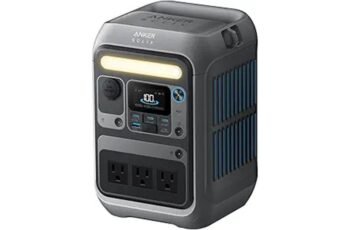
Jackery HomePower Pro Max overview
Can a $1,889 battery system replace a home backup system, or does it merely supplement one? The Jackery HomePower is designed to do more than keep phones charged during a camping trip: it starts with 3,584Wh of storage, supplies 2,000W at 120V, and can provide 4,000W through a 120V/240V configuration from one unit. That makes it unusually interesting for selected household circuits, although the installation requirements mean the advertised price is not the complete project cost.
Jackery positions the Jackery HomePower for permanent home installation with a manual transfer switch and a claimed 4kW–8kW auto-backup setup. The current listed price is $1,889, reduced from the $2,099 original price, and availability is shown as In Stock. We see real value here for households that need quiet battery backup and 240V capability, but we would compare the cost of the transfer equipment, electrical work, and any extra batteries before treating it as a substitute for a conventional generator.
In short, the Jackery HomePower deserves consideration when 240V output, UPS behavior, and expandable storage matter more than portability. It is less compelling for occasional outdoor use or for buyers who want a complete, ready-to-connect whole-home system without professional installation.
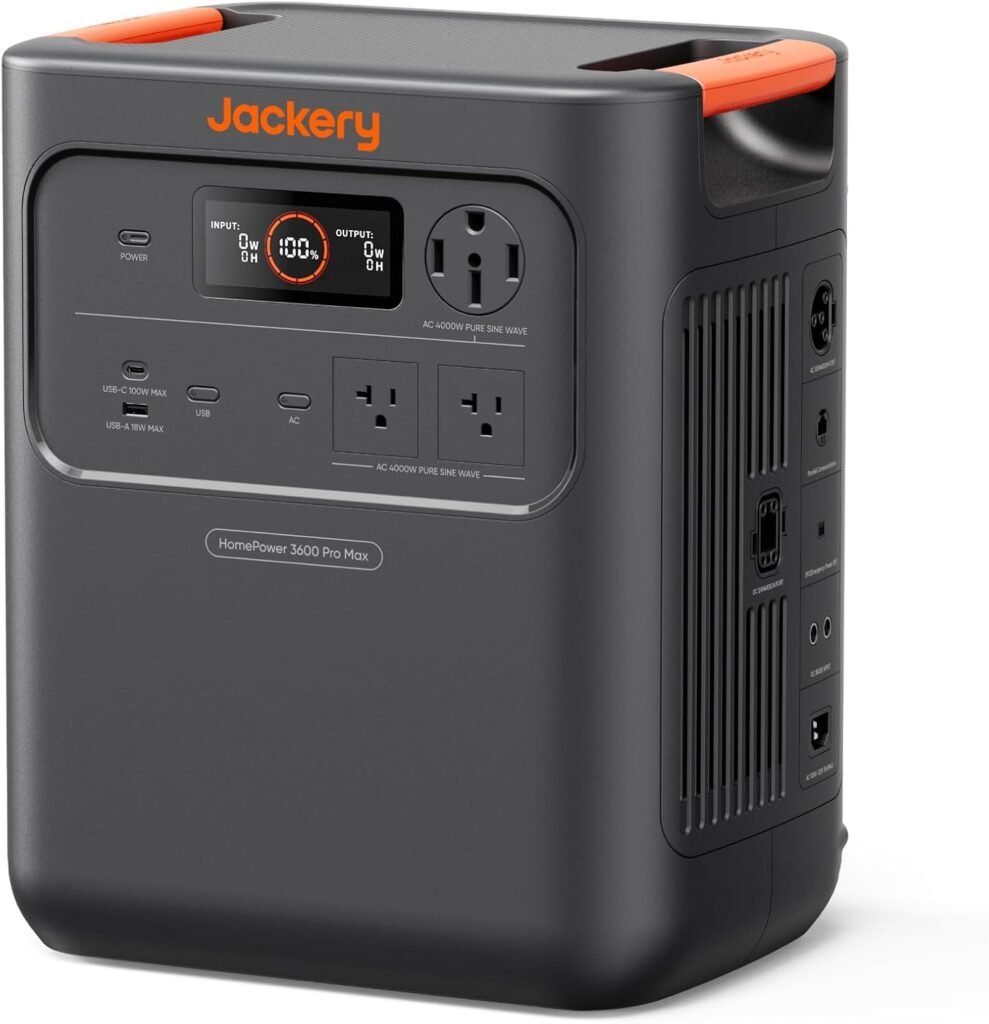

Key specifications and home backup capability
The Jackery HomePower 3600’s 3,584Wh starting capacity is best understood as an energy budget rather than a promise of a fixed number of hours. A 100W load might theoretically consume 100Wh per hour, while a 500W average load would use roughly five times as much. In practice, inverter losses, conversion efficiency, standby consumption, and appliances cycling on and off reduce the usable figure. Running several devices at once also changes the result.
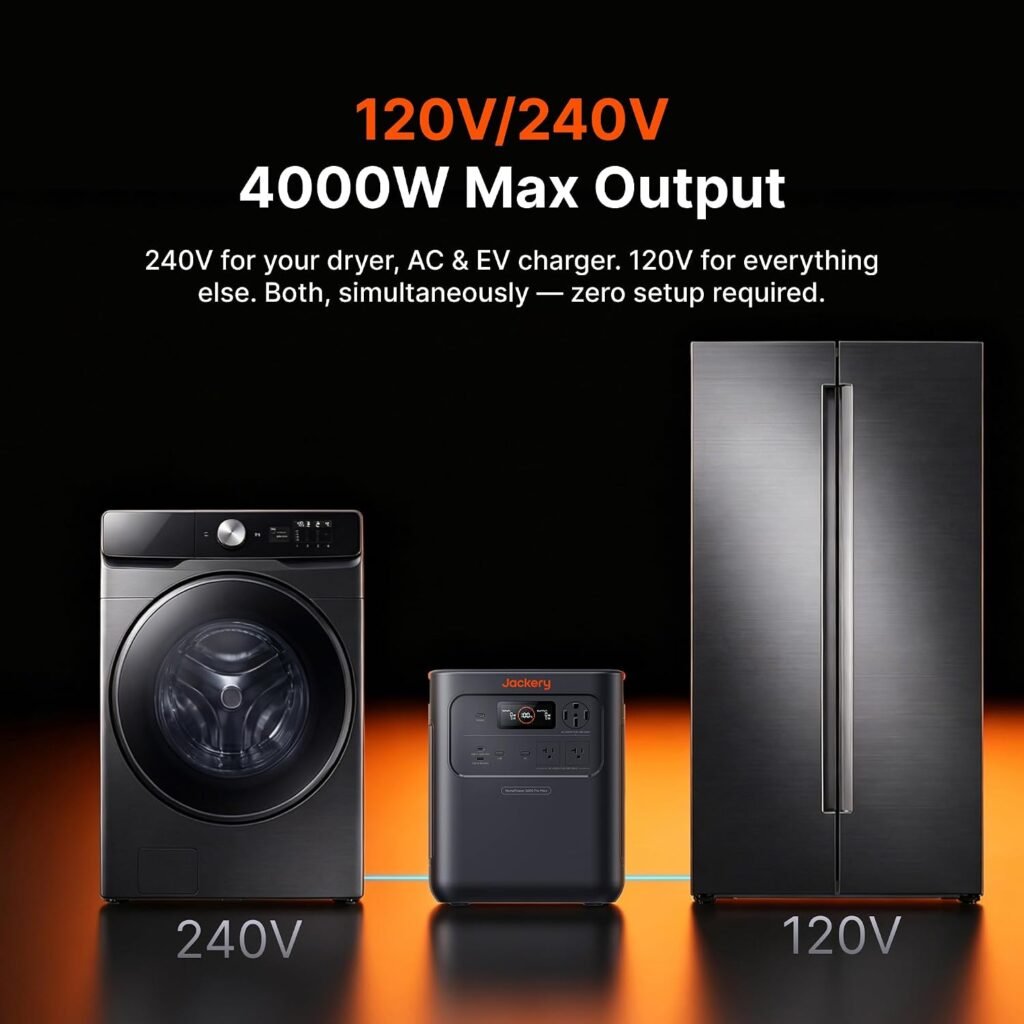
The Jackery HomePower has two different output figures that should not be confused. Its 2,000W rating describes the 120V output, while the 4,000W figure applies to the 120V/240V configuration. That does not mean every individual outlet can deliver 4,000W, nor does it remove the need to check circuit limits and appliance startup demand. Refrigerators, freezers, sump pumps, and some motors can briefly draw considerably more power when starting.
The advertised 4kW–8kW auto-backup capability depends on a compatible manual transfer switch and suitable electrical work. Before choosing a setup, we recommend this process:
- List the appliances and circuits that must operate during an outage.
- Record both running watts and startup watts for motor-driven equipment.
- Add the loads that may run simultaneously.
- Leave practical headroom rather than sizing exactly to the calculated total.
- Ask an electrician to confirm whether the planned 120V/240V circuits are appropriate.
That method gives a more useful answer than looking only at the battery’s headline capacity.
Jackery HomePower features in detail
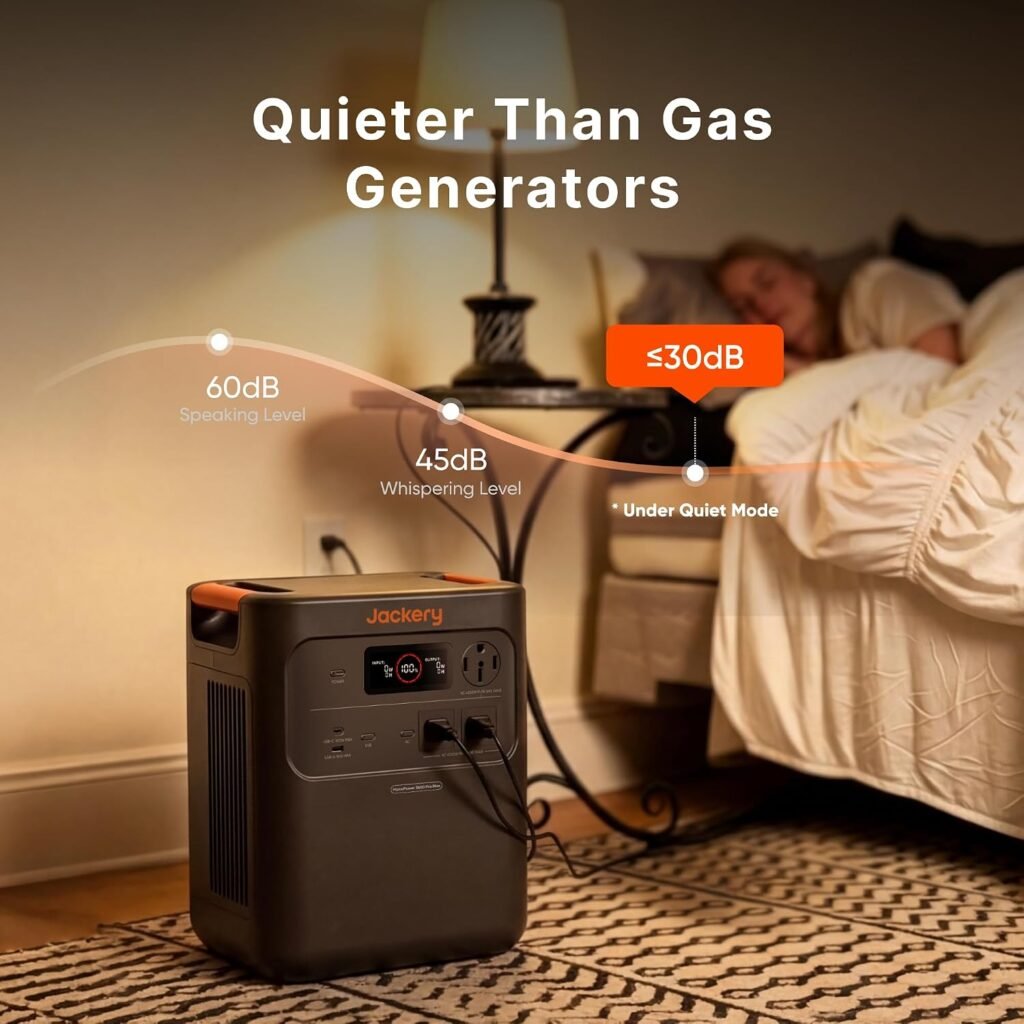
The Jackery HomePower is specified to operate below 30dB, a useful characteristic when backup equipment sits near a living area, office, or bedroom. Quiet operation will not make the system inaudible in every charging or high-load situation, but the manufacturer’s rating is far less intrusive than the sound profile associated with many fuel generators. For households working from home, that difference can matter during a long interruption.
The Jackery HomePower also claims a less-than-10ms UPS switch time. That is intended to keep computers and sensitive electronics powered when the supply changes, reducing the chance of a restart during a short interruption. We would still test actual computers, networking equipment, and other critical devices before relying on the feature, because UPS compatibility and appliance behavior can vary.
Eight recharge methods provide flexibility, including compatibility with a gas generator when grid and solar charging are unavailable. The single-unit 120V/240V design may simplify a home backup plan compared with systems that require multiple linked power stations. However, the manufacturer’s claims should be separated from measured household results: charging speed depends on the selected input and accessories, generator integration depends on the installation, and motor startup performance depends on the appliance.

Battery durability, safety, and installation
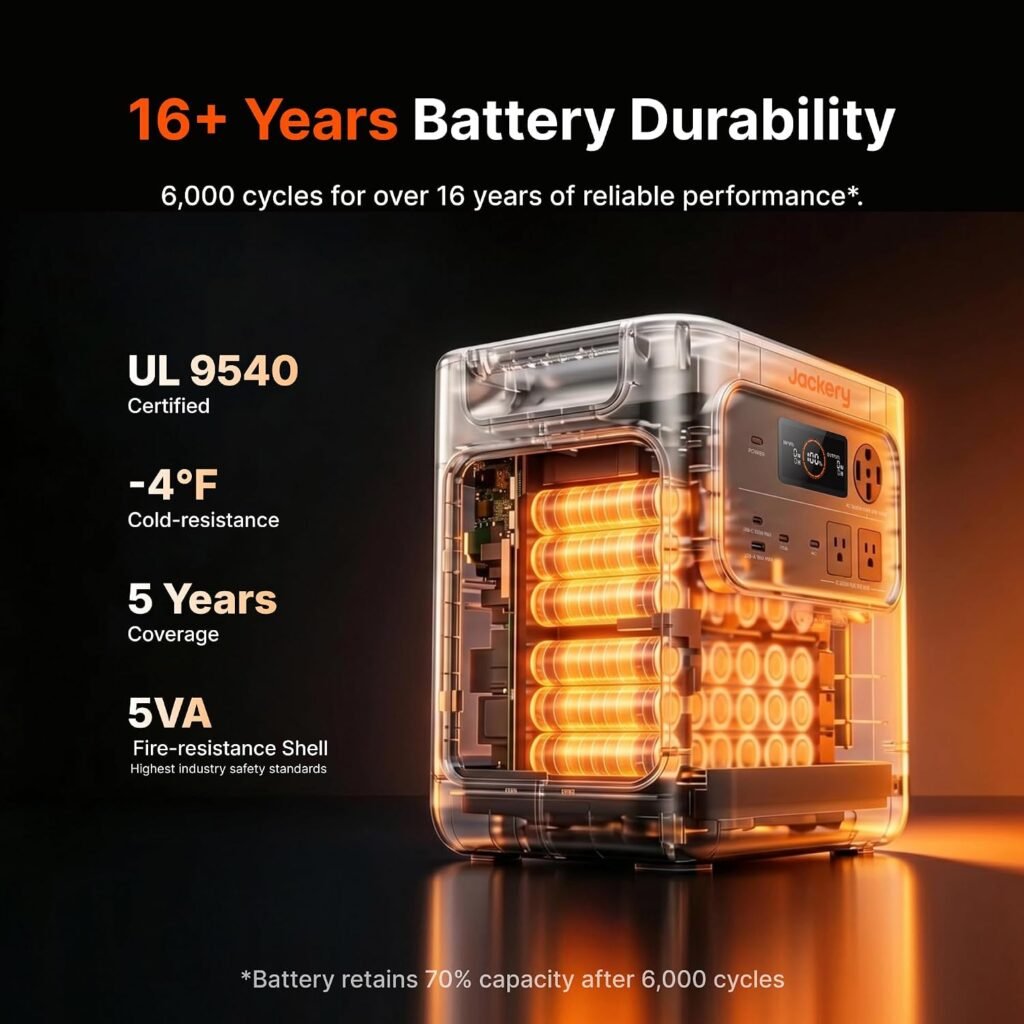
The Jackery HomePower uses EV-grade LFP battery cells and is rated for 6,000 cycles, with a claimed lifespan of more than years. Those figures are encouraging, but they are not guarantees of identical service life in every home. Temperature, depth of discharge, storage conditions, charging habits, and how often the pack remains at a very high or very low state of charge all affect long-term performance.
The Jackery HomePower includes 5VA fireproof housing and a dedicated EPO emergency shutoff. These are safety-focused design features, not permission to skip electrical protection or assume that installation risk has been eliminated. A transfer switch for household circuits should be installed and inspected by a qualified electrician, especially when both 120V and 240V circuits are involved.
We would use this installation checklist:
- Confirm service-panel and transfer-switch compatibility.
- Verify grounding, bonding, and neutral requirements with the installer.
- Identify essential circuits instead of attempting to power everything by default.
- Check local electrical rules and permit requirements.
- Test the outage sequence, UPS behavior, and restoration process under supervision.
Never connect the unit directly to household wiring or improvise a generator inlet. Portable operation and permanent home integration are different use cases, and the latter requires properly designed equipment and workmanship.
Charging, expansion, and expected runtime
The Jackery HomePower expands from 3.6kWh to as much as 43kWh, which changes its role from short-duration backup to a possible extended-outage energy store. Extra modules are most useful for households facing long outages, protecting medical equipment, keeping refrigeration running for extended periods, or supporting a higher daily energy requirement. They are less attractive when the goal is simply a few hours of emergency lighting and communications.
For a rough estimate, divide usable watt-hours by appliance watts, then reduce the result to allow for inverter and conversion losses. A 100W network-and-lighting load should run far longer than a 1,500W heavy appliance, while a refrigerator averaging 500W would sit between those examples. These are illustrative comparisons, not guaranteed runtimes: refrigerators cycle, heavy appliances may have startup surges, and the usable battery percentage is not the same as the nameplate capacity.
Eight recharge options, including gas-generator compatibility, make recovery planning more flexible. The trade-off is cost: solar-input equipment, charging accessories, and expansion batteries can add substantially to the initial purchase. Before an emergency, we recommend charging the system fully, connecting the intended household loads, recording actual wattage, and timing the result. That test is more useful than relying solely on the advertised capacity.
For buyers considering the Jackery HomePower 3600, the expansion path is a strength only if the budget includes the batteries needed for the expected outage duration.
What Customers Are Saying
We cannot responsibly quote a star rating, review count, or recurring customer pattern for the Jackery HomePower because those figures were not supplied in the available product information. It would be misleading to claim that many buyers praised quiet operation, straightforward setup, 240V output, UPS continuity, or LFP durability without a verifiable review record. The same caution applies to complaints about the app, display, charging behavior, support, weight, or transfer-switch installation.
The Jackery HomePower should therefore be assessed with the review evidence available on the listing at the time of purchase. Look for multiple verified-buyer reports rather than one dramatic experience, and separate comments about the power station from problems caused by third-party wiring or an unsuitable transfer switch. A reviewer using the unit for an RV or workshop may have very different priorities from a homeowner protecting a refrigerator, sump pump, and office network.
When checking the listing, we would prioritize reviews from customers with similar loads and a similar installation style. Check dates as well: firmware, accessories, packaging, and support processes can change. For the Jackery HomePower 3600, the most useful feedback will explain the connected wattage, whether 240V was actually installed, how the unit was recharged, and what happened during a real outage rather than simply reporting that the box arrived intact.
Who should consider this home power station?
The Jackery HomePower is a strong match for homeowners who want selected-circuit or broader home backup and have space for a permanent installation. It makes particular sense where a 240V appliance must be included, or where the priority is protecting a refrigerator, freezer, sump pump, home-office equipment, networking gear, and essential lighting during an outage.
We would also consider the Jackery HomePower for shoppers who prefer quiet battery backup to fuel storage and value LFP chemistry, UPS switching, and a path to substantially more storage. The combination is more home-oriented than a small portable battery, although it still needs a carefully planned electrical connection rather than an improvised extension-cord arrangement.
The poor matches are just as clear. Renters without service-panel access are unlikely to be able to use the permanent-installation features. Campers seeking a lightweight battery will probably find this category unnecessarily large and costly. Households expecting sustained whole-home operation without adding storage may also be disappointed if their normal demand is high.
Our decision process is simple: calculate essential loads, confirm whether 120V or 240V is required, obtain an installation quote, price the expansion batteries needed for the expected outage, and compare the complete installed cost. For the Jackery HomePower 3600, that calculation matters more than the base price alone.
How it compares with competing power stations
The Jackery HomePower competes with products such as the EcoFlow DELTA Pro Ultra and Anker SOLIX F3800, but the right choice depends on the complete system rather than the nameplate alone. Jackery’s starting capacity is 3,584Wh, with one-unit 120V/240V output and expansion to 43kWh. The EcoFlow is aimed at a more modular home-energy setup, with a larger potential storage ecosystem, while the Anker emphasizes home-panel integration and a different installation style.
For a buyer prioritizing a single-unit 240V arrangement, the Jackery HomePower may be appealing because its 4,000W 120V/240V architecture is presented as available from one unit. A shopper prioritizing maximum modular capacity may prefer the EcoFlow DELTA Pro Ultra, subject to its package requirements. Someone focused on home-panel integration and a system built around that approach may instead investigate the Anker SOLIX F3800. Portability, expansion design, transfer equipment, and charging ecosystems differ enough that no universal winner is justified.
The listed Jackery reference price is $1,889, versus an original price of $2,099. Competitor prices were not included in the supplied product data, so we would verify their current prices before publishing a direct value comparison. In every case, add transfer equipment, electrician labor, extra batteries, solar-input hardware, and generator accessories before comparing totals. The Jackery HomePower is best judged as part of an installation package, not as an isolated base unit.
Price, ownership costs, and buying decision
At $1,889, the Jackery HomePower offers a persuasive specification package: 3,584Wh of LFP storage, 4,000W 120V/240V output, operation rated below 30dB, UPS switching under 10ms, and a substantial expansion path. The discount from $2,099 improves the headline value, especially for a household that genuinely needs 240V backup rather than merely wanting a large portable battery.
The Jackery HomePower 3600’s real project cost can be higher. A manual transfer switch, professional electrical installation, possible expansion batteries, charging accessories, and periodic testing all belong in the budget. Solar hardware and generator-related equipment may be useful for resilience but can further change the economics. We would request an itemized installation quote before deciding, rather than assuming the listed power-station price covers the home-ready setup.
Paying for this type of system can make sense when outages are frequent, sensitive electronics need continuity, a 240V appliance is essential, or quiet operation is preferable to storing and running fuel. A smaller portable battery may offer better value for brief outages and communications. A conventional generator may suit buyers who need long operation with readily available fuel, while a larger modular system may be better for sustained high demand or greater storage requirements.
Our conclusion for the Jackery HomePower is conditional but positive: buy it when the essential-load calculation, installation quote, expected outage duration, and expansion budget all fit. If they do not, the lower base price can become a false economy.
Pros and Cons
Pros
- Single-unit 120V/240V output rated up to 4,000W
- 3,584Wh starting capacity with expansion potential up to 43kWh
- EV-grade LFP battery rated for 6,000 cycles
- Operating noise specified below 30dB
- Less-than-10ms UPS switch-time claim
- Eight recharge methods, including gas-generator compatibility
Cons
- Manual transfer-switch installation and professional electrical work add cost and complexity
- The $1,889 base price does not include every home-integration accessory or possible expansion battery
- Actual runtime varies substantially with inverter losses, cycling loads, and startup surges
- Not a practical choice for renters without panel access or shoppers seeking a lightweight camping battery
- A verified customer rating and review count were not supplied for independent review synthesis
Final Verdict
Key Takeaways
- The $1,889 price buys a 3,584Wh LFP power station with 2,000W 120V output and a specified 4,000W 120V/240V configuration.
- Its home-backup features require compatible transfer equipment and qualified electrical installation; the base price is not the complete project cost.
- Expansion up to 43kWh makes it more suitable for extended outages than many smaller portable batteries.
- The under-30dB noise claim, less-than-10ms UPS claim, and eight recharge methods are useful advantages, but household testing remains essential.
- It is best for homeowners with clear essential-load requirements, space for installation, and a realistic budget for accessories and expansion.
Frequently Asked Questions
Can the Jackery HomePower power 240V appliances?
Yes. The product is specified to provide 4,000W through a 120V/240V configuration from one unit. The actual appliance must be compatible with the planned circuit, and startup demand, circuit limits, transfer equipment, and professional installation still need to be checked.
Is the Jackery HomePower suitable for permanent home backup?
It is designed for permanent home installation using a compatible manual transfer switch. A qualified electrician should design and install the household connection; the unit should not be connected directly to home wiring or through an improvised inlet.
How much runtime does 3,584Wh provide?
Runtime depends on the appliance wattage, inverter losses, conversion losses, standby consumption, and cycling behavior. A rough estimate is usable watt-hours divided by the appliance’s average watts, followed by an allowance for those losses.
What does the under-10ms UPS claim mean?
The manufacturer states that the UPS switch time is less than 10ms, intended to help computers and sensitive electronics remain powered during an interruption. We recommend testing the specific devices that matter to you before relying on uninterrupted operation.
Can the battery capacity be expanded?
The stated expansion range is from 3.6kWh to as much as 43kWh. Additional storage is most useful for long outages, medical equipment, extended refrigeration, or households with higher daily consumption, but the extra modules increase total cost.
Is the $1,889 price good value?
It can be good value for buyers who need single-unit 120V/240V output, quiet battery backup, UPS behavior, and expansion. The final value depends on the transfer switch, electrician labor, accessories, and any additional batteries required.
Disclosure: As an Amazon Associate, I earn from qualifying purchases.