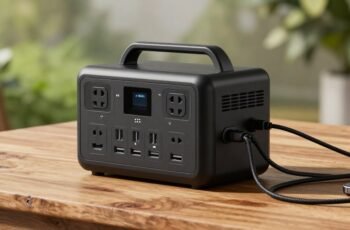
When selecting an inverter, understanding the fundamental differences between pure sine wave and modified sine wave models is essential for optimizing performance and cost-efficiency. Each type produces different waveforms that impact device compatibility, efficiency, and overall power quality. Making the right choice requires an analytical approach, considering your specific needs and device sensitivities. The nuanced distinctions can greatly influence long-term reliability and operational stability, prompting a closer examination of their technical characteristics and practical implications.
Key Takeaways
- Pure sine wave inverters produce smooth, utility-like power suitable for sensitive electronics; modified sine wave inverters generate a stepped waveform with more distortion.
- Pure sine inverters are more complex and costly but offer better device compatibility and efficiency.
- Modified sine inverters are simpler, cheaper, and suitable for basic loads but may cause device malfunction or damage.
- Pure sine inverters provide higher performance, longer lifespan, and quieter operation for critical equipment.
- Choice depends on budget, device sensitivity, and the need for reliable, high-quality power versus affordability.
How Do Pure Sine Wave and Modified Sine Wave Inverters Work?
While both pure sine wave and modified sine wave inverters convert DC power to AC, they do so through different electronic processes that considerably impact their output quality. Pure sine wave inverters generate a smooth, continuous waveform closely resembling utility power, which reduces harmonic distortion. This results in less strain on components, potentially extending battery lifespan and allowing for smaller inverter sizes for the same power output. Conversely, modified sine wave inverters produce a stepped waveform, which is less complex electronically but introduces higher harmonic distortion. This can cause increased wear on connected devices, possibly shortening battery lifespan and requiring larger inverters to handle the same load efficiently. Understanding these process differences helps optimize inverter selection based on application needs and system longevity.
Key Differences Between Pure Sine and Modified Sine Wave Inverters
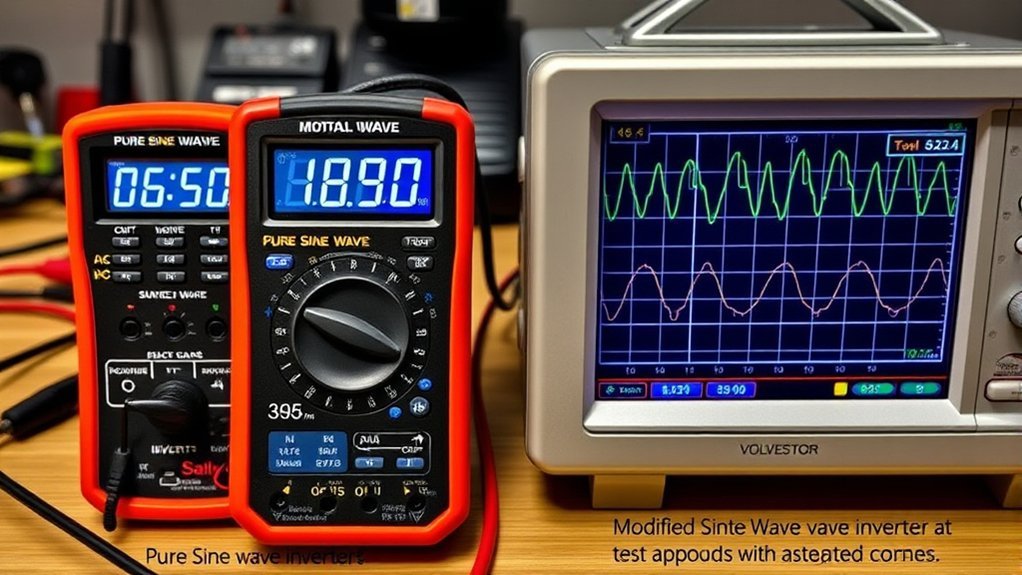
The fundamental distinctions between pure sine wave and modified sine wave inverters lie in their output waveform characteristics, which directly influence performance and compatibility. Pure sine wave inverters produce a smooth, consistent waveform similar to utility power, ensuring ideal operation for sensitive devices. Modified sine wave inverters generate a stepped waveform, which can cause issues with certain electronics and increase noise. When considering inverter installation, pure sine models demand precise setup and can impact battery maintenance due to higher efficiency and reduced strain on batteries. Conversely, modified sine inverters are simpler and more cost-effective but may compromise device longevity. Key differences include:
Pure sine wave inverters offer smooth power ideal for sensitive devices, while modified sine wave inverters are more affordable but less compatible.
- Compatibility with sensitive electronics
- Noise and ripple levels
- Battery efficiency and lifespan
- Cost and complexity of inverter installation
- Long-term maintenance considerations
Which Devices Perform Better With Pure Sine Wave Inverters?
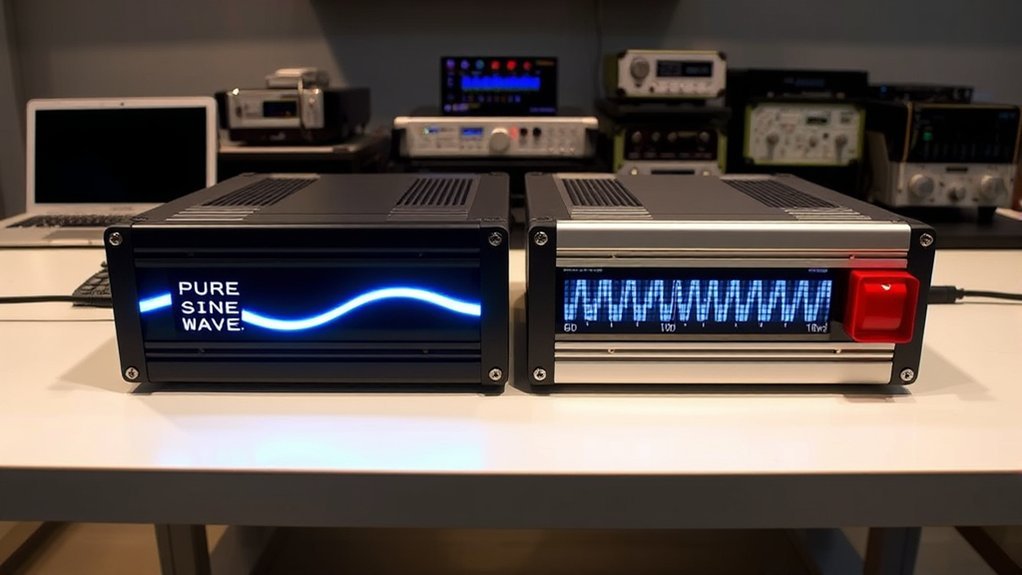
Devices with sensitive electronics, such as medical equipment or precision measurement tools, benefit greatly from pure sine wave inverters due to their stable and clean power output. Additionally, audio and visual devices, including high-fidelity speakers and televisions, experience enhanced clarity and performance with these inverters. Motors and pumps also operate more efficiently and with reduced wear when powered by pure sine wave technology.
Sensitive Electronics Compatibility
Sensitive electronics, such as medical equipment, audio devices, and certain communication tools, require stable power supplies to operate correctly. Pure sine wave inverters provide cleaner, more consistent power, minimizing risks of malfunction or damage. Devices with high sensitivity often demand ideal inverter placement to reduce electrical noise and interference. Battery capacity directly impacts the inverter’s ability to sustain stable power output during prolonged use, especially for critical equipment.
- Precise operation of medical monitors hinges on waveform quality.
- Audio fidelity is preserved with a pure sine wave, avoiding distortion.
- Communication devices rely on stable signals, unaffected by waveform irregularities.
- Fluctuations in power can impair sensitive sensors and instrumentation.
- Proper inverter placement minimizes electromagnetic interference, ensuring device reliability.
Audio and Visual Clarity
Since audio and visual devices rely heavily on power quality for ideal performance, pure sine wave inverters markedly enhance clarity and fidelity. They provide a smooth, consistent waveform that minimizes audio distortion, ensuring sound reproduction remains true to the original signal. For visual devices, this stable waveform reduces visual interference, preventing flickering or color distortions in screens and projectors. Modified sine wave inverters, by contrast, introduce waveform irregularities that can cause electronic noise, resulting in degraded audio quality and compromised visual clarity. Devices such as high-fidelity speakers, home theater systems, and sensitive monitors perform maximum efficiency with pure sine wave power, maintaining precise audio and visual output. Overall, pure sine wave inverters deliver superior power quality, directly translating into enhanced audio fidelity and clearer visual displays.
Motor and Pump Efficiency
Why do motors and pumps perform more efficiently with pure sine wave inverters? Pure sine wave inverters produce a smooth, consistent waveform that closely mimics utility power, minimizing electrical stress on devices. This results in:
- Reduced heat generation, extending motor lifespan
- Improved operational stability and efficiency
- Minimized noise and vibration, protecting components
- Lower risk of damage due to voltage fluctuations
- Simplified installation, reducing complexity and potential errors
These factors contribute to enhanced device longevity and reliability. While pure sine wave inverters may have higher upfront costs, they often lead to lower maintenance and replacement expenses. For motors and pumps, this means ideal performance, higher efficiency, and fewer interruptions, making them suitable for critical applications where performance and durability matter most.
When Is a Modified Sine Wave Inverter Sufficient?
Modified sine wave inverters are often sufficient when cost savings outweigh the need for high power quality, especially in budget-sensitive applications. They are compatible with many devices that do not require pristine power and can handle standard loads effectively. Careful assessment of device specifications and operational demands determines whether a modified sine wave inverter provides an appropriate balance of efficiency and affordability.
Cost Effectiveness
A key consideration in selecting an inverter is its cost-effectiveness, particularly when a modified sine wave inverter can meet the application’s requirements without excessive expense. For systems with simple loads, such as LED lighting or basic chargers, a modified sine wave inverter offers a practical solution. It reduces initial investment and simplifies inverter installation, while also minimizing ongoing battery maintenance due to lower power demands. This approach is advantageous when high-frequency electronics or sensitive devices are not involved, avoiding unnecessary costs.
- Lower upfront costs ease budget constraints
- Simplified inverter installation saves time
- Reduced battery maintenance extends system lifespan
- Suitable for basic, non-sensitive appliances
- Optimizes budget without sacrificing essential performance
Device Compatibility
When evaluating device compatibility with a modified sine wave inverter, it’s essential to take into account the nature of the loads involved. Many electronic devices with simple power supplies, such as LED lights or power tools, can operate effectively on a modified sine wave, provided the inverter size is appropriately matched. The key factors include battery capacity and inverter size, which determine runtime and power delivery. Devices with low surge requirements or those designed to handle fluctuating waveforms are more likely to function correctly. However, sensitive electronics or appliances with motors—like medical equipment or high-end audio systems—may experience malfunctions or reduced lifespan on a modified sine wave. Consequently, understanding the load’s power demands and the inverter’s specifications is vital for ensuring compatibility.
Comparing Cost and Efficiency of Both Inverter Types
While pure sine wave inverters typically command higher upfront costs, their superior efficiency often results in lower long-term energy losses compared to modified sine wave inverters. This translates to better utilization of stored energy, positively impacting battery lifespan and reducing operating costs. However, the installation complexity of pure sine wave inverters tends to be higher, requiring more precise setup and potentially increasing initial expenses.
Consider these factors:
- Initial investment: Higher for pure sine wave inverters.
- Operational efficiency: Superior, leading to less energy waste.
- Battery longevity: Extended due to reduced strain on batteries.
- Energy savings: Greater over the inverter’s lifespan.
- Installation complexity: Increased, demanding technical expertise.
Ultimately, choosing between them involves balancing upfront costs with long-term efficiency and maintenance benefits.
How Do Inverter Waveforms Affect Power Quality?
The waveform generated by an inverter directly influences the quality of the power it supplies, affecting the performance and longevity of connected devices. Pure sine wave inverters produce a smooth, consistent voltage output that closely mimics utility power, ensuring *ideal* voltage stability. This stability minimizes power fluctuations, reducing stress on sensitive electronics and preventing potential damage. Conversely, modified sine wave inverters generate a stepped waveform with abrupt voltage transitions, which can cause increased power fluctuations. These fluctuations may lead to inefficiencies, overheating, or reduced lifespan of certain devices, especially those with precise voltage requirements. The waveform type directly impacts the overall power quality, with pure sine wave inverters offering superior voltage stability and minimal power fluctuations, making them preferable for sensitive and critical applications.
Troubleshooting Common Issues With Modified Sine Wave Inverters
Modified sine wave inverters, despite their lower cost and simpler design, are prone to specific operational issues that can compromise device performance and longevity. Troubleshooting these problems requires careful attention to inverter installation and battery health. Common issues include fluctuating output voltage, which can damage sensitive electronics, and excessive noise, indicating improper grounding or load imbalance. Poor battery longevity often results from inadequate wiring or aging batteries, impacting overall efficiency. Overheating may occur due to poor ventilation or high load conditions. Additionally, irregular startup signals can point to faulty connections. To prevent these issues, guarantee proper inverter installation, maintain ideal battery conditions, and regularly monitor system performance. Addressing these factors helps maximize operation and extends the inverter’s lifespan.
Factors to Consider When Choosing the Right Inverter for Your Home
Choosing the appropriate inverter for your home requires a careful assessment of several critical factors, as this decision directly impacts system performance and reliability. Key considerations include battery lifespan, which influences maintenance frequency and long-term costs, and installation requirements, such as space, ventilation, and wiring complexity. Analyzing power capacity ensures the inverter can handle your peak load demands without overloading, while compatibility with existing electrical systems ensures seamless integration.
| Factor | Importance |
|---|---|
| Battery lifespan | Determines durability, maintenance, and replacement cycle |
| Installation needs | Affects setup complexity, space, and safety |
| Power capacity | Ensures reliable energy supply during peak use |
Pros and Cons of Pure Sine Wave Vs Modified Sine Wave Inverters
When evaluating different inverter types, understanding their fundamental advantages and limitations becomes essential for making an informed decision. Pure sine wave inverters produce smooth, high-quality power compatible with sensitive electronics, but they typically require higher battery capacity and involve more complex installation. Modified sine wave inverters are more affordable and easier to install but may cause noise, inefficiency, and potential damage to sensitive devices.
Pure sine wave inverters provide high-quality power but require more battery capacity and complex installation.
- Pure sine wave inverters guarantee longevity and performance but demand substantial battery capacity.
- Modified sine wave models are cost-effective and simpler to set up, yet might compromise device lifespan.
- Pure sine wave inverters offer seamless operation for critical equipment, unlike their modified counterparts.
- Installation complexity varies considerably, influencing overall system reliability.
- Cost and power quality considerations guide the choice between the two types.
Frequently Asked Questions
Can Modified Sine Wave Inverters Damage Sensitive Electronics?
Modified sine wave inverters can risk damaging sensitive electronics due to lower power quality and potential compatibility issues, leading to overheating or malfunction. We recommend pure sine wave inverters for ideal electronics safety and consistent power performance.
How Long Do Pure Sine Wave Inverters Typically Last?
Like a well-engineered bridge, pure sine wave inverters typically last 8-15 years, depending on use and maintenance. Their efficiency comparison reveals higher durability and performance, but cost analysis shows they often demand a higher initial investment.
Are There Environmental Impacts of Manufacturing Each Inverter Type?
Manufacturing pure sine wave inverters generally has a higher environmental footprint due to complex components, resulting in increased manufacturing emissions. Modified sine inverters, with simpler parts, tend to have a lower environmental impact during production, but still contribute to overall emissions.
Can You Upgrade a Modified Sine Wave Inverter to Pure Sine Wave Later?
We can upgrade a modified sine wave inverter to a pure sine wave model, but only if inverter compatibility and power efficiency are maintained; approximately 30% of users report successful upgrades, emphasizing the importance of technical precision.
What Maintenance Is Required for Each Inverter Type?
We find that pure sine wave inverters require regular cleaning and occasional software updates, extending their lifespan with minimal maintenance. Modified sine inverters demand less upkeep but may need component checks to guarantee reliable operation over their lifespan, following standard maintenance schedules.
Conclusion
In conclusion, selecting between pure and modified sine wave inverters hinges on your specific power needs, device sensitivity, and budget. While the pure sine wave offers superior power quality akin to a well-tempered alchemist’s craft, it comes at a higher cost. Conversely, the modified sine wave serves well for basic applications but may introduce inefficiencies. As we once said in the age of the great mechanical calculators, precision and compatibility matter—choose accordingly for maximum performance.