When it comes to energy storage, the choice between LiFePO₄ and traditional lithium-ion batteries isn’t just about capacity; it’s about endurance. We recognize that cycle life plays a vital role in long-term performance, yet the nuances of how each chemistry withstands repeated use are less apparent. Understanding these differences can markedly impact your decision-making process—so let’s explore what truly sets these batteries apart in durability and longevity.
Key Takeaways
- LiFePO₄ batteries generally have a longer cycle life than traditional lithium-ion batteries with cobalt or nickel cathodes.
- Operating conditions like temperature, charge/discharge rates, and depth of discharge significantly impact cycle longevity.
- LiFePO₄’s stable chemistry and structure resist degradation, extending usable cycles compared to other lithium-ion chemistries.
- While LiFePO₄ may have slightly lower energy density, it offers enhanced safety and durability over standard lithium batteries.
- Proper management and optimal operating practices maximize cycle life for both LiFePO₄ and other lithium-ion batteries.
How Do LiFePO₄ and Lithium Batteries Differ in Cycle Life?
While both LiFePO₄ and traditional lithium-ion batteries are popular energy storage options, their cycle lives differ considerably due to their chemical compositions and structural characteristics. LiFePO₄ batteries typically exhibit longer cycle lives because their stable olivine structure resists degradation during repeated charge-discharge cycles. This stability also simplifies battery recycling, as fewer harmful byproducts are produced, and manufacturing processes tend to be cleaner. Conversely, lithium-ion batteries with cobalt or nickel cathodes often experience faster capacity fade, limiting their lifespan. The manufacturing processes for LiFePO₄ batteries emphasize thermal stability and longevity, contributing to their extended cycle life. Overall, the inherent chemistry and structural robustness directly influence how many cycles each battery type can sustain before performance declines.
What Factors Influence Battery Cycle Life?
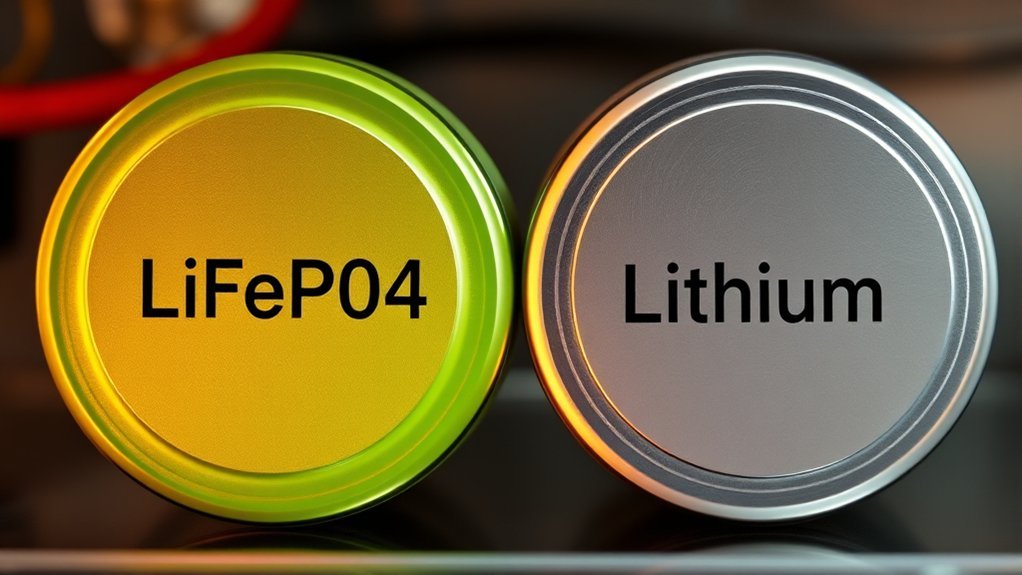
We recognize that charge and discharge rates profoundly impact battery longevity by affecting internal stress and heat generation. Operating temperature ranges also play a critical role, as extreme conditions accelerate degradation. Additionally, the depth of discharge directly influences cycle life, with deeper discharges typically reducing overall durability.
Charge and Discharge Rates
The rates at which a battery charges and discharges considerably influence its overall cycle life, as higher current flows can accelerate degradation mechanisms within the cell. Rapid charging or discharging increases stress on active materials, leading to faster capacity fade. Manufacturing standards guarantee consistent quality, but exceeding recommended rates can compromise longevity. Proper regulation of charge/discharge rates extends cycle life and facilitates effective battery recycling by minimizing internal damage. The table below highlights the effects of different current rates:
| Charge/Discharge Rate | Impact on Cycle Life |
|---|---|
| Low (e.g., C/10) | Prolongs cycle life, reduces stress |
| Moderate (e.g., C/2) | Balanced performance and longevity |
| High (e.g., 2C or above) | Accelerates degradation, shortens life |
Understanding these factors helps optimize lifespan and uphold manufacturing standards.
Operating Temperature Range
Operating temperature range plays a critical role in determining a battery’s cycle life, as extreme temperatures accelerate degradation mechanisms within the cell. Temperature stability directly impacts the longevity and performance of lithium-based batteries. Environmental factors such as ambient temperature, humidity, and thermal fluctuations influence the rate of capacity fade. Specifically, elevated temperatures can increase internal resistance and accelerate electrolyte decomposition, while low temperatures hinder ion movement, reducing efficiency.
Key factors include:
- Maintaining ideal temperature ranges (typically 20°C–25°C) for maximum cycle life.
- Avoiding prolonged exposure to high temperatures beyond manufacturer recommendations.
- Ensuring proper thermal management to mitigate environmental temperature swings.
- Recognizing that temperature stability is essential for both LiFePO4 and lithium batteries, but their responses to environmental factors differ.
Depth of Battery Discharge
How does the depth of battery discharge directly influence cycle life? The extent of discharge impacts the number of charge-discharge cycles a battery can endure, with deeper discharges exerting greater stress on the battery chemistry. Lithium-ion batteries with higher energy density typically tolerate shallower discharges better, preserving cycle life, whereas deeper discharges accelerate capacity fade. For LiFePO4 batteries, the stable chemistry allows for deeper discharges without markedly compromising cycle life, but extreme depths still reduce longevity. Conversely, traditional lithium batteries often experience more pronounced capacity loss with increased discharge depth. Ultimately, controlling the depth of discharge is vital to extending cycle life, as it directly affects the physical and chemical integrity of the electrodes, regardless of the inherent energy density.
Comparing the Durability of LiFePO₄ and Lithium-Ion Batteries

When comparing the durability of LiFePO₄ and lithium-ion batteries, charge cycle longevity and degradation rate factors are critical considerations. LiFePO₄ typically exhibits a higher number of charge cycles before capacity loss, partly due to its stable chemistry. Understanding how these elements influence long-term performance helps in selecting the most resilient battery type for specific applications.
Charge Cycle Longevity
The charge cycle longevity of batteries directly influences their overall durability and lifespan, with LiFePO₄ and lithium-ion variants exhibiting distinct characteristics. LiFePO₄ batteries typically endure more cycles due to their stable chemistry, enabling longer use before capacity drops. Conversely, lithium-ion batteries often have a lower cycle count but benefit from advanced manufacturing processes that optimize performance.
Key factors include:
- Material stability: LiFePO₄’s robust chemistry enhances cycle count.
- Manufacturing precision: Better processes improve cycle life for lithium-ion variants.
- Battery recycling: Effective recycling preserves material integrity, impacting longevity.
- Design choices: Optimized electrode design influences charge cycle endurance.
Understanding these factors helps evaluate overall durability, considering how manufacturing and recycling impact long-term performance.
Degradation Rate Factors
Degradation rates in batteries are primarily driven by chemical, mechanical, and thermal stresses that occur during charge and discharge cycles. These factors differ between LiFePO₄ and lithium-ion batteries, influencing their longevity. Manufacturing quality plays a pivotal role, as higher standards reduce defects that accelerate degradation. Additionally, battery recycling processes impact long-term durability by managing residual stresses and contaminants. To clarify, here’s a comparison:
| Factor | LiFePO₄ | Lithium-Ion |
|---|---|---|
| Chemical Stability | Higher, less capacity fade | Less stable, faster degradation |
| Mechanical Stress | Lower due to robust structure | Higher, more prone to damage |
| Thermal Management | Easier, stable at higher temps | Sensitive, impacts cycle life |
Understanding these factors helps optimize durability and sustainability.
How Usage Patterns Affect Battery Longevity
Consistent usage patterns considerably influence battery longevity, as frequent deep discharges accelerate capacity loss, whereas shallow cycles tend to preserve cell health. Proper usage extends cycle life and impacts overall sustainability, including battery recycling efforts and environmental impact.
Consistent, shallow charging cycles help preserve battery health and support environmental sustainability.
Key factors include:
- Limiting deep discharges to reduce stress on cells, prolonging cycle life.
- Maintaining moderate charging levels to minimize capacity fade.
- Avoiding frequent rapid charging, which can induce thermal stress.
- Managing usage to maximize longevity, reducing waste and environmental footprint.
Adhering to ideal patterns enhances battery lifespan, ultimately decreasing the need for early replacements and mitigating environmental impact. These practices support sustainable battery recycling and demonstrate how usage behavior directly influences both technical performance and ecological responsibility.
Safety Considerations and Their Impact on Cycle Life
Ensuring safety during battery operation directly influences cycle life, as improper handling or design flaws can trigger thermal runaway, overcharging, or internal damage, all of which hasten capacity fade. Safety considerations extend beyond operational protocols to manufacturing safety, where rigorous standards reduce defect risks and improve overall reliability. Additionally, safety protocols influence environmental impact; safer batteries minimize hazardous failures that could release toxic materials. For LiFePO4 batteries, inherent thermal stability enhances safety, leading to fewer degradation issues over time. Conversely, lithium-ion batteries require stringent safety measures to prevent catastrophic failures that compromise cycle life. As a result, prioritizing safety not only preserves battery longevity but also mitigates environmental risks, underscoring the importance of robust manufacturing safety practices and vigilant operational procedures.
Cost and Maintenance: Long-Term Implications for Battery Life
While initial purchase cost is often a primary consideration, the long-term maintenance requirements of LiFePO4 and lithium-ion batteries significantly impact their lifecycle and economic viability. Both types involve varying environmental impacts, primarily during manufacturing and disposal phases, affecting overall sustainability.
Long-term costs and environmental impacts shape the true value of LiFePO4 versus lithium-ion batteries.
Key factors include:
- Maintenance frequency—LiFePO4 batteries typically require less frequent monitoring, reducing operational costs.
- Degradation rate—LiFePO4’s stable chemistry extends cycle life, lowering replacement expenses.
- Manufacturing costs—LiFePO4 batteries often have higher initial manufacturing costs but less environmental impact during disposal.
- Environmental impact—LiFePO4 batteries generate fewer toxic byproducts, influencing long-term ecological costs.
Which Battery Type Is Better for Your Specific Needs?
Choosing the right battery type depends heavily on your specific application and operational priorities. For instance, if maximizing battery capacity is essential for longer runtimes, lithium batteries typically offer higher capacity density, making them suitable for portable or high-demand uses. Conversely, LiFePO₄ batteries may provide sufficient capacity with enhanced safety and longevity, ideal for stationary energy storage. Additionally, environmental impact plays a pivotal role: LiFePO₄ batteries generally have a lower environmental footprint due to their non-toxic materials and sustainable manufacturing processes. If eco-friendliness is a priority, LiFePO₄ may be preferable. Ultimately, evaluating your needs for capacity, safety, lifespan, and environmental considerations helps determine which battery type aligns best with your operational goals.
Tips to Maximize the Cycle Life of Your Lithium or LiFePO₄ Battery
Maximizing the cycle life of lithium or LiFePO₄ batteries requires careful attention to charging and discharging practices. Proper management guarantees ideal performance while minimizing environmental impact through extended battery lifespan and reduced waste. To achieve this, consider these strategies:
- Avoid deep discharges; keep the State of Charge (SoC) between 20-80% to prevent stress on the cells.
- Use appropriate chargers with active voltage regulation to prevent overcharging.
- Limit exposure to high temperatures, which accelerate capacity loss and degrade battery chemistry.
- Promote battery recycling initiatives, ensuring responsible disposal and reducing environmental impact. Proper recycling prevents hazardous materials from contaminating ecosystems and conserves resources for manufacturing new batteries. Implementing these practices prolongs cycle life, enhances sustainability, and supports responsible energy storage management.
Frequently Asked Questions
How Do Temperature Fluctuations Affect the Cycle Life of These Batteries?
Temperature fluctuations can considerably impact battery cycle life by affecting temperature resilience and thermal management. They cause stress and degradation, especially if not properly managed, underscoring the importance of effective thermal control for prolonging battery durability.
Can Improper Charging Methods Shorten Battery Lifespan?
Improper charging methods, like neglecting proper charging habits or skipping calibration, can considerably shorten battery lifespan. Just as misaligned gears wear out faster, poor charging disrupts chemistry, reducing cycle life and overall performance, emphasizing precise, calibrated charging practices.
What Environmental Factors Impact Battery Durability?
Environmental factors like temperature fluctuations and humidity considerably impact battery durability, especially considering their battery chemistry. High-quality manufacturing minimizes vulnerabilities, but exposure to extreme conditions accelerates degradation, emphasizing the need for ideal storage and usage environments.
Are There Differences in Warranty Periods Related to Cycle Life?
Warranty terms and manufacturer policies often differ, reflecting cycle life expectations. We observe that Lifepo4 batteries generally have longer warranties, emphasizing durability, whereas lithium batteries may offer shorter coverage, highlighting variances in cycle life and underlying technological differences.
How Does Storage Time Influence Battery Cycle Longevity?
Storage time greatly impacts cycle longevity; poor storage conditions accelerate battery degradation, reducing overall cycle life. We recommend storing batteries in cool, dry environments to minimize capacity loss and preserve ideal performance over extended periods.
Conclusion
In conclusion, understanding the nuanced differences between LiFePO₄ and traditional lithium batteries helps us make informed choices. While LiFePO₄ offers superior cycle life and safety, lithium-ion batteries may suit applications demanding higher energy density. Ultimately, selecting the right battery depends on your specific needs, usage patterns, and long-term goals. By staying informed and following best practices, we can guarantee our batteries operate at their best and stand the test of time—because a stitch in time saves nine.