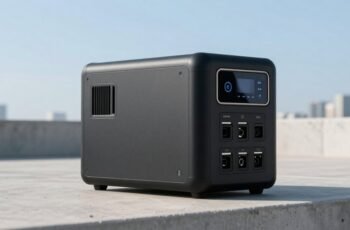
Consider a renewable energy project where initial battery costs greatly impact the overall budget; choosing between LiFePO4 and lithium-ion batteries can influence long-term financial outcomes. While LiFePO4 batteries demand a higher upfront investment, their extended lifespan and enhanced safety profiles often translate into lower total ownership costs. This raises important questions about the true cost-effectiveness of each option, prompting a closer look at long-term factors that can redefine value in energy storage solutions.
Key Takeaways
- LiFePO4 batteries have higher upfront costs but offer longer cycle life, reducing replacement expenses over time.
- Overall cost-effectiveness favors LiFePO4 due to durability, safety, and lower long-term maintenance costs.
- Traditional lithium-ion batteries are initially cheaper but may incur higher safety and disposal costs.
- LiFePO4’s stability and safety profile decrease safety mitigation and environmental disposal expenses.
- Total Cost of Ownership favors LiFePO4 for applications prioritizing longevity, safety, and sustainability.
How Do LiFePO4 and Lithium-Ion Batteries Differ in Purchase Price?
Although LiFePO4 batteries typically have a higher initial purchase price than standard lithium-ion batteries, understanding their cost differences requires a detailed comparison. LiFePO4 cells generally offer a longer battery lifespan, often exceeding 2,000 charge cycles, which can offset higher upfront costs over time. Safety considerations profoundly influence their price point, as LiFePO4 chemistry is inherently more stable and less prone to thermal runaway, reducing safety-related expenses and risks. Conversely, traditional lithium-ion batteries tend to be less costly initially but may incur higher costs due to shorter lifespan and increased safety precautions. Industry analysis shows that while the upfront investment in LiFePO4 is greater, its durability and safety profile contribute to a more cost-effective solution in applications demanding longevity and strict safety standards.
What Are the Long-Term Cost Factors for Each Battery Type?
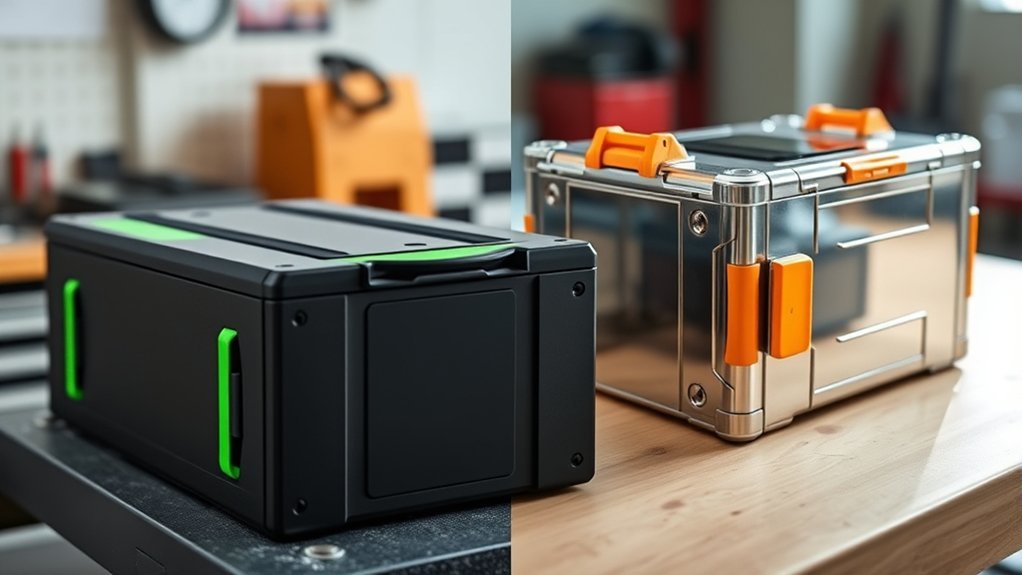
When evaluating long-term costs, we must consider factors such as cycle life, maintenance requirements, safety-related expenses, and replacement frequency. These directly influence the overall economics of each battery type. LiFePO4 batteries typically offer longer battery lifespan and higher cycle durability, reducing replacement costs over time. Conversely, lithium-ion batteries may entail higher recycling costs due to more complex chemical components. Safety considerations also impact expenses, as LiFePO4 batteries are inherently safer, potentially lowering safety-related mitigation costs. Additionally, maintenance requirements tend to be minimal for both, but the extended cycle life of LiFePO4 results in fewer replacements, decreasing long-term expenditure.
Long-term costs favor LiFePO4 with longer lifespan, lower safety, and fewer replacements.
- Battery lifespan and cycle durability
- Recycling costs and environmental impact
- Safety-related expenses
- Replacement frequency
How Do Maintenance and Replacement Costs Impact Overall Expenses?
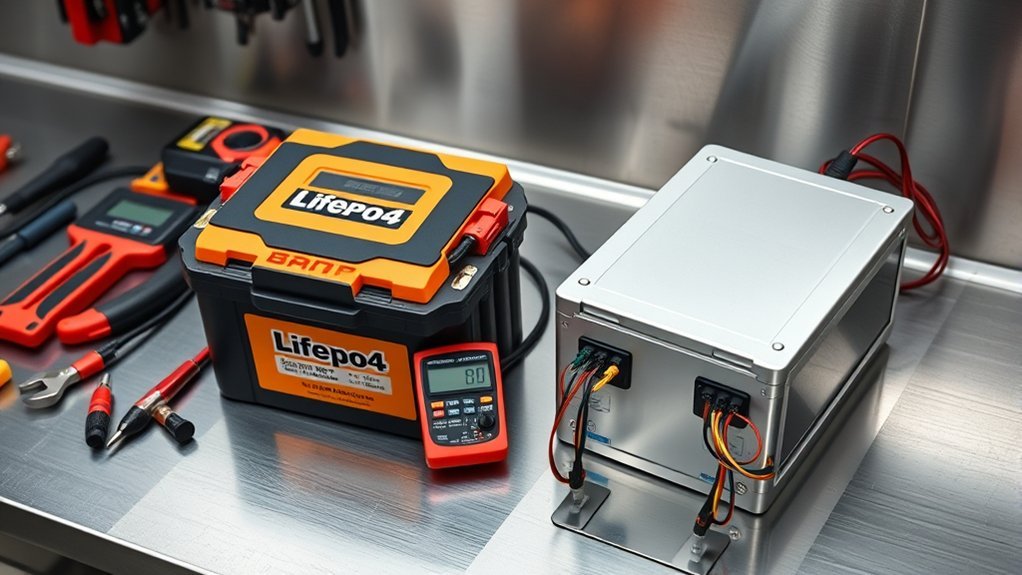
Maintenance and replacement costs substantially influence the total cost of ownership for both LiFePO4 and lithium-ion batteries. Longer battery lifespan reduces frequency of replacements, directly lowering overall expenses and minimizing environmental impact. LiFePO4 batteries typically offer a longer lifespan—often exceeding 2,000 cycles—compared to standard lithium-ion variants, leading to decreased maintenance costs over time. This durability not only cuts ongoing expenses but also lessens the environmental footprint by reducing waste and resource consumption. Conversely, batteries with shorter lifespans require more frequent replacements, increasing long-term costs and environmental impact. Hence, when evaluating total expenses, it’s essential to consider both maintenance and replacement costs, as these factors greatly shape the economic and ecological sustainability of energy storage solutions.
Which Battery Offers Better Value for Specific Applications?
Selecting the most suitable battery for a specific application depends heavily on performance requirements, operational environment, and economic considerations. When evaluating value, factors like battery safety and environmental impact are essential. LiFePO4 batteries excel in safety due to stable chemistry, reducing risks in high-demand or sensitive environments. They also have a lower environmental impact, thanks to longer lifespans and reduced hazardous waste. Lithium-ion batteries, while offering higher energy density, may involve higher safety concerns and disposal costs. For applications prioritizing longevity, safety, and ecological responsibility, LiFePO4 presents better value. Conversely, for short-term needs with space constraints, lithium-ion could be more appropriate. Key considerations include:
- Battery safety standards
- Environmental sustainability
- Cost-to-performance ratio
- Application lifespan
How Can You Calculate Total Cost of Ownership for LiFePO4 vs Lithium-Ion?
Calculating the total cost of ownership (TCO) for LiFePO4 versus lithium-ion batteries requires an all-encompassing analysis of initial investment, operational expenses, and end-of-life costs. Key factors include battery lifespan, which directly impacts replacement frequency and long-term costs. LiFePO4 typically offers a longer lifespan, reducing replacement and maintenance expenses. Operational costs also involve efficiency and environmental impact, as LiFePO4 batteries generally have lower degradation rates and fewer hazardous materials, leading to a smaller environmental footprint. To accurately compare TCO, we must account for upfront purchase price, cycle life, efficiency losses, and disposal or recycling costs. By systematically evaluating these components, industry professionals can determine the more cost-effective solution tailored to specific applications.
Frequently Asked Questions
How Do Initial Installation Costs Compare Between Lifepo4 and Lithium-Ion Batteries?
We find LiFePO4 batteries typically have higher initial installation costs due to advanced safety features and longer lifespan, but their recycling impact is lower, which can offset upfront expenses over the battery’s lifecycle.
What Are the Environmental Costs Associated With Manufacturing Each Battery Type?
Like a double-edged sword, manufacturing both batteries impacts the environment. Lithium-ion batteries demand extensive raw material sourcing and complex recycling processes, whereas LiFePO₄ batteries offer cleaner production with fewer toxic materials, reducing environmental costs overall.
How Does Battery Performance Affect Overall Lifecycle Costs?
Battery performance impacts lifecycle costs considerably; longer battery longevity reduces replacement frequency, lowering overall expenses, while maintenance requirements influence operational efficiency, with Lifepo4 batteries offering advantages due to their durability and minimal upkeep needs.
Are There Regional Price Differences for Lifepo4 and Lithium-Ion Batteries?
You might be surprised—regional pricing for LiFePO4 and lithium-ion batteries varies markedly due to market fluctuations and local manufacturing costs, impacting overall affordability and strategic procurement decisions across different markets, making regional analysis essential for cost optimization.
What Financing Options Are Available for Upgrading to Either Battery Type?
We explore financing options like leasing, grants, and incentives, considering battery recycling and supply chain efficiencies, to facilitate upgrades to LiFePO4 or lithium-ion batteries. These strategies optimize costs and sustainability in industry applications.
Conclusion
In conclusion, choosing between LiFePO4 and lithium-ion batteries is like weighing a sturdy oak against a quick-growing pine—initial costs differ, but long-term value depends on lifespan and safety. LiFePO4’s durability and stability often outweigh its higher upfront price, delivering better total cost of ownership for industrial and renewable energy applications. By analyzing cycle life, maintenance, and safety factors, we can make data-driven decisions that optimize performance and cost efficiency over the battery’s lifecycle.