We protect our systems with a layered, standards-driven approach to surge protection and overload management, combining fast-acting devices with downstream safeguards to curb spikes and prevent sustained faults. We distinguish surges from overloads, align choices to home or industrial needs, and specify coordination, energy handling, and testing requirements. Our method is precise and scalable, with clear maintenance and documentation to sustain reliability. Stay with us as we map thresholds, timing, and verification that keep downstream equipment safe and uptime intact.
Key Takeaways
- Surge protection clips brief voltage spikes and redirects energy to grounding paths to protect insulation and sensitive equipment.
- Overload management detects sustained excess current and initiates protective actions to prevent thermal damage and failures.
- Layered protection coordinates devices across entry, distribution, and system levels to minimize nuisance trips and maximize uptime.
- Standards-driven testing validates clamping levels, response times, energy ratings, and proper coordination with upstream and downstream devices.
- Regular maintenance, testing, and documentation ensure ongoing reliability, proper replacement timing, and traceable fault isolation.
What Surge Protection Really Does for Your Systems
Surge protection isn’t just a safety add-on; it’s a first line of defense that preserves equipment, data, and uptime. We approach this topic with a precise, standards-driven mindset, outlining how protection components respond to transient events. Our focus is on controlled, repeatable behavior that minimizes disruption, not on hype. Surge protection functions by curtailing overvoltage and redirecting excess energy to grounding paths, preserving signal integrity and power quality. We analyze surge behavior across common event profiles, verifying clamping levels, response times, and energy ratings against applicable standards. Noise immunity emerges as a measurable benefit, reducing false triggers and data corruption. By detailing test methods and acceptance criteria, we provide a clear basis for specification, procurement, and system integration.
Surges vs. Overloads: The Real Difference in Power
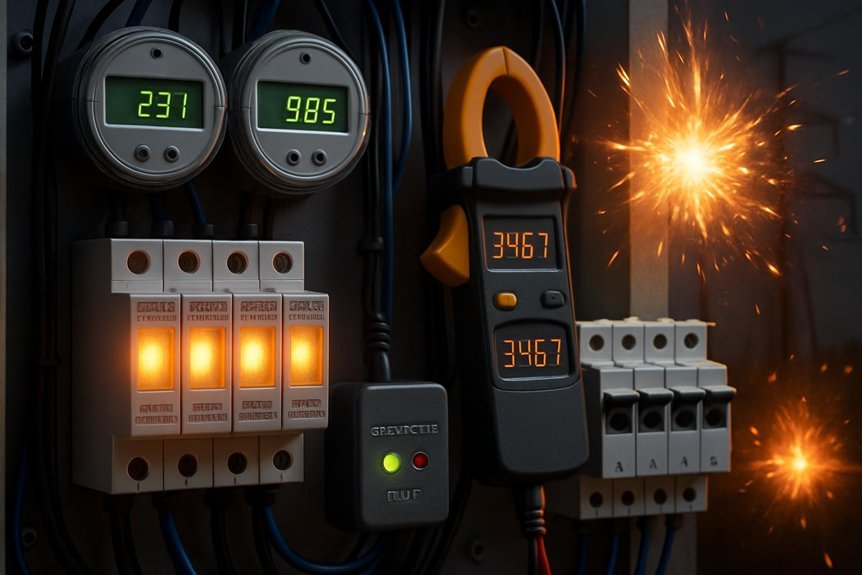
We’ll map the practical differences between surges and overloads, focusing on how each event behaves in real systems. Surges are brief voltage spikes that can stress components, while overloads involve sustained excess current that can trigger protective responses or failures. By clarifying these distinctions, we set a precise framework for evaluating protection strategies and their outcomes for your equipment.
Surges Versus Overloads
Do surges and overloads mean the same thing for your electrical system? Not at all. We, as practitioners, distinguish them by cause, magnitude, and timing. Surges are brief, high-amplitude voltage events that exceed normal operating levels, often originating from external factors like lightning or switching operations. Overloads result from sustained demand that surpasses circuit capacity, stressing conductors and protection devices. Our approach emphasizes precise monitoring of surge timing to determine protection requirements and coordination, ensuring devices react quickly without nuisance tripping. We also define overload thresholds to establish safe operating envelopes and appropriate protection settings. By separating these phenomena, we design for fast isolation of transients and controlled load shedding when necessary. This standards-driven framework guides installation, testing, and ongoing maintenance, preserving system reliability and equipment life.
Real-World Impact Differences
Why do surges and overloads impact your system differently in real-world operation? We can draw a clear distinction by examining cause, duration, and consequence. Surges are transient overvoltages that spike briefly, typically from switching events or external faults; they test protection thresholds and can trigger breakers or damage insulation if not clipped. Overloads endure longer current excesses driven by excessive load demand, risking thermal stress, component aging, and gradual performance decline even when voltages remain nominal. In real world impact, protection devices must respond to both, with precision timing and coordination. Practical examples show surge protectors absorbing brief impulses, while overload management relies on monitoring, derating, and automatic disconnection. Our goal is robust, standards-driven mitigation, minimizing nuisance trips and preserving system integrity without unnecessary downtime.
Home vs. Industrial Needs: What You Must Protect
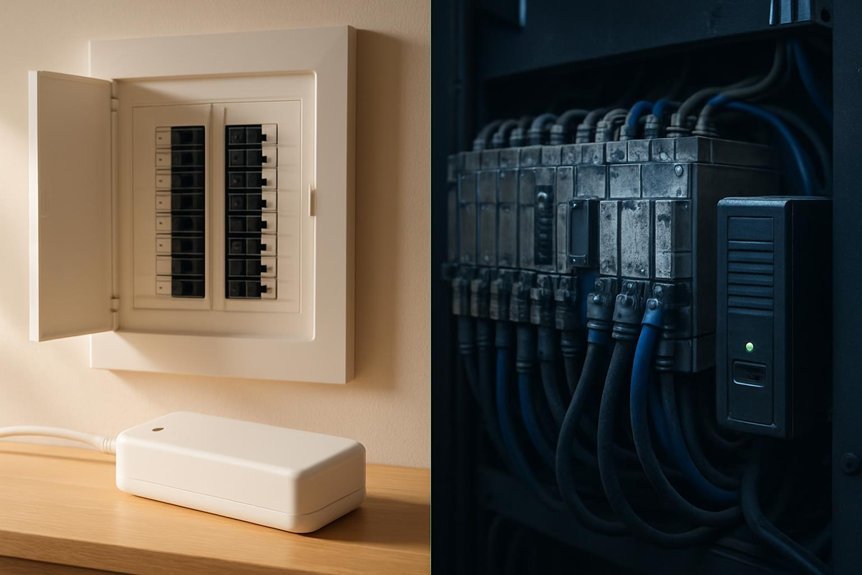
Protecting electrical systems hinges on context: home environments demand protection for sensitive electronics and standard circuits, while industrial settings require safeguarding heavy machinery, critical controls, and high-energy feeders. We present our view on priorities, then align actions with safety norms and reliability goals.
- Protecting sensitive home electronics versus robust industrial loads follows distinct grading—prioritize surge suppression for electronics and feeders, and ensure grounding integrity across facilities.
- Coordination between panel protection and downstream circuits minimizes nuisance trips, maintaining continuous operation and compliance with standards.
- Regular testing, inspection intervals, and documentation support home safety and industrial efficiency, reducing downtime and extending equipment life.
Choose Protection Devices: A Layered, Scalable Framework
We start with a layered, scalable approach to selecting protection devices, aligning choices with load type, protection goals, and coordination requirements. Our method treats protection as a layered framework, prioritizing device roles, response times, and fault isolation. We select components that harmonize with upstream and downstream protection, ensuring coordinated tripping and minimal nuisance alarms. We emphasize scalable protection, allowing future expansion without rework. We document performance targets, setting clearance, surge ratings, and service continuity benchmarks. This disciplined process yields repeatable results and clear accountability.
| Layer | Function | Criteria |
|---|---|---|
| 1 | Entry protection | Fast response, high energy rating |
| 2 | Distribution | Coordination, selectivity |
| 3 | System level | Redundancy, diagnostics |
Design a Layered Protection Strategy
We design a layered protection strategy by applying redundancy and segmentation, ensuring each stage protects the next without creating single points of failure. We establish a protective coordination approach that aligns device classes, response times, and fault paths to minimize disturbance and maximize coverage. With clear, standards-driven criteria, we evaluate each layer for effectiveness and adjust for evolving surge environments.
Layered Protection Principles
How do we guarantee resilience across defenses? We present Layered Protection Principles with a focused, standards-driven approach. We align controls to known surge fundamentals and scale their effectiveness through defined interfaces, enabling predictable performance under load. Our method emphasizes clear roles, measured response, and verifiable outcomes, avoiding single-point failure paths. We establish entry criteria, monitoring, and isolation boundaries that support protection scaling without overengineering. We document interfaces for detection, actuation, and coordination, ensuring rapid, coordinated responses across layers. With disciplined testing and objective metrics, we validate that each layer contributes meaningfully while maintaining system integrity under stress.
- Define layer-specific requirements and performance targets.
- Establish timely sensing, decision, and actuation sequences.
- Verify cross-layer interoperability and rollback procedures.
Redundancy And Segmentation
How can redundancy and segmentation fortify a layered protection strategy? We approach redundancy with clearly defined tiers and proven paths, ensuring maintenance windows don’t expose critical loads. We pair segmentation planning with strict zoning to limit fault domains, isolate disturbances, and accelerate recovery. Our method emphasizes standardized interfaces, documented failover rules, and verifiable testing. We map redundancy strategies to component criticality, aligning cooldowns and isolation delays with safety margins. Segmentation planning reduces cascading events, preserving service continuity under surge. Together, they enable rapid isolation, controlled load shedding, and predictable restoration sequences. We document metrics, review intervals, and configuration baselines to sustain resilience over time.
| Column A | Column B |
|---|---|
| Redundancy strategies | Segmentation planning |
| Fault isolation | Service continuity |
| Testing cadence | Recovery sequencing |
| Metrics & baselines | Documentation & reviews |
Protective Coordination Strategy
Is a layered protective coordination strategy the key to consistent, dependable surge resilience? We believe yes, when we design around predictable responses, clear roles, and verifiable settings. Our approach aligns devices, breakers, and fuses into a coherent overload strategy that minimizes nuisance trips while preserving critical loads. We document coordination curves, select thresholds, and test sequences to ensure fast, selective isolation of faults. By defining acceptable downtime, we quantify performance and validate with standards-driven procedures. This structure enables rapid fault containment, reduces arc flash risk, and sustains service continuity. Readers gain a repeatable framework for assessing protection devices, wiring configurations, and monitoring interfaces. Unity across components delivers durable surge coordination and reliable overload responses.
- Define thresholds and time delays to achieve selective coordination
- Map device roles, duty cycles, and critical-load priorities
- Validate with staged tests, documentation, and compliance checks
Install and Maintain Your Protection Equipment
We’ll begin by inspecting the installation site and securing a dedicated, properly rated surge protection device (SPD) that matches the system’s voltage, current, and protection needs. We install according to manufacturer instructions and applicable standards, ensuring enclosure integrity, accessibility, and clear labeling. We verify correct grounding connections, emphasize discrete grounding to prevent unintended current paths, and confirm coordination with upstream devices. Wiring paths are kept short, with solid conductor terminations and properly torqued connections. We perform thermal testing to detect hotspots, verify rated dissipation, and confirm no contact with mineral deposits or moisture. Periodic maintenance includes visual audits, connector checks, and insulation resistance measurements, replacing aging components before fatigue. Documentation is updated for test results, replacement schedules, and commissioning notes to sustain reliable protection performance.
Monitor, Refresh, and Troubleshoot for Reliability
With the SPD installed and maintained as described, we now focus on monitoring, revitalizing, and troubleshooting to sustain reliability. We follow a precise, standards-driven approach that emphasizes documented procedures, consistent checks, and clear pass/fail criteria. By establishing a formal monitoring cadence, we detect degradation early and prevent outages. We align refresh intervals with manufacturer specs and site conditions, ensuring timely actions without unnecessary testing. Troubleshooting remains disciplined: reproduce symptoms, verify wiring integrity, and isolate faulty modules before replacement. Record results, update the maintenance log, and communicate risk levels to stakeholders. Adherence to defined thresholds minimizes false alarms and enhances response speed.
- Establish monitoring cadence and document results.
- Schedule and verify refresh intervals against current conditions.
- Implement structured troubleshooting with traceable outcomes.
Frequently Asked Questions
How Do Surges Differ From Voltage Spikes and Transients?
Surges are large, brief overvoltages from external causes, while voltage spikes are shorter, sharper elevations within a steady waveform; transients are any temporary deviations. We explain Surge basics and Electrical terminology clearly, with precise, standards-driven analysis for readers.
What Is the Typical Lifespan of Surge Protection Devices?
Typical lifespan for surge protection devices is about 5 to 10 years, depending on usage and surge exposure; replacement guidelines advise inspecting indicators and replacing after significant surges or at routine intervals to maintain protection.
When Should You Replace Protection Devices After a Surge?
We should replace protection devices after a surge when they show damage or wear, following replacement timing guidelines; discarded devices are handled per standards, not due to unrelated topics, and we commit to precise, methodical maintenance.
Can You Mix Protection Devices With Different Ratings Safely?
We can’t safely mix protection devices with different ratings; compatibility concerns arise, and unequal clamping can stress the system. We must match ratings, follow standards, and design a uniform protection scheme to guarantee reliable, predictable protection.
Do Data Lines Require Separate Protection From Power Lines?
Yes, data lines require separate protection from power lines. We ensure data line protection and power line separation to prevent interference and meet standards, applying deliberate zoning, ratings, and coordinated devices for safe, compliant operation.
Conclusion
We’ve seen how surge protection and overload management form a precise, standards-driven defense you can rely on. By coordinating fast-acting devices with downstream protections, we reduce nuisance trips and extend equipment life. An interesting stat: properly coordinated protection can cut nuisance tripping by up to 40% in mixed load environments, preserving uptime. So, we design, install, and maintain a layered, scalable system, monitor performance, and refresh components to keep your power integrity dependable.